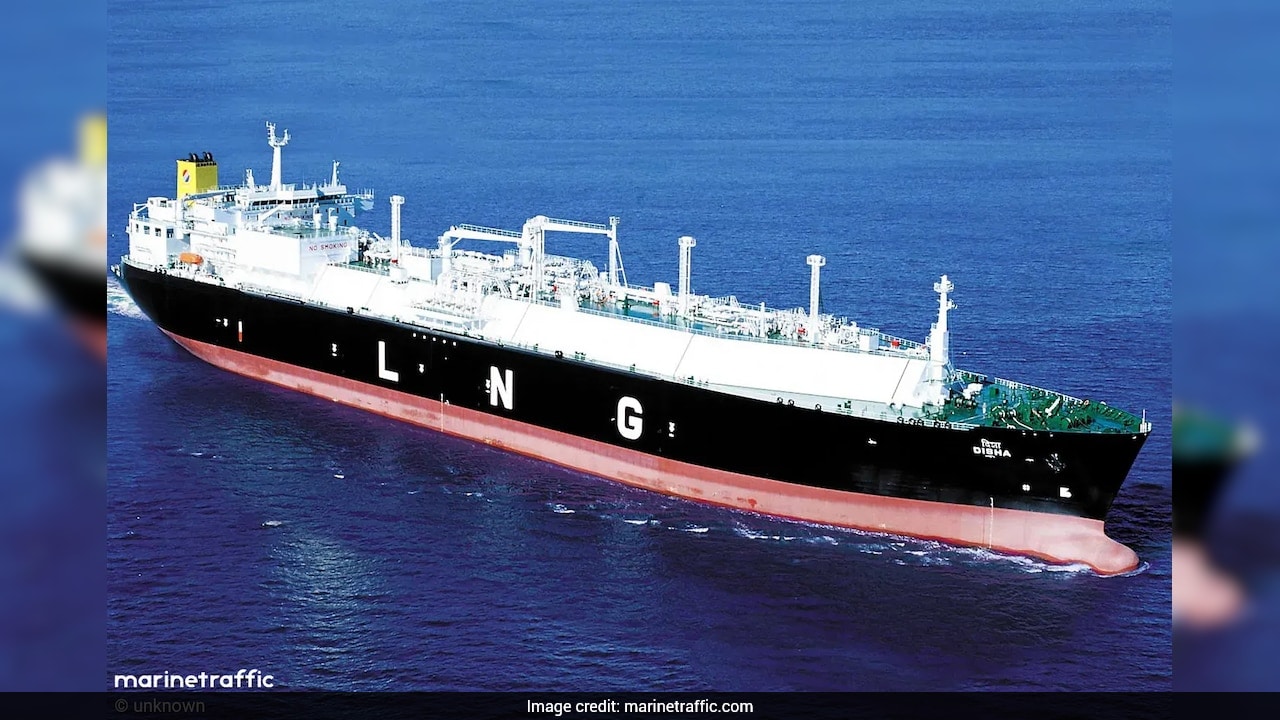
Commercial maritime data establishes that a single liquefied natural gas (LNG) vessel transiting a newly reopened maritime chokepoint does not signify a systemic restoration of energy supply chains. On June 15, 2026, the LNG carrier Disha—a 62,370 metric tonne capacity vessel managed by a Shipping Corporation of India-led consortium and chartered by Petronet LNG—successfully transited the Strait of Hormuz eastward, bound for the Dahej terminal in Gujarat, India. This movement represents the first commercial LNG transit following the provisional United States-Iran peace agreement designed to dismantle the de facto blockade enforced since February 28, 2026.
While financial markets reacted immediately—European natural gas prices dropped by up to 5.8% and Brent crude fell over 4% in early trading—this single transit highlights the extreme operational inertia inherent in modern energy logistics. The Disha had been stranded west of the strait since loading its cargo at Qatar’s Ras Laffan facility on March 1, 2026. A three-month disruption for a single voyage exposes the structural vulnerability of relying on narrow geographic conduits for critical base-load energy inputs.
The true operational metric for energy security is not the initial voyage of a single vessel, but rather the systemic clearance velocity of the wider merchant fleet. Understanding the timeline for full maritime normalization requires breaking down the core economic, risk, and operational variables currently governing the Persian Gulf.
The Three Pillars of Maritime Normalization
The transition from a military blockade to unrestricted commercial navigation depends on three independent operational variables. Each variable introduces specific lags into the supply chain that prevent an immediate return to pre-conflict shipping volumes.
1. The Verification and Clearance Protocol
The provisional agreement between Washington and Tehran is scheduled for formal signature on June 19, 2026. Commercial shipowners are refusing to resume standard sailing schedules based on political declarations alone. Institutional risk managers require physical verification of safety, specifically regarding naval mine clearance. Reports of naval mines laid during the three months of hostilities mean that active mine-sweeping operations must precede routine commercial routing.
2. Underwriting and Capital Exposure
The cost function of transiting a high-risk zone is governed by the War Risk Insurance Premium (WRIP). During the active blockade phase, traditional hull and machinery underwriting was effectively suspended for the Strait of Hormuz, forcing state-backed entities to assume total liability or deploy sovereign military escorts. Until international underwriting syndicates formally recalibrate their risk models and reduce the emergency premiums levied on hulls and cargoes, commercial operators will keep their vessels at anchor outside the risk zone.
3. Asymmetric Information and Spoofing Inertia
Evaluating true traffic density remains difficult due to extensive data corruption in Automatic Identification System (AIS) tracking. Over the course of the conflict, vessels routinely utilized transponder deactivation and AIS spoofing to obscure their positions. This structural blindness persists; as of mid-June 2026, many vessels within the regional flotillas have not broadcasted authentic location data for weeks. This lack of data transparency creates an operational bottleneck, as fleet dispatchers cannot accurately assess real-time congestion or security conditions at the chokepoint.
The Economics of Stranded Fleet Absorption
The macro-level shipping backlog in the Middle East Gulf presents a complex queue-management challenge. The rate at which global energy markets stabilize depends entirely on the clearance velocity of this stranded fleet.
| Metric | Empirical Status (June 2026) |
|---|---|
| Total Blocked Tanker Fleet (Kpler) | 155 vessels (down from 201 in late May) |
| Alternate Estimate (Oil Brokerage) | 215 vessels |
| Anticipated Surge Capacity | ~60 Very Large Crude Carriers (VLCCs) positioned West of Hormuz |
| Theoretical Queue Clearance Windows | 8 to 10 days under unconstrained navigation |
Under a theoretical model of unconstrained navigation—defined as zero military interference, normalized daylight transits, and standard pilotage availability—the clearing time for the current backlog is calculated at 8 to 10 days.
However, the actual operational clearing window will likely be much longer due to the localized structural mechanics of the LNG supply chain:
$$\text{Actual Clearing Window} = \text{Theoretical Clearance Time} + \text{Mine Clearance Lag} + \text{Insurance Re-rating Delay}$$
The Disha voyage was an isolated, calculated risk by a state-backed entity rather than a sign of a broad commercial return. Global shipping giants, including Nippon Yusen and Mitsui O.S.K. Lines, have explicitly stated that their vessels will remain at anchor off Dubai and in the Gulf of Oman until safety is fully confirmed. Consequently, physical freight rates will remain elevated, and overall tonnage movement will remain depressed through the end of June 2026.
India's Structural Energy Diversification
The three-month closure of the Strait of Hormuz forced Indian energy procurement strategies to shift from a focus on lowest cost to a focus on geographic resilience. India relies on imports to meet nearly 50% of its domestic natural gas consumption, and historically, approximately 60% of those imports passed directly through the Strait of Hormuz, primarily originating from Qatar and the United Arab Emirates.
When the blockade disrupted these flows, Indian state and private utilities had to find alternative sources, shifting their procurement away from Persian Gulf suppliers.
[Persian Gulf Blockade]
       │
       ├──► Diversification to United States (Increased to 0.31M tonnes/month)
       └──► Diversification to West Africa (Spot procurement from Nigeria & Angola)
During the blockade, India increased its imports from the United States to an average of 0.31 million tonnes per month, up from the 2025 baseline of 0.24 million tonnes. This structural shift was supported by emergency spot-market purchases from West African producers, specifically Nigeria and Angola.
These alternative routes bypass the Middle Eastern chokepoints but introduce a structural cost penalty. The voyage from the US Gulf Coast or West Africa to India's western ports requires significantly longer sailing times compared to the short run from Qatar's Ras Laffan to Gujarat's Dahej. This geographic shift locks in higher ton-mile demand for the global LNG carrier fleet, structurally elevating long-term transport costs even as spot commodity prices fall on news of the peace deal.
Strategic Action Plan for Fleet Procurement Officers
Relying on initial reports of a diplomatic breakthrough to immediately resume standard shipping operations creates unacceptable risk. Energy procurement officers and fleet managers should implement a phased operational strategy over the next 30 days.
- Maintain the West African and US Spot Sourcing Mix Through July 31: Do not cancel existing supply contracts from non-Gulf producers. The risk of temporary friction during the implementation of the US-Iran peace agreement remains high. Keep these longer, safer supply lines open to guarantee base-load volumes for domestic industrial consumers.
- Enforce Cargo-Specific Underwriting Audits: Before ordering any company-owned or long-term chartered vessel into the Persian Gulf, require written confirmation from underwriters that the War Risk Insurance Premium has been adjusted to reflect a non-hostile environment. Do not accept verbal assurances based on diplomatic announcements.
- Execute a Tiered Re-Entry for the Fleet: Allow state-backed or sovereign-flagged vessels to complete the initial transits over the next 7 to 14 days. Use the operational data from these early voyages to assess real-world transit times, pilotage availability, and the actual security environment in the strait before risking high-value commercial assets.