The fluorescent lights of the hallway always hum a little too loud right around four o'clock. That specific frequency—halfway between a low drone and a high-pitched whine—is the sound of a building exhaling after a thousand children have spent the day running, arguing, laughing, and trying to figure out who they are.
I know that hallway. I have stood at the end of it, waiting for the bell to ring, watching teachers pack their canvas bags with graded quizzes and half-empty coffee mugs. These are people who chose their profession because they wanted to watch minds expand, not because they wanted to be the frontline arbiters of social philosophy. Yet, here we are.
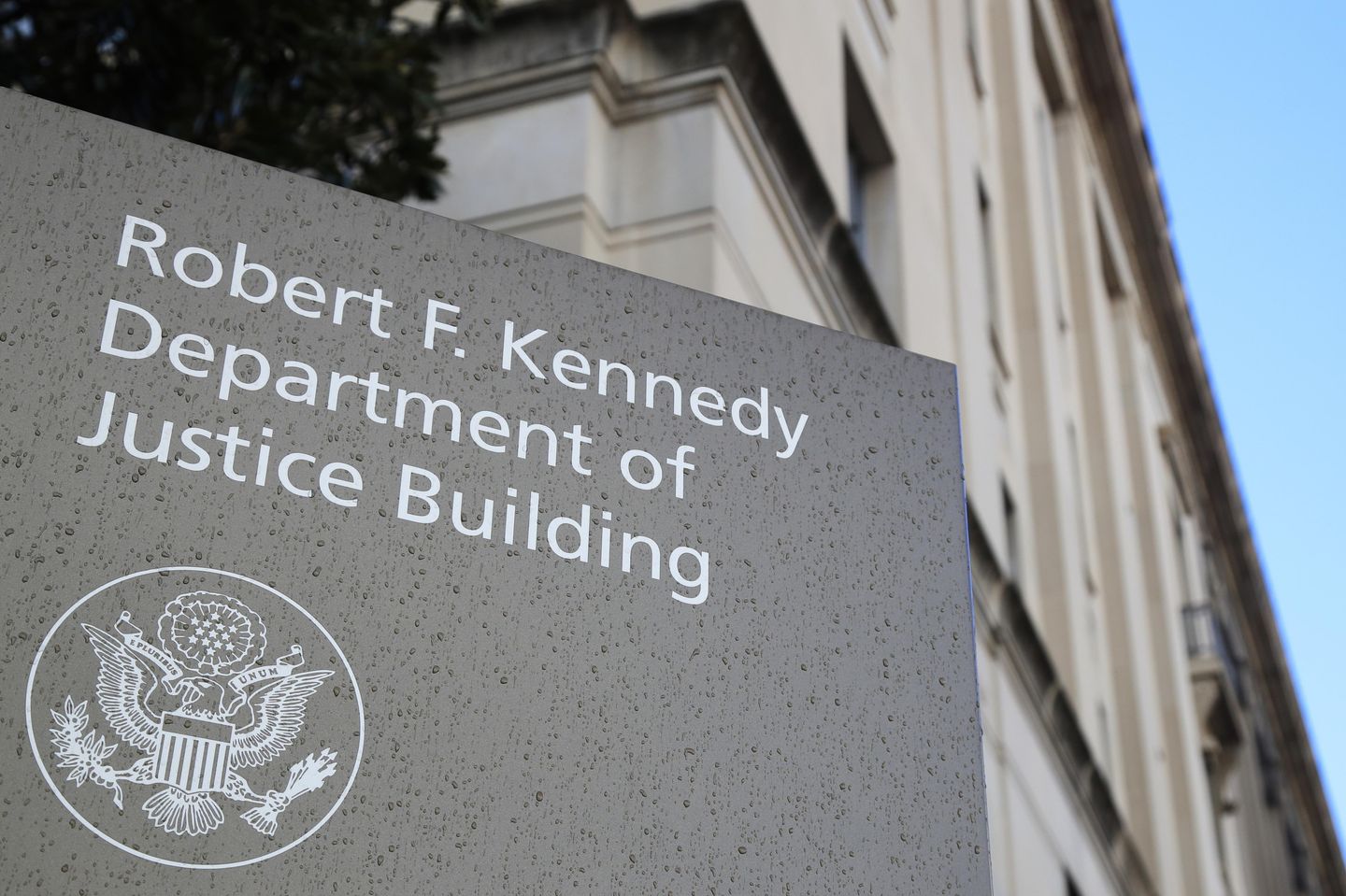
When the Department of Justice files a lawsuit against a Kansas school system over what it labels as secret gender transitions, the headlines flash across our screens like emergency sirens. They use heavy words. Federal intervention. Parental rights. Policy mandates. Constitutional boundaries. The language smells of paper binders and marble columns, lightyears away from the smell of damp coats and peanut-butter sandwiches that defines a Kansas middle school on a rainy Tuesday.
Let us look past the legal briefs for a moment. Let us look at the actual mechanics of what happens when a kid walks into a counselor's office and whispers something they have never said out loud before.
Imagine a fourteen-year-old—let us call him Leo, though his name could be anything, and this is a hypothetical scenario designed to illustrate a human truth rather than a specific case file. Leo looks in the mirror every morning and feels like a ghost trapped in someone else’s photograph. His shoulders are broadening in ways that make his stomach turn. His voice is cracking, and every time someone calls him by the name on his birth certificate, it feels like a small, blunt instrument hitting a bruise.
He doesn't want to talk to his parents yet. Why? Not necessarily because they are monsters. Often, it is because he loves them too much to bear the thought of disappointing them, or because he heard them making an offhand, frustrated comment about the news over dinner six months ago and realized, with a sinking heart, that his inner world was something they viewed as a political football.
So, Leo walks into the school counselor's office. His hands are shaking. He asks a simple, terrifying question: Can I use a different name here? Can I wear my hair differently? Can I just... breathe for seven hours a day without feeling like I'm wearing a costume?
What does the counselor do?
This is where the federal lawsuit intersects with the linoleum floor. The legal question is framed as a breach of trust: Does a school have the right to keep secrets from a parent? Does withholding a child's social transition—a change in pronouns, name, or dress at school—infringe upon the fundamental constitutional right of parents to direct the upbringing of their children?
The Justice Department argues yes. They contend that when a school actively facilitates a social transition while deliberately concealing it from the family, it crosses a line from safe harbor into active deception. They argue that parents are the ultimate moral and medical authorities for their minors, and that driving a wedge between home and school isolates the child when they need stability the most.
On the other side of the courtroom, educators and advocates argue something equally urgent, born of a different kind of fear. They argue that for some kids, home is not a safe harbor. It is a storm. They point to statistics that clutch at your throat: rates of self-harm, depression, and youth homelessness that spike when young people are rejected by the people who brought them into the world. They argue that school counselors are bound by a duty of care to the student sitting right in front of them, and that forcing disclosure before a child is ready can push them out of the only support system they have left, or worse, onto the pavement.
Two truths, grinding against each other like tectonic plates.
Parental authority is not a minor concept. It is the bedrock of how we raise generations. We trust parents to vaccinate their kids, feed them, guide their spiritual lives, and pick their curfews. To suggest that a state employee has better instincts about a child's inner life than a mother who has kissed their scraped knees for a decade is arrogant, paternalistic, and historically dangerous. Families are meant to be the primary emotional safety net of human society. When that net is frayed or bypassed by institutional policy, we risk breaking the fundamental contract between the community and the home.
At the same time, we must look at the reality of the child standing in the hallway.
I remember what it felt like to be fourteen, when every minor awkwardness felt like a public execution. I remember the absolute, blinding terror of hiding secrets that felt too heavy for my chest. If you have never felt the desperate need to find one adult in the world who will look you in the eye and say, I see you, you are real, and you are going to survive this, then you might look at this lawsuit as a simple matter of right and wrong, black and white, paperwork and jurisdiction.
It is not simple.
When schools adopt blanket policies—either mandating immediate parental notification regardless of the child's home situation, or conversely, mandating total secrecy from parents—they are attempting to write a universal rule for a deeply messy, highly individual human experience. Life does not fit into a bureaucratic checkbox. Every family has its own texture, its own history, its own capacity for grace or cruelty.
Consider what happens when we turn classrooms into courtrooms. When the state sues a local school board, the adults posture, the lawyers bill their hours, and the cable news segments churn through outrage cycles. But down in the hallways, the kids are watching. They watch how we talk about them. They listen to whether we treat their pain as a crisis of human dignity or a convenient talking point for the next election cycle.
When we reduce a child's identity to a federal case docket, we miss the point entirely.
The core of this issue is not about administrative paperwork, nor is it about who holds the administrative keys to a student's file. It is about trust. Trust between parents and children. Trust between teachers and families. Trust in a system that is currently fracturing because we have forgotten how to talk to each other without a bullhorn in our hands.
If a child cannot talk to their parents, the school's job should never be to drive a permanent wedge between them. But neither should it be to throw the child out into the cold without a coat. The real work—the hard, unglamorous, daily work—is building an environment where a kid feels safe enough to bring their parents into the conversation themselves, rather than treating the school counselor as an accomplice in a secret life.
The lawsuit in Kansas will wind its way through dockets and briefs, generating headlines that will fade the moment a newer, louder crisis takes its place. But long after the judges issue their rulings, the fluorescent lights in that hallway will still hum at four o'clock.
A teenager will walk out the heavy glass doors, push their hands deep into their pockets, and step out into the wind, carrying a world that no court order can neatly resolve, waiting to see if anyone is actually listening.