Stand on the shores of the Bosphorus at dusk, and you can watch the water tear itself in two currents. On the surface, the dark rush flows south from the Black Sea toward the Marmara, driven by a relentless pressure from the north. Yet far below, a heavier, saltier undercurrent pushes stubbornly in the exact opposite direction. Two invisible forces, locked in an ancient, silent wrestling match within the same narrow channel.
Modern Turkey feels very much like that strait.
Walk through the bustling neighborhoods of Kadikoy on a Friday evening, and you hear the laughter of young people arguing over politics in crowded cafes, sipping bitter coffee, clutching smartphones, breathing the electric air of a digital generation plugged entirely into the modern world. They want jobs. They want inflation to stop chewing through their paychecks. They want the freedom to mock politicians on social media without wondering if a dawn knock on the door will follow.
Then step back, zoom out, and look at the apparatus of the state. It is heavy. It is rigid. It is a system built to preserve power by constricting the oxygen of public debate.
We often talk about geopolitics as if it were a game of chess played by men in gray suits across marble tables in Brussels or Washington. We look at spreadsheets of gross domestic product, trade deficits, and refugee containment pacts. We treat countries as blocks of color on a map. But countries are made of flesh, bone, and anxiety. They are made of mothers wondering if their sons will find a future worth staying for, and opposition leaders calculating the exact cost of a single sentence spoken into a microphone.
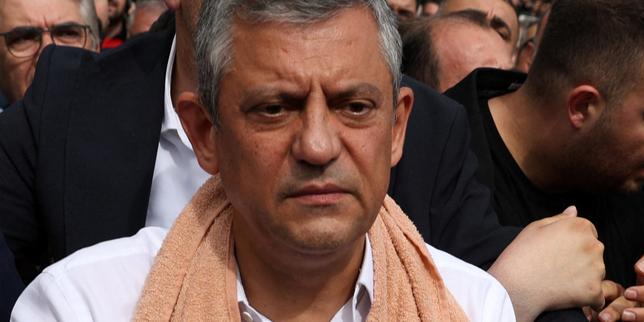
Enter Ozgur Ozel.
He is not a fire-breathing revolutionary from a cinematic fantasy. When you see him step up to a podium, his demeanor is closer to that of a weary high school history teacher who has spent twenty years trying to convince a rowdy classroom that the test actually matters. He leads the Republican People's Party, the CHP, carrying the heavy historical armor of Mustafa Kemal Atatürk’s legacy into an era that looks nothing like the early twentieth century.
For decades, that party was accused of being out of touch, of guarding the secular gates of the republic while locking out the conservative working class. Ozel represents a calculated attempt to break that mold. He walks the streets. He listens. More importantly, he speaks a language that connects the daily humiliation of soaring grocery prices to the structural erosion of democratic institutions.
Earlier this year, Ozel dropped a sentence into an interview that sent quiet tremors through diplomatic corridors across the continent. He looked straight into the camera lens and said it plainly: The future of Europe depends also on the future of Turkish democracy.
At first glance, it sounds like standard political theater. Every regional leader wants to inflate their own importance, tying their local struggles to the grand destiny of the West. But pause. Think about what happens next if you dismiss that claim as mere rhetoric.
Turkey is not a distant island. It is the geographic and strategic anchor holding down the southeastern corner of Europe. It is the wall holding back millions of displaced souls fleeing the smoldering ruins of the Middle East, secured by a fragile political bargain with the European Union. It is a massive market, a military powerhouse with the second-largest army in NATO, and a logistical heartbeat connecting Asia to the West.
If that anchor snaps, Europe does not simply get a cold. It gets a systemic fever.
We have seen this script before. We watch autocracy creep in slowly, incrementally, through technical adjustments to election laws, the quiet buying of independent media outlets, and the steady demoralization of the judiciary. It never happens overnight. There is no single dramatic explosion that sounds the alarm. Instead, the walls simply get a little thinner, the air a little stuller, until one day you wake up and realize the room has no exits left.
This is the terror that Ozel and millions of Turkish citizens navigate daily. It is a psychological weight. Imagine waking up in a country where the rules of the game can be rewritten by sunset, where a critical tweet can lead to a terrorism investigation, and where the economic floor keeps dropping beneath your feet while official statistics pretend everything is fine.
Inflation in Turkey has not just been a statistical data point for the past few years; it has been a thief in the night. It steals the retirement of grandparents. It turns a simple trip to the butcher shop into a math puzzle. When people are exhausted by the sheer act of survival, democracy often feels like a luxury item meant for wealthy nations with full stomachs.
This is precisely where the opposition faces its steepest climb. How do you convince a population stretched to the breaking point that abstract concepts like judicial independence and parliamentary oversight matter to their empty dinner tables?
Ozel’s strategy has been to tie the two together. He argues, with mounting urgency, that economic collapse is not an accident of global markets alone. It is the direct downstream consequence of one-man rule. When power concentrates in a single office, accountability vanishes. When accountability vanishes, bad economic decisions compound unchecked because no one dares tell the emperor that his economic theories are bankrupt. Nepotism replaces merit. Loyalty replaces competence. The lira slides because trust evaporates, and trust cannot be decreed by presidential decree.
It is an intuitive argument, born from lived reality. Anyone who has ever worked under a tyrannical boss recognizes the pattern on a national scale. The boss makes a terrible call, everyone nods to keep their jobs, the company spirals, and management blames external headwinds.
Now scale that up to a nation of eighty-five million people.
For Europe, the temptation has always been to look away. Transactional diplomacy is comfortable. As long as Ankara keeps the refugee numbers down and maintains the southern flank of the alliance, many European leaders are quietly willing to overlook the slow dismantling of democratic norms within Turkish borders. It is a cynical bargain. Trade away someone else's freedom for short-term border security.
Ozel’s warning is a direct challenge to that cynicism. He is telling European capitals that you cannot outsource your security to an unstable autocracy forever without inviting catastrophe. A Turkey that is deeply fractured, economically volatile, and politically repressed is a ticking time bomb on the edge of the continent.
Consider the alternative. Imagine a democratic Turkey. A nation where power is genuinely contested at the ballot box, where courts are independent, and where the rule of law offers a predictable environment for both local innovators and foreign investors. Such a Turkey would not just be a defensive bulwark; it would be an engine of regional stability, a cultural bridge that actually works, and a living proof that democracy can thrive in a predominantly Muslim, rapidly modernizing society.
The stakes could not possibly be higher.
Yet, walking through the backstreets of Istanbul, away from the glittering tourist facades of the Sultanahmet district, you feel the profound exhaustion in the air. People are tired of fighting. They are tired of hope turning into disappointment. They remember previous opposition surges that promised change only to fracture under the weight of internal rivalries and systemic pressure.
When you ask a young Turkish software engineer if things will get better, you rarely get a speech about political theory. You get a weary smile, a shrug, and a question about visa processing times for Germany. The brain drain is real. The brightest minds, the doctors, the coders, the artists, are voting with their feet, packing their bags for Berlin, Amsterdam, or London.
And that is perhaps the greatest tragedy of all. A country can rebuild bridges, roads, and factories in a few short years. It takes generations to replace the talent that leaves.
Ozel knows this. His political survival depends on convincing those who want to pack their bags that staying to fight for the ballot box is still worth the risk. It is a lonely, high-wire act. Every public appearance is scrutinized. Every word is weighed by prosecutors looking for an excuse to ban a political party or silence a rising voice.
History rarely announces its turning points. We look back at the collapse of great orders and wonder how everyone missed the flashing red lights. We ask why the warning signs were ignored until it was too late.
Right now, the warning signs are flashing bright and clear along the Bosphorus. The undercurrents are pulling hard. Ozgur Ozel is standing on the shore, shouting across the water, trying to make Europe wake up before the strait gives way entirely.
The current keeps running. The water is deep. And the tide waits for no one.