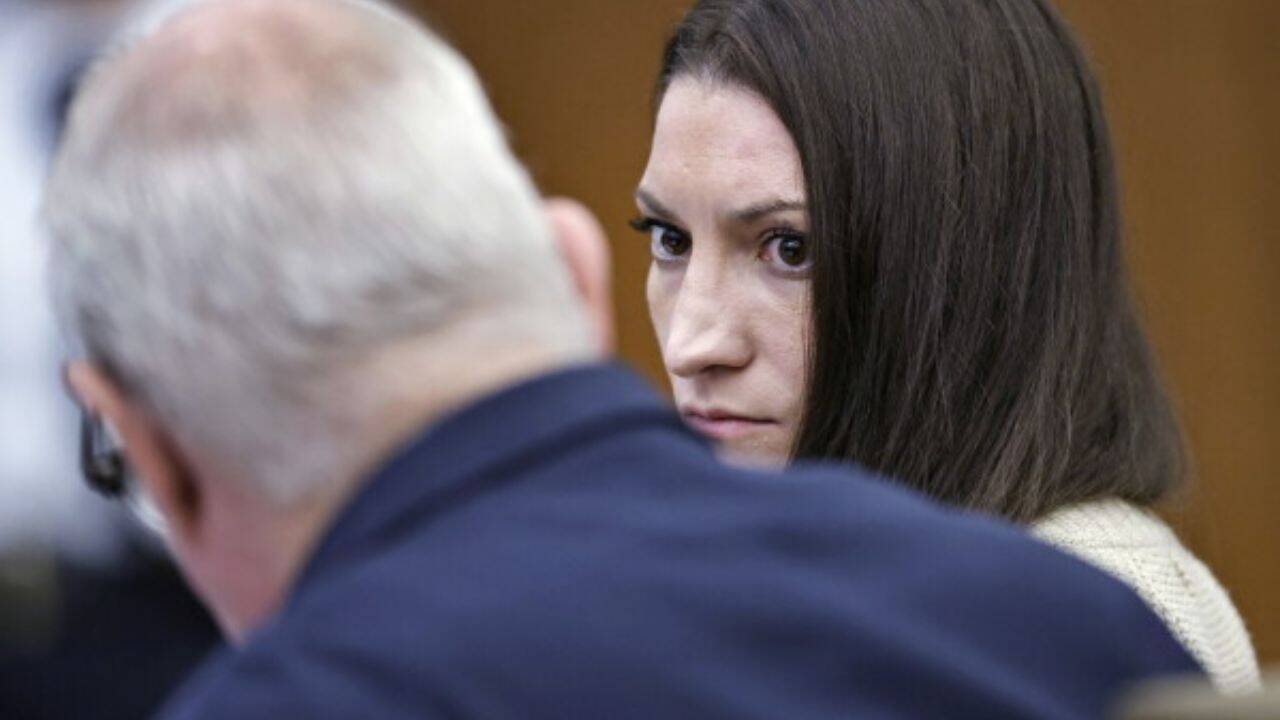
Courtrooms are tense environments, but few capture public attention quite like the legal battle over Lindsay Clancy's mental state. When a prosecution expert witness suddenly started testifying about Catholic theology and mortal sins, chaos erupted in Plymouth Superior Court.
Defense attorney Kevin Reddington immediately demanded a mistrial, arguing that injecting religious doctrine into the proceedings was a step too far. Judge William Sullivan ultimately rejected the mistrial request, but he didn't hide his frustration. He forcefully reprimanded the prosecution and ordered the jury to completely disregard the remarks about faith.
If you've been following this case, you know the stakes couldn't be higher. Clancy stands accused of killing her three young children—Cora, Dawson, and Callan—in January 2023 before jumping from a second-story window, an act that left her paralyzed. Her defense team argues she suffered from severe postpartum psychosis, rendering her unable to understand the wrongfulness of her actions. The prosecution, meanwhile, contends she acted with deliberate intent.
The Dangerous Crossroads of Faith and Forensics
Dr. Kirk Heilbrun, a forensic psychologist testifying for the state, touched off the courtroom uproar during his recall of an interview with Clancy. Discussing her state of mind, Heilbrun noted that Clancy told her children to "Go to God" while strangling them. Then, he brought up her Roman Catholic upbringing, questioning whether suicide aligns with Catholic teachings on mortal sin.
That line of questioning crosses a massive legal boundary. Religion has virtually no place in evaluating criminal responsibility unless it directly forms the core delusion of a defendant. Bringing up personal faith risks inflaming juror bias, turning a scientific assessment of mental illness into a moral judgment on theology.
Judge Sullivan made his stance crystal clear when proceedings resumed. He called the testimony about the defendant's raised religion completely inappropriate, ordering it stricken from the record. Jurors were explicitly told they cannot consider those remarks during deliberations.
Decoding the Competing Psychological Claims
Beyond the courtroom drama over religion, the core of this trial rests on starkly contrasting expert testimonies regarding postpartum mental health. Heilbrun argued that Clancy's behavior didn't match typical patterns of acute psychosis. He pointed out that she only reported hearing a voice telling her to kill her children during the brief window of the killings, calling it an unusual manifestation.
The defense presented entirely different perspectives from specialists like forensic psychiatrist Dr. Phillip Resnick, who previously testified that Clancy was clearly psychotic and lacked control. These conflicting analyses highlight just how complex and fractured psychiatric evaluations can become when juries are asked to determine intent versus illness.
Trials involving severe mental trauma force legal systems to grapple with medical realities that defy simple categorization. When witnesses wander into subjective areas like personal religion, they muddy the waters and risk the very mistrials defense teams watch for. As closing arguments approach, the jury must look past the procedural missteps and focus strictly on the medical evidence.
Judge warns prosecution not to Clancy's Catholic faith
This video provides an on-the-ground news report detailing the judge's sharp warning to the prosecution and the defense's reaction to the testimony regarding Catholic faith.
http://googleusercontent.com/youtube_content/1