The international press is currently high on its own supply. If you scan the headlines from the Hindustan Times or the usual suspects in Brussels and DC, you’ll see a victory lap being run over the supposed "defeat" of Viktor Orbán. They cite friction with the EU, his cozying up to Trump, and internal scandals as the nails in his coffin.
They are wrong. They are misreading the data, misunderstanding the electorate, and—most dangerously—confusing a temporary political pivot for a systemic collapse.
I have spent decades watching these cycles of "illiberal" autocrats supposedly hitting the wall. Every time, the Western media mistakes a tactical retreat for a total surrender. Orbán isn't losing because he’s a "strongman" who finally got too big for his boots. He is evolving. To call this a defeat after 16 years is like calling a championship team "washed" because they lost a pre-season game.
The Myth of the EU Friction Failure
The lazy consensus argues that Orbán’s constant bickering with the EU commission over the rule of law and frozen funds finally broke his back. The theory is that the Hungarian public grew tired of being the pariah of Europe.
This is a fundamental misunderstanding of Hungarian domestic optics.
Orbán doesn't see EU friction as a bug; it is the central feature of his brand. Every time Brussels threatens to withhold billions, Orbán turns it into a narrative of national sovereignty against "foreign bureaucrats." It is a masterclass in political alchemy. He turns a financial loss into a cultural win.
People ask: "How can he survive without the EU money?"
The brutal honesty? He doesn't need all of it. Hungary’s economy has spent the last decade diversifying its dependencies. While the West looks at the frozen Cohesion Funds, they ignore the massive influx of Eastern capital. Between 2020 and 2024, Chinese investments in Hungary—specifically in the EV battery sector—hit record highs.
If you think a leader is defeated because he’s fighting with a trade bloc, you’re missing the fact that he’s already built a bypass.
The Trump Tie Was Never a Liability
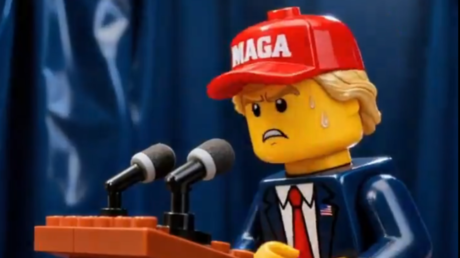
Critics love to point at Orbán’s deep ties to the MAGA movement as a strategic error. They claim that by tethering his fate to a polarizing American figure, he alienated the "moderate" center.
Look at the numbers. The Hungarian electorate doesn't care about what a suburban voter in Ohio thinks. Orbán used his relationship with Trump to position Hungary as the intellectual capital of the global New Right. He turned a landlocked country of 10 million people into a mandatory stop for every major conservative thinker on the planet.
That isn't a failure of diplomacy. That is the highest ROI on soft power we have seen in the 21st century. He traded traditional diplomatic "niceties" for a seat at the table of a movement that represents nearly half of the United States. Even if Trump isn't in the White House, the ideological infrastructure Orbán helped build remains. He isn't a pariah; he’s a pioneer of a new type of ideological networking that bypasses the State Department entirely.
Understanding the "Tisza" Factor
The rise of Péter Magyar and the Tisza party is being framed as the "Orban-Slayer." This is where the media’s wishful thinking becomes a hallucination.
Magyar is an insider. He is a product of the very system he is now criticizing. While the media paints him as a liberal savior, the reality is that he is competing for the same nationalist, conservative-leaning voters that Orbán has held for nearly two decades.
This isn't a shift toward Western liberalism. This is a family feud.
Magyar’s platform isn't "Let’s be more like Germany." It’s "Let’s be a better version of what Orbán promised." The fact that the strongest challenger to Orbán comes from his own ideological backyard proves that Orbán has already won the long-term war. He has successfully shifted the "Overton Window" in Hungary so far to the right that the only way to beat him is to act like a more charismatic version of him.
The opposition isn't winning; they are LARPing as the man they claim to hate.
The Demographics of the "Defeat"
Let’s look at the actual voting patterns. The idea that there is a massive youth-led uprising against Fidesz is a half-truth. While Budapest remains a liberal stronghold, the rural heartland remains largely untouched.
In my years analyzing regional shifts, I’ve seen this mistake made in Turkey with Erdogan and in India with Modi. The capital city—the place where the journalists live and drink coffee—is not the country.
Orbán’s "defeat" in recent local and European elections was a correction, not a collapse. Fidesz still commanded 44.8% of the vote. In what world is nearly 45% of the popular vote after 16 years in power considered a "shattering loss"? In most Western democracies, a leader with 45% support would be considered an untouchable titan.
The standard being applied to Hungary is a double standard born of desperation. The West wants him to be gone so badly that they are willing to misinterpret a slight dip in the polls as a revolution.
The Economic Reality No One Mentions
The competitor article mentions inflation. Yes, Hungary had high inflation. So did everyone else.
But look at the structural changes. Orbán’s government has overseen a massive transfer of assets into the hands of a new national bourgeoisie. You might call it cronyism. He calls it "building a national interest."
The downside of my contrarian view? It’s ugly. It involves the erosion of traditional checks and balances. But from a purely cold-blooded political survival standpoint, it is effective. By creating a class of wealthy business leaders whose fortunes are directly tied to the state’s survival, Orbán has created a human shield that doesn't just disappear because of one bad election cycle.
The "Dictator" Label is a Strategic Mistake
Calling Orbán a "strongman" or a "dictator" is the fastest way to lose the argument. He is a democratically elected leader who has mastered the art of using the law to undermine the spirit of the law.
If you treat him like a military junta, you will use the wrong tools to fight him. You’ll wait for a coup that will never come. You’ll wait for a "Maidan moment" that the Hungarian public has no appetite for.
Orbán’s power is built on a foundation of genuine popular grievance against the neoliberal consensus of the early 2000s. Until the opposition offers a vision that addresses the fear of cultural erasure and economic instability—without just parroting Brussels—they will continue to lose.
Why the "Defeat" Narrative is Dangerous
When the media tells the world Orbán is finished, it does two things:
- It makes the opposition complacent. They start measuring for drapes in the Parliament building instead of doing the hard work of organizing the provinces.
- It allows Orbán to play the underdog again.
Nothing fuels a populist leader more than being able to tell his base, "The global elites say I’m done, but YOU decide." By prematureley declaring his end, the Hindustan Times and others are handing him the very ammunition he needs for a 2026 comeback.
The Real Power Play
The real story isn't that Orbán lost some ground. The story is that he has survived 16 years of concentrated international pressure and still controls the largest political machine in Central Europe.
He has rewritten the constitution. He has reshaped the judiciary. He has consolidated the media. You don't "defeat" a system like that with one electoral setback. You’re not dealing with a politician; you’re dealing with an architect.
If you want to understand the future of Hungary, stop looking at the protest signs in Budapest. Look at the institutional capture. Look at the fact that even his most potent rival is a former Fidesz man.
Orbán hasn't been ousted. He’s just been forced to work a little harder. And a bored, unchallenged Orbán was always more dangerous than one with a clear enemy to fight. The West just gave him exactly what he needed: a reason to stay.
The "strongman" isn't packing his bags. He’s just reloading.
Stop reading the obituaries. The funeral hasn't even been scheduled.
The mistake everyone makes is thinking that a crack in the wall means the building is falling. In reality, it just means the building is settling into its foundations. Orbán is the foundation. Until someone provides a better blueprint for the Hungarian soul, he isn't going anywhere.
Go back and look at the 2022 elections. The opposition did everything right. They unified. They picked a conservative leader. They had the wind at their backs. Orbán crushed them.
This current "friction" is a ripple in a very deep pond. If you’re betting on his exit in 2026 based on 2024 headlines, you’re going to lose your shirt.
Politics isn't a sprint, and it’s not a marathon. It’s a siege. And Orbán owns the castle.
Don't mistake a change in the weather for a change in the climate.