Emmanuel Macron is heading to London to celebrate a fragile strip of embroidered linen crossing the Channel, and the media is treating it like a masterclass in modern diplomacy. Let us stop the applause right there. The narrative that shipping an eleven-century artifact to the British Museum represents a triumph of cross-border harmony is a lazy, superficial take that ignores the actual risks involved in moving a national treasure made of wool and unprimed linen.
We are told this exchange builds bridges. What it actually builds is an unnecessary point of vulnerability for an object that has survived nearly a thousand years precisely because people had the good sense to leave it alone. Meanwhile, you can explore related events here: The Sailor King Who Stood Guard Over Time.
The Conservation Myth
Every museum director whispering into the ear of a politician claims that modern climate-control technology makes transit completely safe. This is a comforting fiction. I have watched priceless works of art suffer micro-fractures and fiber degradation because institutional pride outweighed basic material science.
The Bayeux artifact is roughly seventy meters of wool embroidery stitched onto a linen foundation. Organic materials react poorly to environmental shifts, no matter how many digital sensors you pack into the shipping crate. Humidity fluctuations during transport do not care about diplomatic protocols. When you move an object of this fragility, you are trading permanent physical risk for a temporary photo opportunity. To explore the bigger picture, check out the excellent article by The New York Times.
The cultural exchange lobby loves to pretend that putting historical artifacts on planes solves international friction. It does not. It creates a high-stakes lottery where the public absorbs all the downside while politicians collect the press clippings.
The Geopolitical Smoke Screen
Why is this happening now? Because grand gestures are cheap substitutes for structural cooperation. When leaders need a distraction from domestic stagnation, they reach for heritage diplomacy. Transporting a medieval visual record of the Norman Conquest across the English Channel is designed to evoke images of unity, ignoring the irony that the piece commemorates an invasion, a military subjugation, and a radical restructuring of the British ruling class.
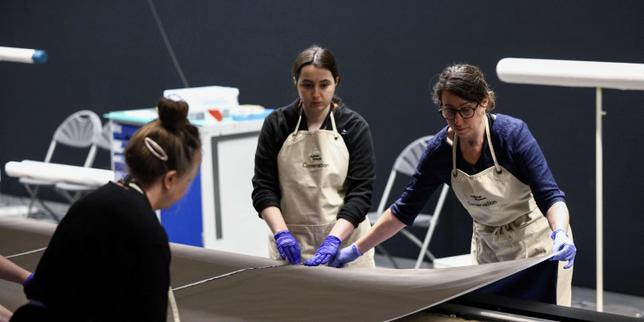
If you want to understand how modern European diplomacy works, look at the incentive structure. Macron gets a headline about European leadership. British officials get a blockbuster exhibition that guarantees a spike in ticket sales and gift shop revenue. Meanwhile, the actual custodians of the heritage—the conservators whose job is preservation rather than pageantry—are forced to smile for the cameras while crossing their fingers.
Imagine a scenario where a routine transport delay exposes the crate to unregulated humidity levels for six hours. The ensuing damage might be microscopic at first, manifesting only as accelerated fiber decay years down the line. Who takes the blame then? Nobody. The politicians will have moved on to their next ribbon-cutting ceremony.
Rethinking Heritage Access
The lazy consensus argues that physical access must be maximized at all costs, as if looking at an original through a layer of bulletproof glass while standing shoulder-to-shoulder with three hundred tourists offers some profound connection to the eleventh century.
It does not. High-resolution digital capture and permanent stationary display facilities do a better job of educating the public without treating history like a touring rock band. The obsession with physical movement stems from a nineteenth-century museum model that measures cultural value in foot traffic rather than preservation integrity.
True stewardship means sometimes saying no to heads of state who want to use your national heritage as a prop for a Wednesday afternoon summit. Until we prioritize the physical survival of these objects over the transient political utility of their transit, our cultural policy will remain an exercise in reckless exhibitionism.
Leave the linen in Normandy.