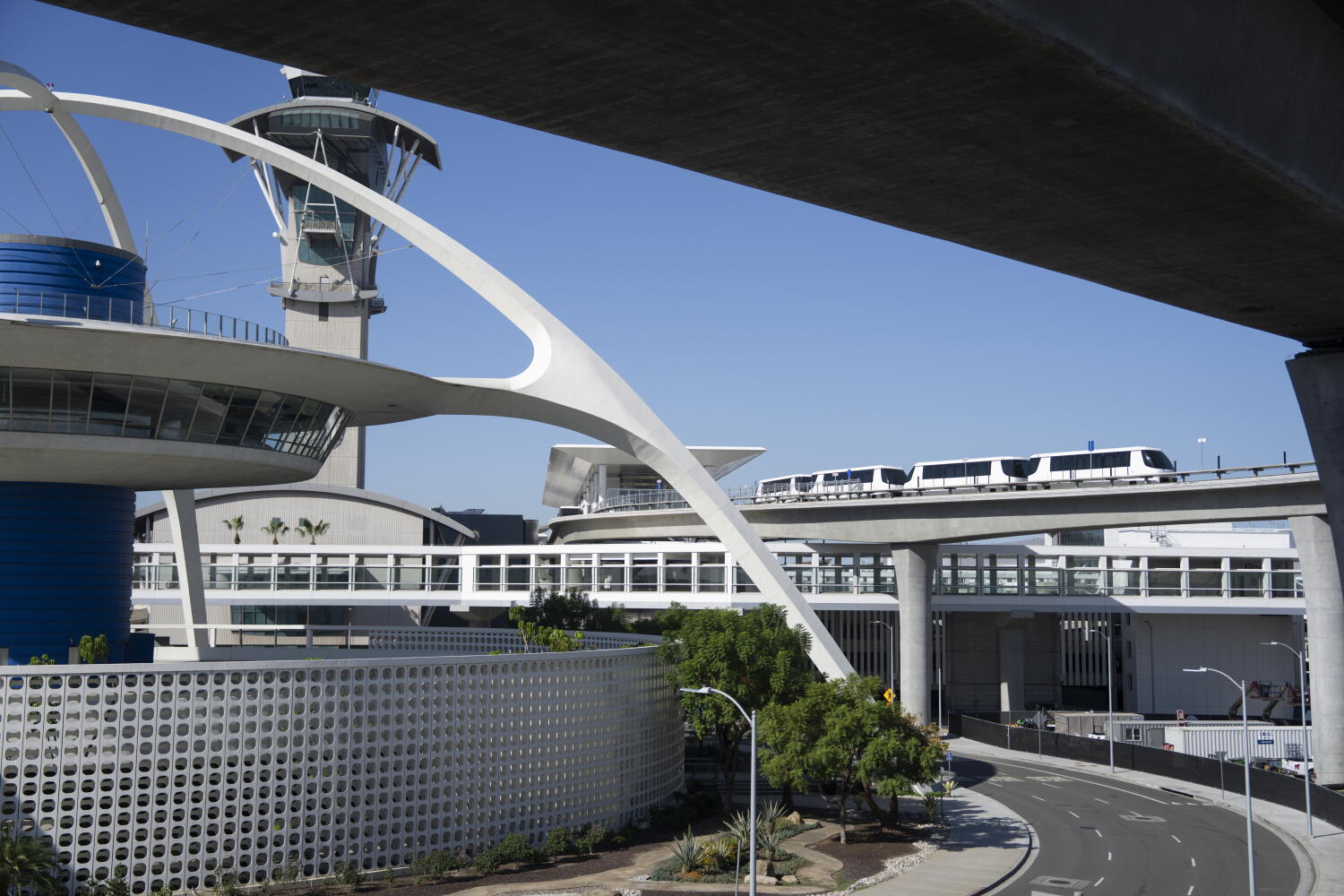
Disney put a working monorail in the air in roughly a year. Los Angeles has spent closer to eight years wrestling with its airport people mover, and passengers still haven't stepped aboard.
Look at those two timelines side by side and it's easy to see why Southern California residents get heated. Back in the late 1950s, Walt Disney saw monorail concepts in Europe, pushed design and construction forward quickly, and opened the Disneyland Monorail in June 1959 as the first daily operating monorail in the country. Fast forward to LAX. What was pitched as a relief valve for the infamous airport horseshoe has been pushed from an original 2023 debut into 2027, with total costs climbing to around $3.3 billion.
Anyone who has sat through bumper-to-bumper terminal traffic at LAX knows the stakes. A reliable elevated train linking terminals, rental cars, parking, and regional transit isn't a shiny toy. It's basic sanity. Yet the comparison between a theme park attraction built in the Eisenhower era and a modern public transit megaproject reveals less about "laziness" and way more about how rules, risk, and accountability have shifted.
Why LAX people mover delays keep piling up
The LAX people mover, branded as SkyLink, didn't stall because engineers forgot how to build tracks. It stalled because modern infrastructure comes wrapped in overlapping layers of public contracting, safety certification, legal disputes, and technical hiccups.
When you build inside a live international airport, nothing happens in a vacuum. Every section of guideway, station interface, power feed, and signaling system has to clear strict safety and reliability gates before regular riders get anywhere near it. Even after full-schedule testing began in April 2026, setbacks didn't stop—including electrical incidents in September 2026 and revised target dates sliding toward spring 2027.
Money tells the same tense story. Reports indicate the SkyLink contract started around $1.9 billion before change orders, dispute settlements, and wider program pressures pushed overall costs toward roughly $3.3 billion. Meanwhile, Los Angeles World Airports and the LINXS contractor consortium have traded blame over testing milestones and legal claims.
Here's what actually trips up projects like this in practice:
- Contractual tug-of-wars: When schedules slip, contractors and agencies fight over who caused the delay and who pays for extra work—slowing progress even further.
- Strict reliability thresholds: Automated trains must prove consistent safety and dependability under rigorous testing windows, not just roll down a track once.
- Brownfield constraints: Building around active terminals, utility corridors, and heavy traffic leaves zero room for carefree experimentation.
Disneyland built a monorail fast, but the rules were different
Walt Disney's 1959 monorail achievement deserves real credit. Inspired by European monorail ideas—including the ALWEG straddle-beam concept—Disney's team engineered and constructed a working system on a 2.25-mile beamway (later expanded) in astonishingly short order. It was a genuine engineering milestone, recognized decades later by the American Society of Mechanical Engineers.
Still, comparing a 1959 theme park attraction to a 2026 public transit line isn't apples to apples.
Walt Disney operated on private land with tight creative and executive control. He didn't have to navigate decades of modern environmental review rules, multi-agency sign-offs, public procurement lawsuits, or thousands of daily commercial airline passengers depending on every switch and signal. Even the Disneyland Monorail started as a closed-loop attraction with two trains before expanding to serve the Disneyland Hotel in 1961.
That distinction matters. Saying "Disney did it in a year" is a great wake-up call against bureaucratic drift, honestly. Just don't pretend the operating environment is the same. A theme park can iterate fast on a closed loop. A major airport transit spine has to be bulletproof on day one.
What this gap means for travelers and public works
For everyday flyers, the delay means more shuttle buses, more patience, and more guesswork around terminal drop-offs. Even if testing stays on track in late 2026, riders shouldn't count on a casual hop onto SkyLink until reliability testing wraps up and LAWA confirms a firm opening.
For taxpayers and city leaders, the lesson is sharper. Public agencies can't keep treating multi-billion-dollar overruns and moving goalposts as normal background noise. Accountability has to happen before the concrete is poured—through clearer risk allocation, realistic schedules from day one, and transparent reporting when systems fail tests.
If you're flying through LAX right now, build a little buffer into your trip. Check official Los Angeles World Airports updates rather than rumors on social media, keep an eye on shuttle and rideshare drop-off rules near the central terminal area, and give yourself extra time before tight connections. Real progress at LAX won't be measured by press releases or test runs—it'll start the day the doors open and the train actually carries passengers.