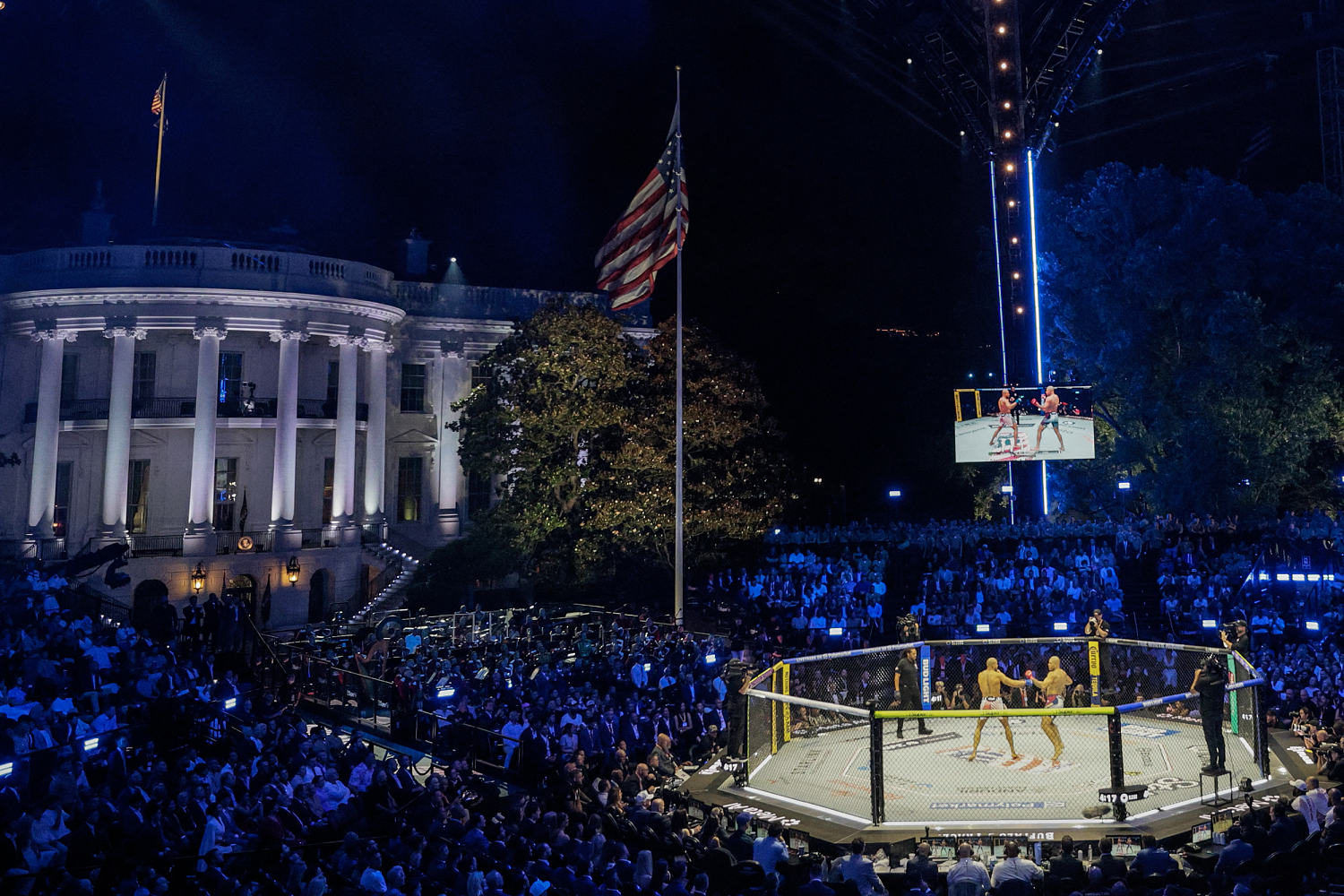
The grumbling from the ranks was entirely predictable. The moment the FBI director hopped onto social media to trumpeting a foiled plot targeting a major Ultimate Fighting Championship (UFC) event, local police departments and federal field agents immediately leaked their frustration to the press. They claimed the premature victory lap compromised ongoing counterterrorism investigations, burned sensitive informant networks, and signaled to cell members that the feds were onto them.
It is a classic grievance. It also misses the entire point of modern intelligence operations. Read more on a related topic: this related article.
The loud complaints from anonymous law enforcement sources about "operational security" ignore a brutal reality. In the current threat environment, public narrative control is not a secondary luxury. It is the primary weapon. The traditional playbook of keeping a disrupted plot quiet for six months while trying to map out every single peripheral actor is an obsolete strategy from a slower era.
The media and law enforcement consensus is that the FBI director blundered by prioritizing public relations over a neat, tied-with-a-bow prosecution. That consensus is wrong. Further journalism by NPR delves into related perspectives on this issue.
The Myth of the Infinite Intel Loop
In deep-cover counterterrorism operations, there is a dangerous institutional temptation to let an investigation run indefinitely. Agents call it "building the matrix." The goal is always to follow the breadcrumbs from the low-level radical to the mid-tier facilitator, and eventually to the foreign financier.
I have watched task forces spend years and millions of dollars chasing these digital ghosts, refusing to execute takedowns because they were waiting for a perfect, comprehensive network map. What happens? The target gets spooked by an unrelated traffic stop, flushes their devices, and disappears. Or worse, the operational timeline moves faster than the bureaucratic surveillance approvals, and a tragedy occurs because someone wanted more data.
When dealing with high-profile soft targets like a packed arena hosting a global sports event, the math changes completely. The risk profile shifts exponentially.
Traditional Intel Approach:
Monitor Target -> Map Network -> Wait for Core Plotters -> Mass Arrest (High Risk of Failure)

Modern Disruption Approach:
Identify Threat -> Loud Public Interruption -> Scatter the Network -> Re-assess (Low Risk of Casualty)
The public announcement of a foiled plot acts as a flashbang grenade. It instantly shatters the operational security of the remaining cell members. They do not double down; they burn their burner phones, cut ties with their contacts, and go to ground. From an intelligence perspective, forcing an active cell to instantly scatter into panic mode is frequently much safer than letting a high-risk operation run hot in the hopes of catching a third cousin in an overseas chat room.
Public Attribution is the New Deterrence
The old guard views a public social media post as cheap grandstanding. In reality, it serves as a critical mechanism of asymmetric deterrence.
When the state publicly declares exactly how it intercepted a plot, it sends a chilling message to adversarial networks regarding the depth of federal penetration. It is a calculated display of capability. Consider the psychological impact on an decentralized network when a federal agency essentially says, We knew about your specific venue, your specific timeline, and your specific methods before you even packed a bag.
This is not about checking a box for a congressional budget hearing. It is about actively eroding the operational confidence of amateur and professional bad actors alike. If they believe every encrypted channel is a trap and every co-conspirator is a potential federal source, the friction required to coordinate a large-scale strike becomes paralyzing.
The Operational Cost of Transparency
To be fair, this aggressive, narrative-first approach does have significant downsides. The field agents complaining to reporters are not entirely manufacturing their grievances.
- Informant Burn Rate: When a plot is neutralized publicly, human sources inside those extremist ecosystems are immediately suspect. The circle narrows, and those assets become useless for future operations.
- Evidentiary Complications: Premature exposure can result in thinner court filings. Prosecutors are forced to rely on conspiracy charges rather than catching suspects with physical contraband or weapons at a staging site.
- Inter-agency Friction: Local police departments, who bear the immediate physical security burden of these venues, are left managing the public anxiety generated by the announcement without having full access to the underlying classification levels of the file.
These are real structural costs. But they are acceptable trade-offs when weighed against the catastrophic fallout of a kinetic failure at a massive public gathering. Managing a messy prosecution or replacing a burned source is standard federal business. Managing the aftermath of a successful mass-casualty event on live television is a total failure of mission.
Dismantling the Consensus
The public frequently asks: Why can't law enforcement just quietly arrest the suspects and tell us after the trial?
The question itself assumes a justice system that operates in a vacuum. A quiet arrest allows rumors, misinformation, and alternative narratives to fill the void, particularly in hyper-polarized online spaces. By seizing the initiative and dictating the exact facts of the disruption immediately, the agency prevents bad actors from turning a standard arrest into a radicalizing propaganda victory.
Stop looking at federal law enforcement announcements through the lens of traditional policing. This is not a local burglary investigation where you wait to find the pawn shop. This is a high-stakes information war where public attribution is just as tactical as a tactical team breaching a door. The FBI director did not ruin a case; he ended a threat.