Justice moves slowly. Sometimes it takes years. The August 2021 bombing at Hamid Karzai International Airport left a permanent scar on global memory. Thirteen American service members died. Roughly one hundred and seventy Afghan civilians lost their lives in the chaos. Years later, federal courts in the United States handed down a twenty-year prison sentence to an Afghan national tied to ISIS support networks.
Most people missed the deeper implications of this ruling. They saw a headline about a prison term and scrolled away. That is a mistake. This case reveals how international counterterrorism operates long after the cameras leave the disaster zone. Recently making waves recently: The Mapmakers of Rabat and Tel Aviv.
The Reality Behind the Kabul Airport Investigation
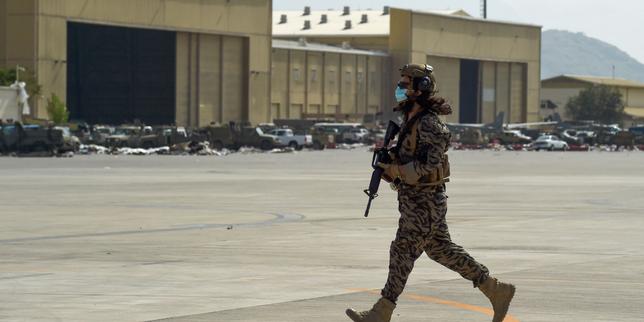
The chaos of the August 2021 evacuation is hard to overstate. Tens of thousands of people jammed the gates. Desperation ruled every single hour. Amid that human tide, Islamic State Khorasan, known widely as ISIS-K, struck with brutal efficiency. A single suicide bomber detonated an explosive device at Abbey Gate.
Investigators faced an impossible puzzle. Crime scenes in active war zones rarely remain pristine. Witnesses scatter across continents. Digital evidence gets wiped or buried. Yet federal law enforcement and intelligence agencies spent years piecing together the logistical supply chain. You cannot execute an attack of that magnitude without local support, money movement, and operational planning. Additional information on this are explored by Associated Press.
The sentencing of an ISIS supporter to twenty years in prison proves a crucial point. Modern counterterrorism does not stop at the battlefield. It tracks financial flows, encrypted communications, and network affiliations across international borders.
Inside the US Federal Court System and Terrorism Trials
Prosecuting international terrorism on American soil is a monumental legal challenge. Defense attorneys scrutinize every piece of classified intelligence. Courts must balance national security secrets with constitutional rights.
A twenty-year sentence is severe. It reflects the gravity of mass casualty terrorism. Federal prosecutors rely on strict evidentiary standards. They must prove direct material support to a designated foreign terrorist organization beyond a reasonable doubt.
Many critics argue these trials take too long. They want immediate military retribution. But legal prosecution offers something drone strikes never can. It creates an immutable public record. It exposes the financial backers and logistical fixers who think they are safe hiding behind ideological rhetoric.
Why ISIS-K Remains a Persistent Global Threat
Too many observers assumed the threat evaporated after the Western military exit from Afghanistan. That complacency is dangerous. ISIS-K expanded its operational footprint while regional stability deteriorated.
The group targets local minorities, international embassies, and regional infrastructure. They recruit globally using encrypted messaging apps. Their ambition extends far beyond South Asia.
When courts sentence logistics providers and facilitators, they disrupt the pipeline. Logistics win or lose wars. Take away the safe houses, the fake identification documents, and the money transfer networks, and operations stall.
The Broader Geopolitical Fallout
Accountability is messy. Governments must cooperate across vast political divides. Intelligence sharing between nations that barely tolerate each other becomes mandatory when dealing with transnational extremists.
The conviction sends a clear signal to anyone thinking about assisting violent extremist networks. Distance does not grant immunity. Digital footprints persist. Years down the line, investigators will knock on doors.
We need to stop viewing the 2021 withdrawal as a closed chapter. The legal fallout, the security adjustments, and the human cost continue to shape foreign policy today. Pay attention to the courtrooms, not just the breaking news tickers. That is where real accountability actually happens.