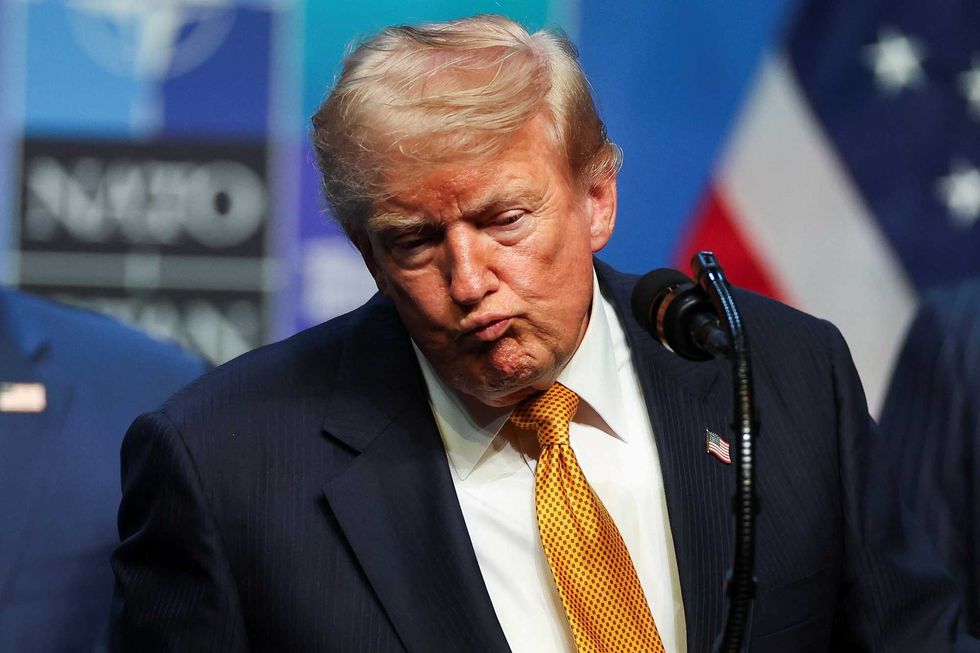
There is a specific kind of silence that settles over a campaign headquarters when the arithmetic turns cold. It is not the dramatic quiet of a courtroom awaiting a verdict or the sudden hush of a theater before the curtain rises. It is the dead, heavy air of a room where the oxygen is slowly being sucked out, leaving everyone to stare at spreadsheets they no longer know how to read.
I have stood in those rooms before, years ago, watching a different candidate realize that the runway had vanished beneath the wheels. You see it first in the shoulders. They drop an inch. Then you hear it in the careful avoidance of eye contact. No one wants to look at the strategist who promised a breakthrough that never came, or the donor who wired five million dollars for a Hail Mary that landed in the fifth row of the bleachers.
Right now, Donald Trump is living inside that exact room.
To look at the public rallies, you would never know it. The music still thumps through the speakers, heavy bass vibrating the floorboards of airplane hangars across the Midwest. The hats are still red. The crowds still roar. But backstage, away from the television cameras and the warm glow of the teleprompter, the reality is starker than any poll. As one of his own senior advisors quietly conceded behind closed doors this week, there are very few options left. They are, in the advisor's blunt vernacular, just trying to hang on.
Consider what happens next: the legal walls, once theoretical hazards discussed by cable news pundits on slow afternoons, have hardened into actual concrete. Every motion filed by a federal prosecutor is another brick in a corridor that grows narrower by the month. When you strip away the rallies, the fundraising texts pinging cell phones across the country, and the defiant posts on social media, the core strategy has been reduced to a desperate exercise in buying time.
Time is a terrible asset when you are losing it.
I remember the smell of cold coffee and stale takeout grease from a campaign that had run out of road. It smells like desperation, though no one ever uses that word out loud. Instead, they use euphemisms. Pivoting. Recalibrating. Focusing on the core message. But the message stopped changing months ago because the narrative is no longer written by the candidate. It is written by the calendar.
The unique tragedy of political momentum is its irreversibility. When a campaign is ascending, every mistake is a minor turbulence; when it is descending, a minor wind becomes a hurricane. Trump has spent decades rewriting the rules of American political gravity, bouncing from scandal to indictment to primary landslide as if immune to the laws that govern ordinary mortals. For a long time, the system bent to his will. The institutions creaked, but they did not snap.
Now, though, the machinery of accountability has stopped negotiating.
Think of it like a chess grandmaster who realizes, twenty moves too late, that his king is trapped on the edge of the board. He can still knock over a pawn. He can still stall, make theatrical gestures, knock his opponent off balance with a sudden, erratic move. But the pieces are gone. The defense has collapsed. Every available square is covered.
When advisors start leaking phrases like just trying to hang on, the internal firewall has already burned down. It is an admission that the grand offensive strategy—the sweeping return to power, the total vindication, the complete dismantling of legal jeopardy—has been scaled back to simple survival.
Survival is a low bar for a man who once defined himself by total victory.
We tend to forget that beneath the cult of personality, modern political campaigns are grueling logistical nightmares driven by human exhaustion. The people closest to the center of power are often the most miserable. They sleep on leather couches in back offices. They scroll through social media at three in the morning, watching the numbers tick down, waiting for the next subpoena to drop like a guillotine blade. They are tired. Not just physically, but existentially. They know that if the house falls, they are the ones buried in the basement.
And yet, the show must go on. The music plays. The crowd cheers for the ghost of an invincible movement, unaware that the men pulling the strings are checking their watches and wondering how long the money will hold out.
The corridor narrows. The air grows thin.
There are no magic words left to say. There is only the long walk down the hall, the sound of heavy boots on cheap carpet, and the heavy, undeniable weight of a door closing from the outside.


