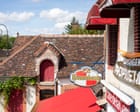
The floorboards of the Café de la Poste do not merely creak; they confess.
They remember the damp coats of winter 1982, the spilled red wine of harvest celebrations long since turned to dust, and the heavy, rubber-soled trudge of farmers who came inside simply to let their breath turn back into air. For generations, this room in a village tucked deep into the folds of the Creuse department was not a commercial enterprise. It was an organ of the state, a municipal lung. If you did not walk through these swing doors by ten in the morning, someone drove up your lane to check if you were still breathing.
Today, the coffee machine hisses an empty promise.
Across rural France, the village bistro is dying. Not with the dramatic crash of a factory gate locking for the last time, but with the quiet, terminal drip of a leaky tap. Every year, thousands of these small-town sanctuaries shutter their doors for good. The reasons are a cold ledger of demographic arithmetic: the young leave for the gravitational pull of Lyon and Paris, the elders pass on, and the hypermarkets on the ring roads swallow up the weekly provisions.
To look at a spreadsheet of disappearing rural commerce is to see numbers declining by a predictable percentage. To stand in the empty square of a French village after the bistro has closed is to witness the unravelling of society itself.
Consider what happens to a community when the last public hearth goes cold.
When the bistro dies, the post office is usually already gone, the bakery opens only three mornings a week, and the schoolhouse was converted into a holiday home a decade ago. The bistro was the last line of defense. It was where the plumber traded a fixed sink for a bottle of cider, where the mayor heard about a leaking roof before it became a crisis, and where a lonely widower could sit for two hours over a single demitasse just to hear the radio play over the bar.
Without it, isolation settles over the stone houses like an autumn fog. People do not die of old age in these places so much as they die of silence.
The French state has begun to realize that losing these village cafes is akin to losing the village itself. Initiatives have flickered to life—subsidies, municipal buyouts, cooperative models where villagers chip in fifty euros apiece to keep the lights on. In some communes, the mayor has taken to operating the draught beer taps behind the counter after finishing morning paperwork at the town hall.
Yet, a business model propped up purely by civic nostalgia is a fragile thing. You cannot pay a commercial rent on duty and affection alone.
Walk into one of the surviving success stories, however, and the air changes. Take the bistro in a tiny hamlet near Limoges, rescued three years ago by a thirty-something couple who traded graphic design in Bordeaux for greasy aprons and endless hours of scrubbing zinc.
They did not try to reinvent the wheel. They did not install craft IPAs or avocado toast. They kept the zinc bar, kept the sticky tiles near the entrance, and kept the menu down to a single daily plat du jour that arrives steaming in heavy earthenware. But they added a corner for a book swap, organized monthly accordion nights, and turned the terrace into a remote-working hub for freelancers who escaped the city during the lockdowns and never went back.
The secret was never about selling pastis or espresso. It was about curation. The modern rural bistro must be a stage for accidental encounters.
In a world engineered to keep us separated by algorithmic walls, the physical proximity of a village cafe is radical. Here, the retired communist schoolteacher argues politics with the newly arrived Parisian IT consultant over a plate of charcuterie. Here, the teenager learns how to look an adult in the eye and order a soda without staring at a screen.
The stakes are invisible until they are gone. When a bistro vanishes, the village stops talking to itself. Trust curdles into suspicion. The houses become dormitories for ghosts.
The sun dips below the tile roofs of the Creuse valley, casting long, bruised shadows across the gravel square. Inside the Café de la Poste, the lights are on. A handful of locals lean against the wooden counter, their voices rising in an unscripted rhythm that has echoed across these hills for centuries. Outside, the dark closes in, but for tonight, the heart is still beating.