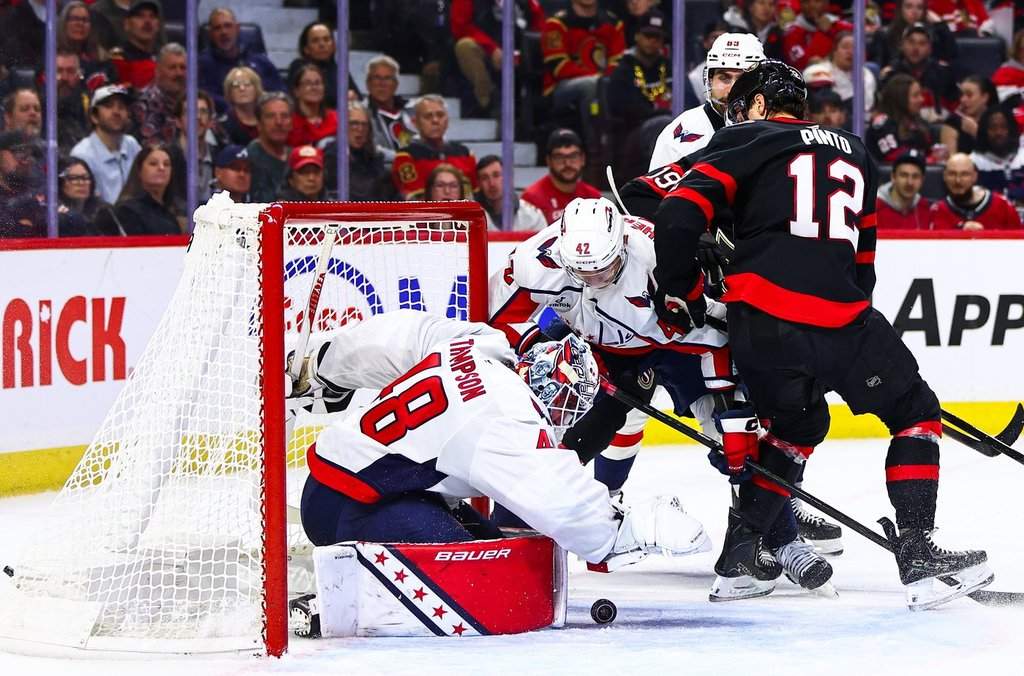
Lane Hutson settled a tight, physical Eastern Conference battle in overtime to give the Washington Capitals a 3-2 win over the Ottawa Senators, turning a deadlocked regulation into two points through elite spatial manipulation. While standard box scores reduce the game to a sudden-death finish, the underlying mechanics of how Washington outlasted Ottawa reveal a profound shift in how modern NHL defenses break open under three-on-three pressure.
Most casual observers look at an overtime winner and see a lucky bounce or a momentary defensive lapse. Spend enough decades covering the National Hockey League from press boxes across North America, and you start recognizing that three-on-three sudden death is rarely an accident. It is a stress test of roster construction, edge work, and cognitive processing speed under extreme fatigue.
The Structural Trap of Three-on-Three Hockey
When the NHL introduced three-on-three overtime, the stated goal was to eliminate shootouts and inject immediate entertainment into the end of tied games. Coaches initially treated the five-minute extra period like an extended power play or a chaotic pond-hockey scrimmage. That era is long dead.
Modern overtime has evolved into a rigid, possession-obsessed chess match. Teams routinely circle back into their own defensive zone, reset their formations, and wait for a single micro-mistake from the opposition before attacking across the offensive blue line.
The Washington Capitals and Ottawa Senators arrived at the extra frame locked at 2-2 after sixty minutes of heavy, contested hockey. In regulation, five skaters per side choke off the middle of the ice. Defensemen play tight gaps, wingers collapse low to support the slot, and neutral-zone turnovers are quickly smothered by backchecking centers.
Remove two skaters from each team, and the geometry of the 200-by-85-foot rink changes entirely. Passing lanes widen exponentially. Suddenly, a single missed assignment or a slightly misjudged angle by a defender leaves a massive pocket of exposed ice directly in front of the goaltender.
Why Traditional Defenders Struggle in Open Ice
For generations, general managers prioritized size, reach, and physical punishment on the blue line. A six-foot-four defenseman with a heavy stick could erase an opposing forward along the half-wall in five-on-five play.
In overtime, those exact physical traits can become liabilities. Larger defenders often require an extra stride to pivot from backward skating to forward acceleration. Against a dynamic puck-mover who uses deception and lateral agility, that half-second delay in hip rotation is fatal.
Consider a hypothetical scenario common in modern overtime. A defenseman carries the puck above the circles, draws two defenders toward the strong side, and delays his pass by a fraction of a second. The defending winger bites on the shoulder fake, opening a seam across the royal road—the imaginary line connecting the two faceoff dots. By the time the defender recovers his balance, the puck is already on the tape of an open shooter at the back post.
Deconstructing the Capitals Versus Senators Deadlock
To understand why Hutson’s overtime strike mattered so much, you have to look at the grind that preceded it. Games between Washington and Ottawa rarely feature loose, uncontested skating lanes through the neutral zone.
Ottawa builds its identity around aggressive forechecking pressure and high-tempo transition offense. When the Senators are clicking, their young core forces opposing defensemen into hurried rim passes and turnover-prone clearing attempts. Against a team like Washington, which relies on structured zone exits and veteran positional awareness, the matchup quickly turns into a battle of wills.
Two goals apiece through sixty minutes tells the story of two goaltenders holding their ground while both defensive units systematically erased second-chance opportunities. Neither club found a consistent way to penetrate the inner slot at even strength. Shots came largely from the perimeter, screened through traffic, or off quick rush attempts that lacked sustained zone time.
When the horn sounded to end the third period, both benches knew the margin for error had vanished completely.
The Psychology of the Sudden-Death Shift
Coaches manage the final two minutes of regulation with conservative line deployments, often rolling out their most trusted defensive pairs to guarantee at least one point in the standings. The moment overtime begins, the mandate flips from preservation to calculated aggression.
Fatigue plays an invisible role here. Players logging heavy minutes in a 2-2 game enter the extra frame with lactic acid building in their legs and grip strength fading on their sticks. Mental processing slows down right when the ice opens up.
- Line changes become high-wire acts. A poorly timed skate to the bench during a neutral-zone regroup hands the opponent an instant three-on-two odd-man rush.
- Puck management dictates survival. Firing a low-percentage shot from the outer boards that misses the net often ricochets around the glass and launches a counterattack the other way.
- Communication breaks down under noise. With crowds standing and roaring on every entry, defenders frequently lose track of weak-side trailers sneaking down from the point.
How Hutson Manipulated the Final Sequence
Great offensive defensemen do not beat defenders with raw top-end straight-line speed alone. They beat them with deception, edge control, and tempo changes.
Watch how elite puck-movers operate at the offensive blue line in overtime. Instead of telegraphing their intentions with wide stickhandles, they keep their chest square to the middle of the ice, presenting multiple threats simultaneously. The defender is forced to guess whether the puck carrier will shoot through a screen, slide a pass to the flank, or cut sharply back against the grain.
Hutson’s game thrives in that exact gray area. By using subtle head fakes and rapid weight shifts on his skates, he forces defenders to lock their ankles in anticipation of a move that never comes. The moment an opposing forward or defenseman commits their weight in one direction, the lane opens in the other.
In the decisive overtime sequence against Ottawa, that spatial manipulation broke the Senators' defensive shell. Once the coverage fractured, Washington capitalized immediately, burying the third goal to seal the 3-2 victory before Ottawa could reset its structure.
The Illusion of Defensive Coverage
Many hockey analysts point to blown coverage on overtime goals, blaming a specific forward for failing to track his man. That critique often misses the root cause.
Coverage does not collapse in a vacuum. It collapses because an offensive player creates an overload that forces defenders into impossible binary choices. If a defender stays glued to the weak-side shooter, the puck carrier walks uninterrupted into the high slot for a clean look at the top corner. If the defender steps up to challenge the puck carrier, the passing lane opens for a tap-in.
When a defenseman possesses the vision to read which choice the defender makes in real time, the defensive scheme is effectively solved before the shot is even released.
What Two Points Mean in the Eastern Conference Grind
A single overtime victory in November or mid-season might look minor on a sprawling 82-game calendar, yet veteran executives treat these extra-time points like currency in a tight market.
The modern NHL standings are engineered for parity. Thanks to the loser point awarded for reaching overtime, teams rarely separate themselves cleanly in the wild-card race. Every year, playoff spots in the Eastern Conference come down to tiebreakers, regulation wins, and the razor-thin margin of points salvaged in three-on-three play.
For the Capitals, banking two points against a hungry division-adjacent rival like Ottawa accomplishes two distinct objectives. First, it rewards sixty minutes of disciplined defensive structure with the maximum possible return. Second, it denies a direct competitor the chance to climb the standings on their ice.
For the Senators, walking away with a single point after pushing Washington to the brink feels bittersweet. Losing in overtime exposes the razor-thin line between executing a game plan and watching a hard-earned road effort evaporate on a single rush.
The Shifting Blueprint for Modern NHL Blue Lines
Look across the league today and compare the archetype of a top-pair defenseman to the roster builds of fifteen years ago. The transformation is undeniable.
Front offices still value size, penalty-killing grit, and net-front clearing ability. Nobody wins four rounds of Stanley Cup playoff hockey without defenders who can absorb punishing forechecks in the corners. However, simply surviving in your own end is no longer enough to justify top-four ice time.
Teams win regular-season standings battles by generating offense from the back end. When your defensemen can retrieve pucks under pressure, evade the first wave of the forecheck with a single pivot, and join the rush as a legitimate fourth attacker, opposing defensive structures stretch to their breaking point.
Balancing Risk and Reward on the Back End
Of course, deploying offensive-minded defensemen in high-leverage moments carries inherent risk. Aggression at the offensive blue line can quickly turn into an odd-man break going back toward your own crease if a pass gets picked off at the shin pads.
Coaches walk a tightrope every night. Pull the reins too tight, and your team becomes predictable, dumping pucks into corners and praying for greasy deflections. Give creative players too much freedom without structural guardrails, and your goaltender faces a steady diet of breakaways and two-on-ones.
The sweet spot lies in calculated support. When a defenseman activates into the offensive zone or holds the puck deep in overtime, a forward must instinctively rotate high to cover the point. That seamless exchange of responsibilities allows dynamic players to take risks without leaving the back door unguarded.
Why Ottawa’s Forecheck Couldn’t Seal the Deal
Ottawa’s frustration in a 3-2 overtime loss stems directly from how close their blueprint came to working. Against most opponents, holding a team to two goals in regulation while generating consistent zone pressure is a winning formula.
The Senators clogged the neutral zone effectively for long stretches, forcing Washington to work for every inch of ice through the middle. Their penalty kill held firm when tested, and their goaltending gave them every opportunity to steal the win on the road.
Yet in hockey, controlling territory means very little if you cannot close out the final possession. Once the game shifted to three-on-three, Ottawa lost control of the puck-possession battle. Without the puck on their sticks, their aggressive forechecking identity became irrelevant. You cannot forecheck a team that refuses to give up possession in open ice.
The Lingering Lesson From Washington’s Win
Strip away the highlight-reel finish and the roar of the home crowd, and the Capitals' 3-2 victory over the Senators stands as a textbook study in modern NHL game management.
Washington did not dominate the shot clock from start to finish, nor did they overwhelm Ottawa with a barrage of power-play goals. Instead, they absorbed pressure, protected the middle of the ice for sixty minutes, and trusted their skill players to exploit the open geometry of overtime.
When Hutson found his opening in the extra frame and buried the winner, he validated the exact principle every modern front office is chasing—that in a league defined by parity and razor-thin margins, a single defenseman with the vision to manipulate space is the ultimate tiebreaker.


