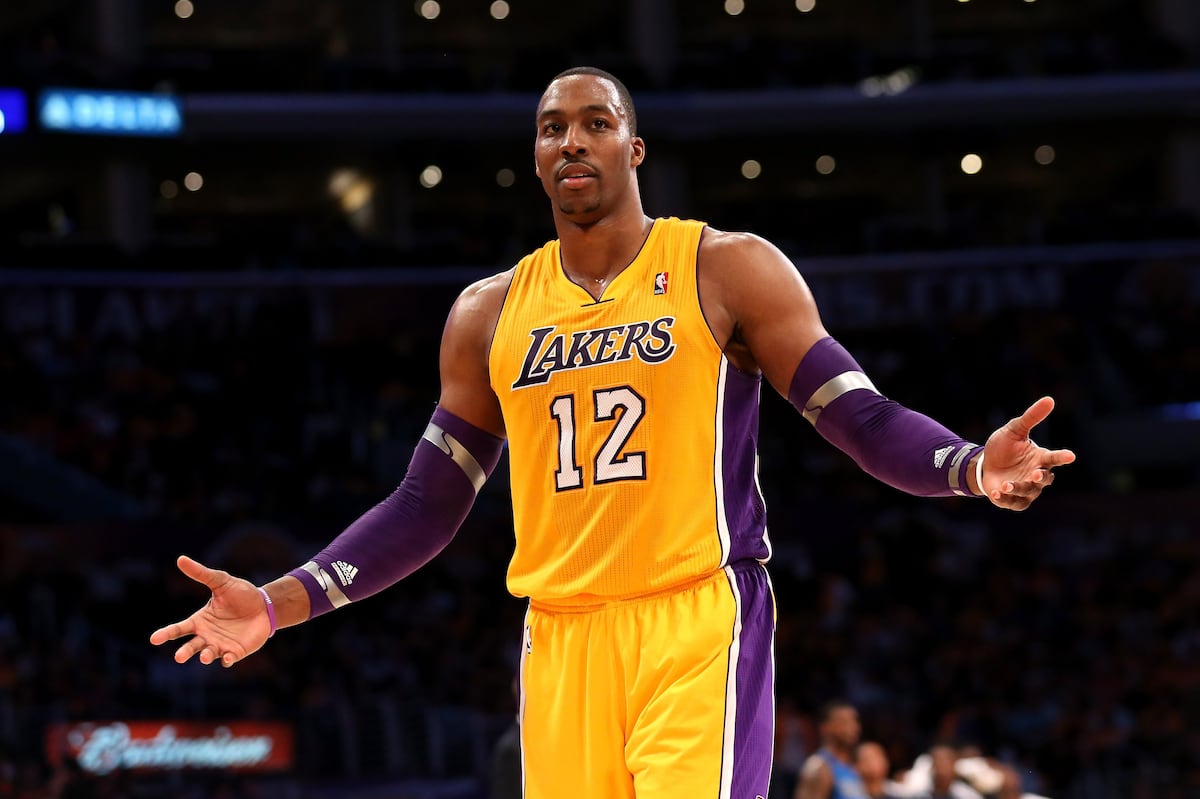
The Los Angeles Lakers know exactly what people say about them when they face the Oklahoma City Thunder. They hear the chatter about age versus youth. They see the highlights of Shai Gilgeous-Alexander carving up defenses. They're well aware that OKC sits near the top of the Western Conference while Los Angeles fights to stay out of the play-in tournament mud. But if you think LeBron James or Anthony Davis enters the arena feeling like underdogs, you haven't been paying attention to how these two rosters actually match up on the hardwood.
Respect is there. Fear isn't. The Thunder earned that respect by transforming from a "spooky" young team into a legitimate powerhouse with a terrifying point differential and a defense that swarms like a hive of bees. They're fast. They're disciplined. They've got a coach in Mark Daigneault who might be the smartest tactical mind in the league right now. Yet, the Lakers locker room remains remarkably calm whenever this matchup circles on the calendar. It's not arrogance. It's physics.
Size still matters in the postseason
Basketball has changed, but the rim is still ten feet high. The Thunder play a style of "positionless" basketball that relies on speed and shooting from every spot. It's beautiful to watch until they run into a team that can simply move them out of the way. Anthony Davis is the primary reason the Lakers don't feel intimidated. When AD is healthy and engaged, he's a structural nightmare for a team as lean as Oklahoma City.
Chet Holmgren is a phenom. Let's be clear about that. His timing on blocks and his ability to stretch the floor changed the trajectory of the OKC franchise overnight. But he’s still giving up significant weight to Davis and LeBron. The Lakers' strategy is blunt force trauma. They want to get into the paint, draw fouls, and make the Thunder's interior defenders feel every pound of that weight difference over 48 minutes.
In their head-to-head meetings, you can see the Lakers' eyes light up when they get into a half-court set. They aren't trying to outrun the Thunder. They know they'll lose a track meet. Instead, they turn the game into a wrestling match. By slowing the pace and forcing OKC to defend the post every single possession, the Lakers take the wind out of the Thunder's transition game. If you can't get stops and rebounds, you can't run. If you can't run, you're playing the Lakers' game.
The experience gap is a psychological weapon
Experience is a word that gets thrown around until it sounds like a cliché. It’s not a cliché when the shot clock is at four seconds in a tie game in the fourth quarter. The Lakers have players who have seen every defensive coverage invented in the last twenty years. LeBron James has played more playoff minutes than the entire Thunder starting lineup combined. That matters.
The Thunder play with a frantic, high-energy joy. That's great for November. It's often enough for March. But the Lakers bank on the fact that high-pressure environments cause young teams to tighten up. They wait for the one or two mistakes—the rushed triple, the missed rotation—and they pounce. They've done it to Memphis. They've done it to Golden State. They truly believe they can do it to OKC.
Austin Reaves and D'Angelo Russell don't lack confidence either. They've played on the biggest stages and survived. While the Thunder are still learning what it feels like to have a target on their backs, the Lakers have lived with that target for decades. They don't get rattled when SGA goes on a 10-0 run by himself. They just stick to the script.
Solving the Shai Gilgeous-Alexander problem
You don't stop Shai. You just hope to make his life miserable. He's arguably the most difficult cover in the league because his rhythm is so unorthodox. He plays at a glacial pace then explodes. He's a master of the mid-range in an era that tried to kill it. The Lakers' lack of intimidation stems from their defensive versatility when they actually try.
Jarred Vanderbilt, when healthy, is the "Swiss Army Knife" they throw at stars. Without him, they rely on a committee of long-armed defenders to force Shai into the one thing he hates: a crowded paint. The Lakers have the luxury of having a Defensive Player of the Year candidate lurking behind the perimeter defenders. Knowing Anthony Davis is waiting at the rim allows the Lakers' guards to play more aggressively on the perimeter.
They'll give up the contested two-pointer. They'll let Shai get his 30 points. What they won't do is let the "others" get hot. This is a veteran gambit. They bet that if they can turn the game into a solo act for the Thunder's superstar, the rest of the young roster will lose their rhythm. It's a risky bet, but it's one the Lakers are comfortable making every single time.
Why the regular season standings are lying to you
The standings say there's a gulf between these two teams. The eye test in a playoff-style game says something else. The Lakers are built for a seven-game series where scouting reports are 100 pages long and every weakness is exposed. The Thunder are built to win 55 games by outworking teams on Tuesday nights in January.
Look at the physicality. In the playoffs, whistles often get swallowed. A more physical game favors the older, heavier team. The Lakers' roster is constructed of players who thrive when the game gets ugly. Rui Hachimura, LeBron, AD—these are big men who can bully smaller wings. If the officials let them play, the Lakers' "intimidation" factor isn't about mean faces. It's about bruised ribs.
They also know the Thunder's depth is a double-edged sword. Having ten guys who can play is great for the regular season grind. In the playoffs, rotations shorten to seven or eight. The Lakers believe their top three players are better than the Thunder's top three in a vacuum. That's where the "insistence" on not being intimidated comes from. They look at the matchups and see advantages where the spreadsheet sees a deficit.
Real talk on the Thunder's evolution
It's important to admit the Thunder are better than they were a year ago. They aren't just a "young team" anymore. They're a disciplined execution machine. Jalen Williams has emerged as a terrifying second option who can create his own shot at will. The Lakers' staff isn't overlooking that. They know that if they play a lazy game, OKC will embarrass them.
But the Lakers' defiance comes from a place of "been there, done that." They've seen the "next big thing" come and go. They remember when the Suns were the next dynasty. They remember when the Jazz were supposed to take over the West. For the Lakers, the Thunder are just the latest hurdle in a long history of hurdles. They don't hate them. They don't look down on them. They just don't think the Thunder are ready to knock them off the mountain when the stakes are at their highest.
If you're watching the Lakers, don't look at the record. Look at the body language. They walk onto the floor against OKC like they own the place. Until the Thunder actually beat them in a high-stakes series, that dynamic won't change. The Lakers are betting on their pedigree. The Thunder are betting on their future. Usually, the future wins eventually, but the Lakers are convinced that "eventually" isn't 2026.
Keep an eye on the rebounding totals in the next matchup. If the Lakers win the boards by double digits, the game is over regardless of how well Shai plays. Watch how the Lakers use LeBron as a "free safety" on defense to disrupt passing lanes. If you want to see if the Lakers are actually worried, watch their transition defense. If they're sprinting back, they're taking it seriously. If they're jogging, they think they've already won the psychological battle.
The next time these two meet, ignore the hype about the "changing of the guard." Watch the post play. Watch the foul count. The Lakers aren't intimidated because they think they're the bigger, stronger, and more experienced team. In the NBA, that's usually enough to keep your confidence high.