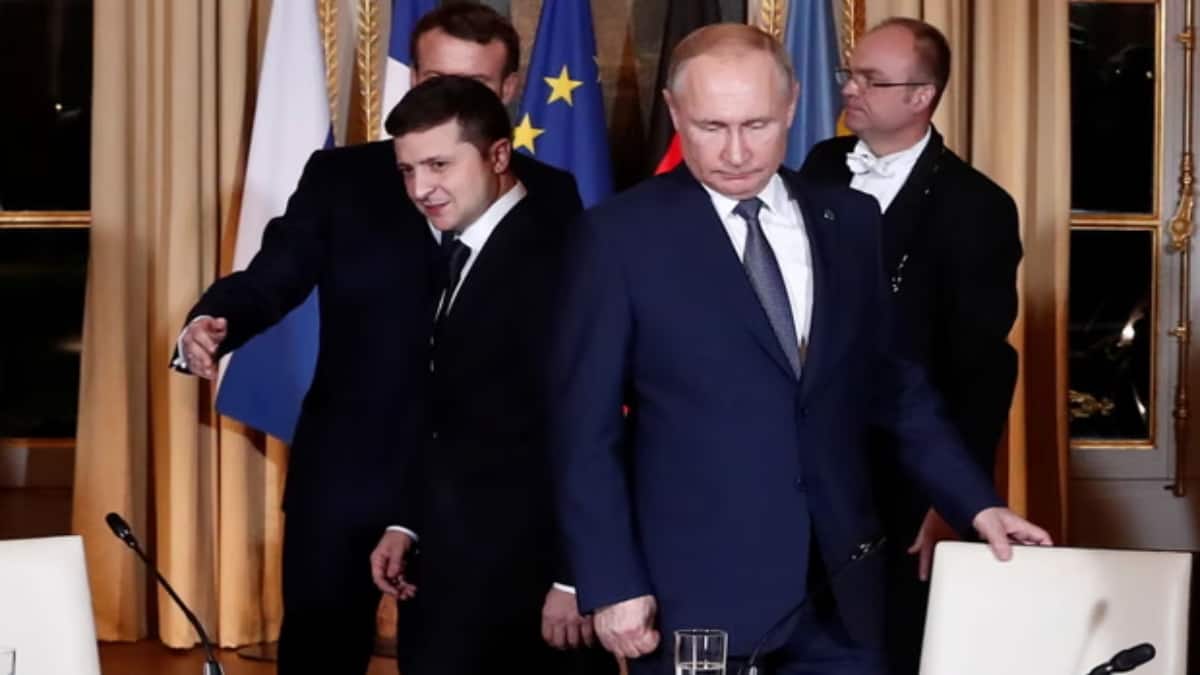
Vladimir Putin’s inner circle isn't just fighting a war in Ukraine. They’re fighting a war of words designed to convince the Russian public that the entire Western world is bent on their physical and systemic annihilation. It’s a classic move from the Kremlin playbook. Take a geopolitical conflict and inflate it into an existential struggle for survival. Recently, top Russian officials have ramped up this rhetoric, claiming that "Ukraine’s partners" are using the conflict as a proxy to effectively "destroy" Russia as a sovereign nation.
This isn't just spicy talk for a Sunday talk show. It's a calculated diplomatic shield. By framing the West’s military and financial support for Ukraine as a direct "clash between the West and Russia," Moscow tries to shift the blame for the war’s mounting costs from its own decision to invade to a supposed global conspiracy. You’ve likely heard this before, but the intensity is hitting a new peak in 2026.
Why the Kremlin Claims the West Wants to Destroy Russia
When Dmitry Peskov or Sergei Lavrov speaks, they aren't just talking to the UN. They're talking to a domestic audience that's feeling the squeeze of a prolonged conflict. The narrative is simple. Russia didn't start a war; Russia is defending itself against a Western world that wants to carve it up.
This "destruction" narrative serves several purposes. First, it justifies any level of military escalation. If you believe your country’s very existence is at stake, you’ll tolerate more economic pain and more casualties. Second, it attempts to peel away international support for Ukraine by painting Western aid as an act of aggression rather than a response to an invasion.
Russian state media has been working overtime to push this. They point to everything from long-range missile supplies to economic sanctions as proof of a "total war" being waged by Washington and Brussels. They argue that the goal isn't a free Ukraine, but a broken, subservient Russia.
The Reality of the Proxy War Label
Calling the conflict a "proxy war" is the Kremlin’s favorite way to delegitimize Ukrainian agency. If Ukraine is just a tool of the West, then Russia doesn't have to acknowledge Ukraine as a sovereign nation with its own will. It’s a convenient lie. It turns a complex struggle for national identity into a simple board game between two superpowers.
The West, for its part, has been careful—sometimes to a fault—to frame its support as strictly defensive. Think about the debates over Leopard tanks or F-16s. Every shipment was preceded by months of hand-wringing in Berlin and Washington about "escalation." If the West truly wanted to destroy Russia, the response would look very different. Instead, what we see is a slow, methodical attempt to help Ukraine hold its lines and reclaim territory.
Economic Warfare and the Narrative of Sabotage
Sanctions are often cited by the Kremlin as the ultimate evidence of this "destruction" plot. Russian officials argue that decoupling Russia from the SWIFT system and freezing its central bank assets are "acts of economic aggression." To them, it’s not a consequence of invading a neighbor. It’s a pre-planned hit job.
But look at the data. Despite the sanctions, the Russian economy hasn't collapsed. It’s pivoted to China, India, and the Global South. The Kremlin’s claim that the West is successfully "destroying" them is actually undermined by their own boasts about "resilience." You can’t have it both ways. Either you’re a victim of a devastating Western plot, or you’re an unstoppable economic powerhouse that doesn't need the West. The Kremlin picks whichever version suits the 6 o'clock news that day.
How the Clash Between West and Russia Reaches a Boiling Point
The rhetoric about a direct clash is getting more dangerous because it leaves no room for off-ramps. When the Kremlin tells its people that "Ukraine’s partners" want to destroy them, they’re burning the bridges of diplomacy. If the enemy’s goal is your total annihilation, you don't negotiate. You fight until the end.
This language is a trap for the Russian people. It locks them into a cycle of perpetual conflict. It also puts Western leaders in a tight spot. Every time a new aid package is announced, Moscow uses it as "proof" of its claims. It’s a feedback loop of hostility that makes a peaceful resolution seem like a distant dream.
Fact Checking the Destructive Claims
Let’s be real about what’s actually happening.
- The West’s Goal: Multiple NATO leaders, including those in the U.S. and UK, have explicitly stated that their goal is a sovereign Ukraine, not a dismantled Russia.
- Russian Sovereignty: No Western power has officially called for the dissolution of the Russian state. The focus has consistently been on the 1991 borders of Ukraine.
- The Aggressor: It's easy to forget in the sea of propaganda that the "clash" began with Russian troops crossing a border, not the other way around.
The Role of Information Control
The Kremlin’s success in pushing this narrative depends entirely on its grip on the Russian media landscape. By shutting down independent outlets and labeling dissenters as "foreign agents," they’ve created an echo chamber. In this chamber, the idea that the West wants to "destroy our country" isn't just a talking point—it's a fundamental truth.
It’s hard to break through that wall. When people are told every day that they’re under siege, they start to believe it. This makes the work of international observers and independent journalists even more critical. They provide the necessary context that the Kremlin desperately wants to hide.
What This Means for Global Stability
As long as Moscow maintains this "existential threat" stance, the risk of a broader conflict remains high. It’s not just about Ukraine anymore. It’s about a worldview that sees the international order as a zero-sum game. In this view, if the West wins, Russia must lose everything.
This mindset makes the world a much more dangerous place. It discourages cooperation on global issues like climate change or pandemic prevention. It forces countries to pick sides in a way we haven't seen since the Cold War. The "clash between West and Russia" isn't just a headline; it's a structural shift in how the world operates.
Getting Past the Propaganda
To understand what’s really going on, you have to look past the fiery speeches. Watch the troop movements. Watch the budget allocations. The Kremlin is spending more on its military than at any point since the Soviet era. That’s a choice. Framing it as a "forced defense" against Western destruction is just the PR campaign to sell that choice to a public that might otherwise ask for better healthcare or schools.
Keep an eye on the specific language used by Russian officials in the coming months. If the "destruction" narrative continues to intensify, it’s a sign that the Kremlin is digging in for an even longer, more brutal conflict. They’re preparing their population for a marathon, not a sprint.
Understand the difference between a country defending its borders and a superpower claiming it's being "destroyed" while it's the one doing the invading. Don't let the rhetoric cloud the facts. Stay informed by checking multiple sources and questioning the "existential" labels being thrown around. The future of European security depends on seeing through the smoke and mirrors of Kremlin propaganda.