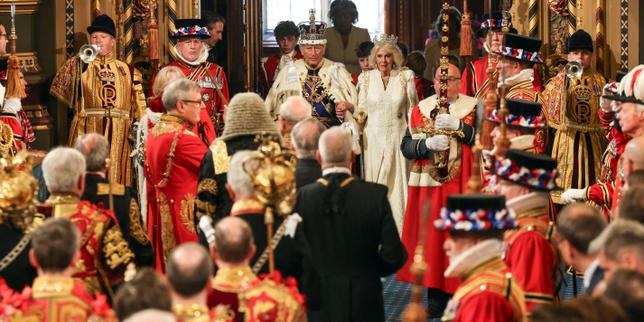
King Charles III just finished delivering a speech that felt more like a political lifeline than a royal tradition. We’ve seen the pageantry before—the crown, the robes, the gold carriage—but the atmosphere inside the House of Lords wasn't about gold this time. It was about survival. Keir Starmer stands on the edge. His government is reeling from internal scandals and a plummeting approval rating that makes his landslide victory feel like ancient history. The King's Speech serves as the legislative roadmap for the UK, but right now, it looks more like a desperate attempt to change the subject.
If you’re watching British politics, you know the vibe is tense. The public expected a "change" government that felt different. Instead, they’ve been treated to months of headlines about free clothes, donor access, and a bizarrely gloomy economic outlook. Starmer needed the King to speak today to remind everyone that he actually has a plan beyond surviving the next twenty-four hours.
A legislative shield against a political storm
The King’s Speech is fundamentally a list of bills the government wants to pass. It’s the "to-do list" for the country. Starmer’s list is heavy on infrastructure and light on the fluff. He’s betting that if he can build houses and fix the railway system, people will forget about the optics of his first hundred days. It’s a massive gamble. People don't live in the long term; they live in the now. And right now, the "now" is messy.
The speech included several key pieces of legislation designed to look "grown-up." We saw a focus on planning reform. This is the big one. Starmer wants to rip up the red tape that prevents anything from getting built in Britain. It sounds boring. It's actually revolutionary if they pull it off. By bypassing local NIMBY (Not In My Back Yard) opposition, the government hopes to spark a construction boom.
But there’s a gap between a King reading a speech and a shovel hitting the dirt. Starmer is dealing with a civil service that moves like molasses and a backbench that is already getting twitchy. You can see the cracks. The uncertainty isn't just coming from the opposition; it’s coming from within his own party. They’re worried that the "Starmer Project" is losing its soul before it even finds its feet.
Why the pageantry feels different this time
Usually, the state opening of Parliament is a moment of stability. The King represents the eternal nature of the state, while the politicians are the temporary tenants. This time, the contrast was jarring. Charles III looked like the only person in the room who knew exactly what his job was. Starmer looked like a man trying to remember where he parked his car in a hurricane.
The "uncertainty" mentioned in every news cycle isn't just a buzzword. It’s a tangible feeling of "what happens if this fails?" If Starmer can’t use this legislative session to turn the narrative around, he’s in deep trouble. The British public is notoriously impatient. They gave the Tories fourteen years, but they might only give Starmer fourteen months if the cost of living doesn't budge.
The speech touched on nationalizing the railways. This is a crowd-pleaser for the left wing of his party. It’s also a logistical nightmare. Taking back control of the tracks and the trains sounds great on a manifesto, but it costs billions and takes years. It doesn’t fix the 8:15 AM train being canceled tomorrow morning. That's the disconnect. Starmer is offering long-term structural changes to a country that wants immediate relief.
The ghost at the feast of the Labour cabinet
Every time the King spoke about "stability" or "growth," you could almost hear the whispers about the Sue Gray departure or the donors who bought the Prime Minister’s glasses. You can’t ignore it. Politics is 10 percent policy and 90 percent vibes. Right now, the vibes are rancid.
Starmer’s team thinks they can "policy" their way out of a PR disaster. They can't. They need a win. The King’s Speech was supposed to be that win, but it felt a bit like a captain announcing a new menu while the ship is taking on water. The legislation on energy—specifically Great British Energy—is a cornerstone of their plan. They want a state-owned clean energy company. It’s ambitious. It’s also largely undefined.
The bills that actually matter for your wallet
- The Renters’ Rights Bill: This aims to end "no-fault" evictions. It’s a huge deal for millions of people. If it works, it’s a genuine win for Starmer.
- The Planning and Infrastructure Bill: As mentioned, this is about building. It's the engine Starmer thinks will jumpstart the economy.
- Employment Rights Bill: Banning zero-hour contracts. It's a move to protect workers, but businesses are already screaming about the cost.
These aren't just words on a page. They are the only things keeping the government afloat. If these bills get bogged down in committee or neutered by lobbyists, Starmer has nothing left to show for his time in office.
Can the King save Keir
The short answer is no. The King is a mouthpiece in this context. He reads what he’s given. But the ceremony itself provides a temporary shield. It forces the media to talk about "The Gracious Speech" rather than "The Gracious Gifts" Starmer accepted from Lord Alli. It’s a reset button.
The problem with reset buttons is you only get to press them so many times. This was Starmer’s big moment to pivot from the "misery and austerity" talk of the summer to a "hope and build" narrative for the winter. Honestly, it felt a bit forced. You can tell the Prime Minister is exhausted. The weight of the office is visible. He’s trying to be a technocrat in an era that demands a populist or a poet. He’s neither.
We should also talk about the House of Lords reform mentioned in the speech. Removing the right of hereditary peers to sit and vote is a classic Labour move. It’s easy red meat for the base. It costs nothing. It changes almost nothing for the average person on the street, but it makes the government look like it's "reforming the system." It’s a distraction, but a clever one.
What happens when the gold carriage goes back to the mews
Tomorrow, the King will be back at Buckingham Palace, and Keir Starmer will be back in the House of Commons facing a barrage of questions he doesn't want to answer. The uncertainty isn't going away because a guy in a crown read a list of laws.
The real test starts now. The government has to actually pass this stuff. They have a massive majority, but a majority is only useful if you know how to use it. If Starmer continues to look indecisive or if more scandals break, that majority will start to look like a liability. Bored MPs with nothing to do except worry about their seats are dangerous.
Stop waiting for a "magic moment" where the UK suddenly feels fixed. It's not coming this year. The King’s Speech proves the government knows what the problems are—housing, energy, transport—but it doesn't prove they have the stomach for the fight. Watch the progress of the Planning Bill. That’s the real bellwether. If they cave to local pressure on building, the Starmer era is effectively over before it really started.
Watch the polls over the next two weeks. If there isn't a "King's Speech bounce," the internal chatter about Starmer's leadership will turn into a roar. He’s on thin ice, and the ice is melting fast. Pay attention to the amendments tabled by his own MPs; that's where the real rebellion lives. Don't get distracted by the shiny crown—watch the guys in the cheap suits behind the Prime Minister.