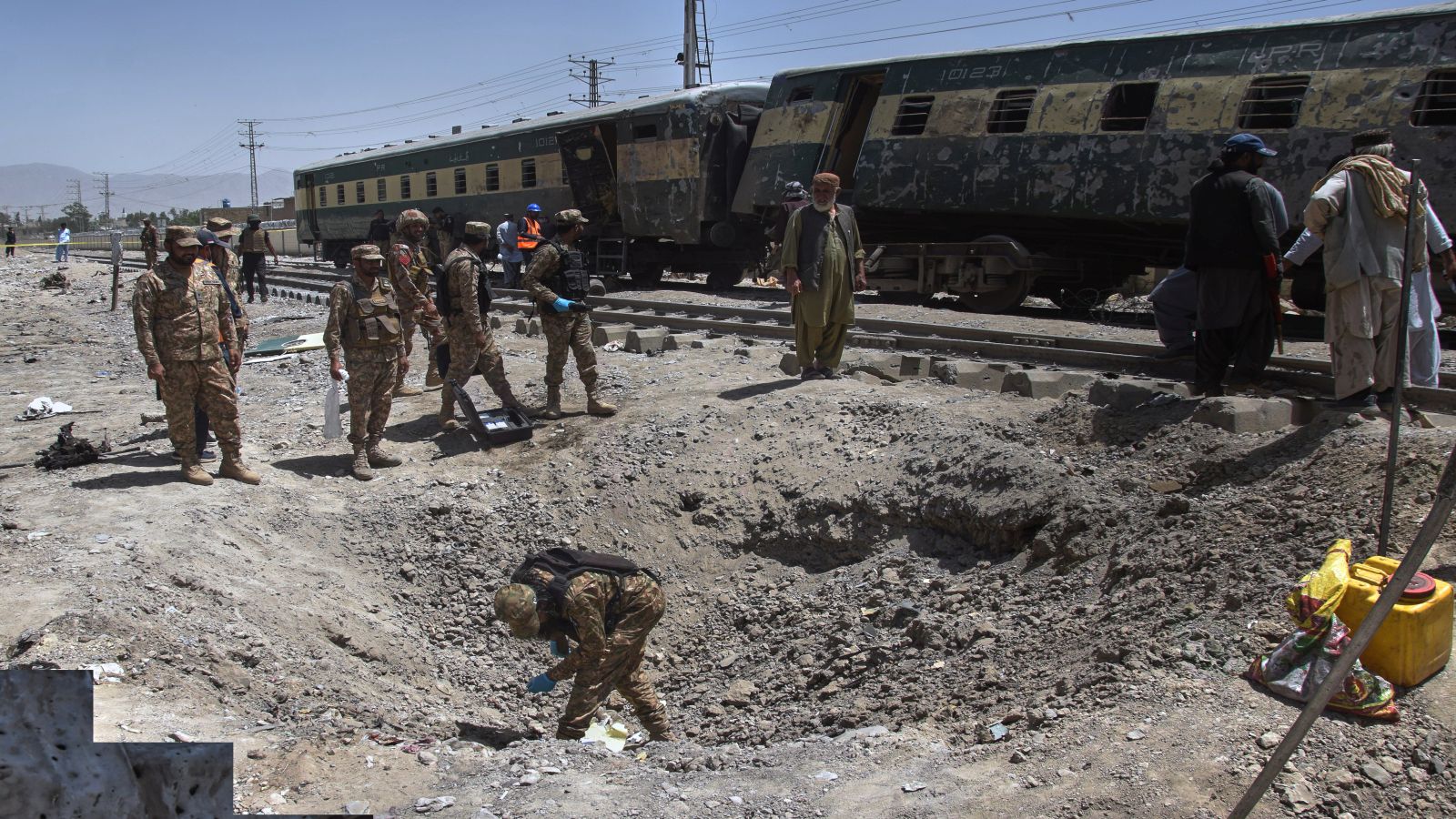
The physical destruction of transit infrastructure serves as a compounding force multiplier in asymmetric warfare, converting localized kinetic energy into regional economic and logistical paralysis. The detonation of an vehicle-borne improvised explosive device (VBIED) targeting a passenger and military shuttle train at the Chaman Phatak signal intersection in Quetta, Balochistan, underscores a highly structured operational shift by non-state actors. By moving beyond passive, static sabotage toward dynamic, synchronized interdiction, insurgent formations like the Baloch Liberation Army (BLA) are exposing systemic vulnerabilities in state critical infrastructure protection frameworks.
Understanding this threat vector requires breaking down the attack into its core components: kinetic mechanics, operational timing, structural vulnerabilities in state defense, and the broader macroeconomic consequences.
The Triad of Kinetic Interdiction Mechanics
The lethality of the Quetta rail attack relies on a specific configuration of mass, velocity, and spatial confinement. Media accounts focus heavily on casualty figures—confirming at least 24 fatalities and over 70 injuries—yet standard reporting fails to isolate the underlying physical and structural dynamics that dictated these outcomes.
[VBIED Detonation at Chaman Phatak]
                │
                ├──► Shockwave Expansion (Structural Collapse & Car Overturning)
                ├──► Secondary Combustion (Gas Cylinder Explosions in Waiting Vehicles)
                └──► Kinetic Disruption (Locomotive Derailed + 3 Coaches Damaged)
The event can be mathematically characterized through three distinct structural failure phases:
- Primary Blast Overpressure: The initial shockwave generated by the VBIED at the Chaman Phatak signal line applied sudden lateral force to the moving mass of the Peshawar-bound Jaffar Express shuttle. This abrupt energy transfer compromised the lateral stability of the train, causing the immediate derailment of the locomotive and three connected coaches, alongside the total overturning of two passenger bogies.
- Secondary Fragment Matrix: The detonation occurred at a highly congested metropolitan rail-road crossing where civilians were waiting for the signal to clear. The blast radius absorbed adjacent civilian vehicles, converting steel chassis into high-velocity fragments.
- Tertiary Thermal Cascades: The initial explosion triggered secondary combustion loops by rupturing commercial gas cylinders housed within the queued civilian vehicles. This mechanism escalated the thermal output, trapping passengers within the overturned aluminum and steel fuselages and driving the proportion of critically injured victims upward.
Temporal Synchronization and Target Selection Vector
The choice of target reflects strict strategic intent rather than opportunistic violence. The Jaffar Express shuttle was utilized as a troop-transport asset, carrying military personnel and state security families traveling for the upcoming Eid holiday. By deploying a vehicle-borne asset directly against a moving military transit vehicle, the planners optimized for two variables: maximizing state institutional casualties and achieving symbolic disruption during a high-density travel window.
This tactical selection exposes an ongoing struggle between state tracking capabilities and insurgent operational security. The BLA operates an information network capable of identifying troop movements, schedules, and precise geographical bottlenecks within the Quetta Cantonment network. The deployment of a mobile VBIED or suicide operator to execute an intercept at a specific urban railway crossing indicates that the armed group has transitioned to a model of real-time intelligence gathering and adaptive targeting.
The Critical Infrastructure Defense Gap
The vulnerability of linear infrastructure stems from a fundamental geometric reality: the defensive footprint required to protect thousands of kilometers of track is unsustainably large, whereas an attacker needs to compromise only a single point to break the entire system.
The failure to prevent the Quetta interdiction points to three structural deficiencies in the current security apparatus:
Signal and Intersection Control Deficiencies
Rail-road crossings and signaling nodes like Chaman Phatak represent permanent friction points where rolling rail stock intersects with unvetted urban vehicular traffic. These zones act as chokepoints. Without physical blast mitigation barriers, standoff inspection lanes, or automated threat-detection arrays, these intersections remain highly vulnerable to mobile, vehicle-borne threats.
Outpaced Surveillance Architecture
Fixed security detachments stationed near critical junctions are structurally unsuited to counter high-velocity VBIED vectors. Standard defensive postures rely on static visible deterrence, which can be bypassed by an adversary willing to execute a suicide mission. The lack of proactive, stand-off perimeter detection means that security forces have zero reaction time between identifying a suspect vehicle and the moment of kinetic impact.
Intramodal Complications
The mixing of civilian commuters and military personnel within shared transit corridors creates an asymmetric defense dilemma. Implementing total military checkpoint protocols across commercial rail transport severely harms transit efficiency and triggers significant domestic economic drag. Conversely, maintaining open civilian access introduces unverified threat actors directly into the security perimeter of state military assets.
Macro-Economic and Geopolitical Spillovers
The strategic utility of targeting the Balochistan rail network extends far beyond localized disruption. The Quetta transit corridor serves as a vital logistical spine connecting inland Pakistan with deep-water port infrastructure and cross-border trade routes.
┌───────────────────────────────┐
│ Rail Corridor Disruption      │
└───────────────┬───────────────┘
                │
                ▼
┌───────────────────────────────┐
│ Escalated Security Premia      │
└───────────────┬───────────────┘
                │
                ▼
┌───────────────────────────────┐
│ Chilled Foreign Investment    │
└───────────────────────────────┘
The systematic targeting of these transit links directly undermines the viability of long-term economic corridors, such as the China-Pakistan Economic Corridor (CPEC). When rail lines are repeatedly broken, the state is forced to redirect finite fiscal resources from capital construction to continuous emergency repairs and defensive military deployments.
The resulting economic instability raises insurance premiums and operational costs for international trade, making long-term foreign direct investment less attractive. Additionally, this security strain can complicate regional diplomatic initiatives, creating friction with international partners who rely on stable, secure transport corridors for their strategic investments.
Strategic Hardening Blueprint
Securing linear transit assets against high-velocity, decentralized threats requires abandoning static defense models in favor of dynamic, tech-driven resilience.
To mitigate the current vulnerability vector, the infrastructure network must be re-engineered around an automated defense framework:
- Geometric Isolation: Eliminate grade-level rail-road crossings within high-risk metropolitan zones. Converting intersections like Chaman Phatak into elevated grade-separated overpasses or sunken trenches physically isolates the rail line from the urban automotive ecosystem, eliminating the threat of vehicle-borne contact.
- Automated Standoff Interdiction: Implement automated license plate recognition, permanent weight-sensor pads, and active vehicle-barrier systems at all remaining perimeter access points. These systems must be linked to automated threat profiles capable of deploying physical tire-shredders and blast blocks the moment an unverified vehicle breaches a signaling perimeter.
- Sensor-Driven Rolling Escorts: Deploy autonomous, lightweight drone cars ahead of high-value transport trains. These pilot units should be equipped with ground-penetrating radar and forward-looking infrared systems to map the track bed and adjacent intersections in real time, absorbing potential kinetic strikes and providing the primary train with the space needed to perform an emergency stop.
The state must recognize that the current approach of using static military guards to protect dynamic transit lines is no longer viable. Until the rail network transitions to an isolated system that treats urban intersections as high-threat access points, transit infrastructure will continue to be a highly vulnerable target for asymmetric disruption.