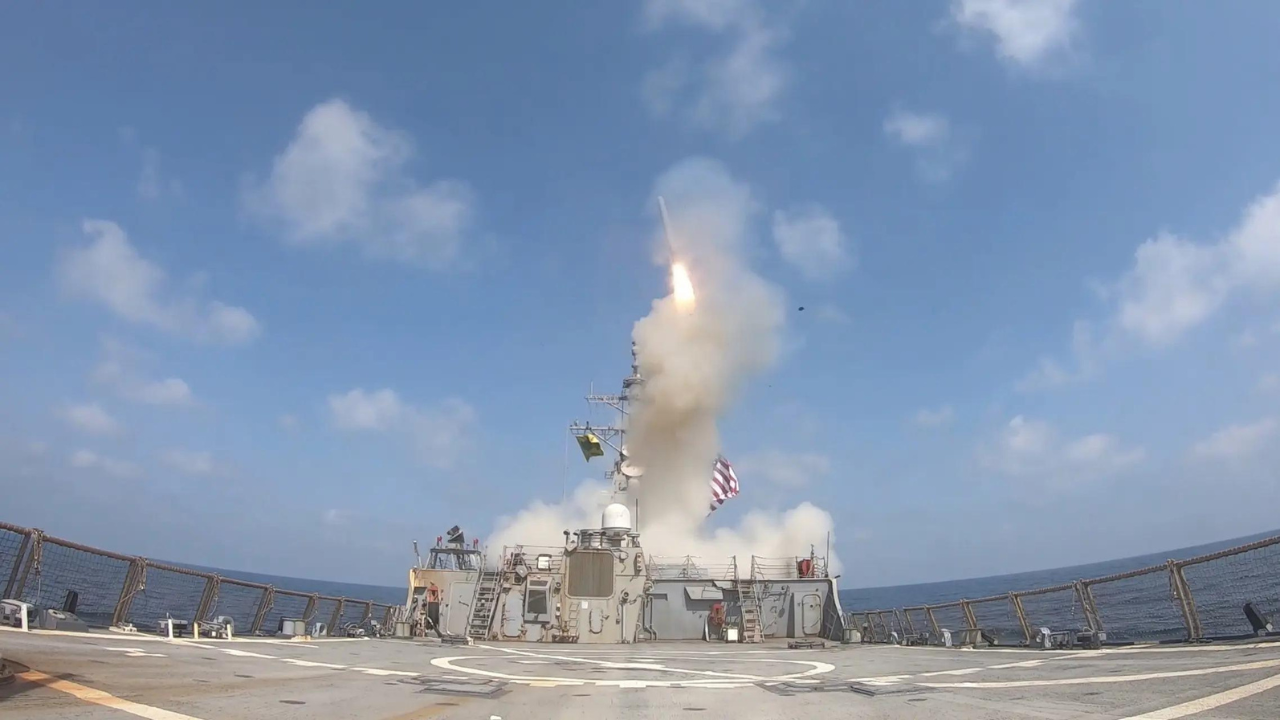
The modern theater of Middle Eastern conflict has transitioned from traditional territorial skirmishes to a high-frequency exchange of long-range precision-guided munitions (PGMs) and unmanned aerial systems (UAS). Measuring the impact of these strikes through a live "death toll" tracker provides a superficial metric of human tragedy while failing to account for the strategic degradation of defensive architectures and the shifting cost-curves of regional deterrence. To understand the current US-Israel-Iran kinetic cycle, one must look past the casualty counts and analyze the structural integrity of Integrated Air Defense Systems (IADS) and the exhaustion rates of interceptor inventories.
The Triad of Kinetic Impact
Assessing the effectiveness of a strike involves three distinct variables that operate independently of reported fatalities. Also making headlines in this space: Finland Is Not Keeping Calm And The West Is Misreading The Silence.
- Functional Attrition: The physical destruction of high-value assets, specifically S-300 or domestic Bavar-373 surface-to-air missile (SAM) batteries.
- Psychological Displacement: The forced relocation of civilian populations and the disruption of economic hubs, creating an internal governance tax on the targeted state.
- Information Dominance: The ability to penetrate "hardened" airspace, signaling to the adversary that their primary defensive investments are obsolete.
Casualty figures often serve as a lagging indicator of conflict intensity. In the context of recent strikes on Iranian soil, the low immediate death toll frequently masks the high strategic cost of losing early-warning radar arrays. If an interceptor battery is destroyed, the geographical area it once protected becomes a "blind corridor," facilitating subsequent waves of higher-lethal-capacity munitions.
The Economic Asymmetry of Interception
A critical bottleneck in sustained regional conflict is the radical cost disparity between offensive and defensive measures. This is not merely a budgetary concern but a manufacturing capacity constraint. More information into this topic are covered by TIME.
- The Attacker's Advantage: Low-cost loitering munitions (drones) and ballistic missiles can be produced in high volumes. A single Iranian-designed Shahed-series drone may cost between $20,000 and $50,000.
- The Defender’s Burden: Kinetic interceptors, such as those used in the David’s Sling or Arrow-3 systems, cost upwards of $1 million to $3 million per unit.
This creates a Saturation Threshold. If an attacker launches 100 low-cost drones alongside five high-speed ballistic missiles, the defender is forced to expend millions of dollars in sophisticated interceptors to prevent even a single high-impact hit. When tracking "live" strike data, the more significant data point is the depletion rate of interceptor stockpiles relative to the adversary's production capacity.
Structural Vulnerabilities in Iranian Infrastructure
The Iranian defensive posture relies on a "deep-bench" strategy of underground facilities and mobile launchers. However, specific nodes within their military-industrial complex represent single points of failure.
Solid-Fuel Mixing Facilities
The production of advanced ballistic missiles requires industrial-scale planetary mixers for solid fuel. These machines are difficult to procure due to international sanctions and possess a long lead time for replacement. A strike that destroys three mixers may result in zero casualties but could effectively freeze the production of long-range missiles for 12 to 18 months.
Radar Cross-Section (RCS) Exploitation
The effectiveness of Israeli and US strikes often hinges on electronic warfare (EW) and stealth. By degrading the signal-to-noise ratio of Iranian radar systems, attackers can create "ghost targets," forcing the IADS to fire at non-existent threats. This leads to Self-Inflicted Attrition, where a battery exhausts its ammunition on decoys, leaving it vulnerable to the actual strike package arriving minutes later.
Human Capital and the Professionalization Gap
While trackers focus on total injuries, the qualitative loss of personnel is more impactful than the quantitative loss. The death of a high-ranking IRGC commander or a specialized radar technician represents a loss of "institutional memory" and tactical expertise that cannot be replaced through standard recruitment.
The "injury" metric in these trackers is frequently contaminated by secondary trauma—concussions from overpressure, hearing loss, and psychological shock—which, while debilitating for the individual, does not necessarily degrade the state's kinetic output. Analysts must distinguish between Tactical Casualties (those involved in operating weapon systems) and Collateral Casualties (non-combatants or support staff) to assess the true impact on military readiness.
The Logic of the "Response Loop"
Strategic conflict in this corridor operates on a rigid feedback loop of escalation. Each strike is calibrated to achieve a specific political or military objective while attempting to stay below the "Total War Threshold."
- The Signal Phase: A strike targeting an empty airfield or a peripheral warehouse. The goal is to demonstrate capability without forcing a massive retaliation.
- The Degradation Phase: Targeting air defense nodes and fuel depots. This is a preparation for higher-intensity operations.
- The Decapitation Phase: Targeting command and control (C2) centers. This signals a shift from deterrence to active regime destabilization.
Current live-tracking data suggests we are oscillating between the Signal and Degradation phases. The persistence of strikes on "dual-use" infrastructure—sites that serve both military and civilian logistics—indicates a strategy of Systemic Stressing, intended to make the cost of continuing the conflict unbearable for the Iranian leadership.
Logistical Constraints of the US-Israeli Alliance
The alliance faces a geography problem. Conducting strikes in the heart of Iran requires either long-range stealth platforms (B-21, F-35) or mid-air refueling capabilities over third-party sovereign airspace.
- Tanker Availability: The number of aerial refueling tankers determines the maximum size of a strike package.
- Transit Friction: Using Iraqi or Jordanian airspace introduces diplomatic volatility. Each strike creates a "diplomatic debt" that the US and Israel must eventually repay or manage.
The "live tracker" of events often ignores these back-end logistics. A pause in strikes is rarely a sign of de-escalation; it is more frequently a window for maintenance, repositioning of assets, and reassessment of the target list based on fresh satellite imagery.
Assessing the Precision-Lethality Ratio
A "successful" strike in modern terms is defined by the Precision-Lethality Ratio. High precision allows for low lethality (fewer casualties) while achieving high strategic utility (destruction of a specific server rack or turbine). If we see a rise in casualty numbers without a corresponding destruction of military assets, it suggests a shift toward Punitive Warfare, where the objective is to terrorize the population rather than degrade the military. Conversely, a strike with zero casualties that disables a nation's power grid is a masterclass in high-end electronic and kinetic integration.
Strategic Forecast: The Shift to Sub-Surface Assets
As surface-level assets (airfields, SAM sites, and depots) become increasingly difficult to defend against PGMs, the operational focus will shift toward sub-surface hardening. Iran has already pioneered "Missile Cities" buried deep within mountain ranges.
The next stage of this conflict will likely involve the deployment of specialized "bunker-buster" munitions (like the GBU-57 MOP) and autonomous "tunnel-warfare" drones designed to navigate underground complexes. Tracking surface casualties will become an even less reliable metric as the core of the conflict moves underground, where impacts are felt through seismic shifts and long-term structural collapses rather than immediate explosions on a live feed.
The primary strategic move for any observer or participant is to pivot from casualty-based metrics to Capacity-Based Metrics. Monitor the availability of solid-fuel mixers, the health of the S-300 radar networks, and the replenishment cycles of interceptor missiles. These are the true indicators of who is winning the war of attrition. The conflict is not a tally of lives lost; it is a calculation of how long a state can maintain its "shield" before it is physically and economically hollowed out.