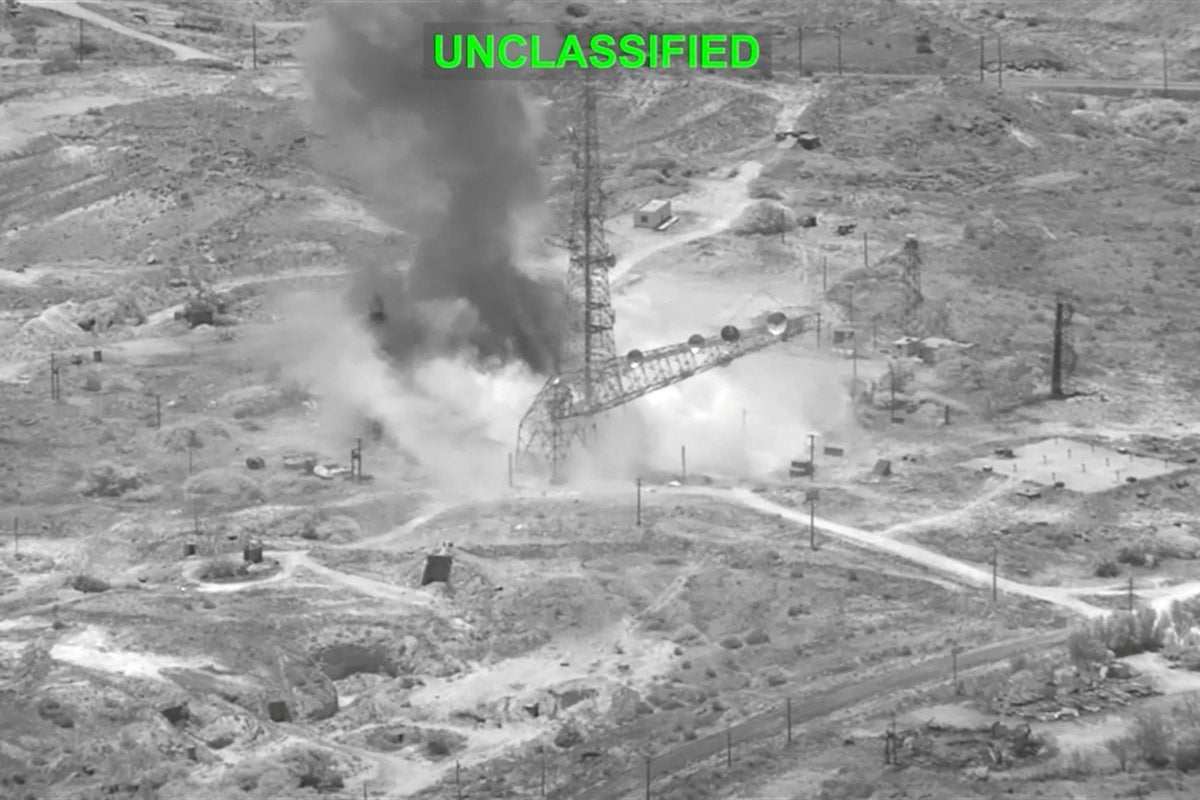
The return of the United States naval blockade of Iranian ports on July 14, 2026, has fundamentally altered the risk parameters of the Middle East's primary energy transit corridor. When US Central Command (CENTCOM) deployed an aircraft to fire AGM-114 Hellfire missiles into the smokestack of the Curaçao-flagged M/T Belma within the first 24 hours of the revived blockade, it was not merely a tactical intervention; it was a calculated demonstration of kinetic deterrence designed to redefine the operational economics of "dark fleet" shipping.
To evaluate the geopolitical and economic consequences of this escalation, analysts must look past the immediate news cycle. Understanding this event requires a precise examination of the underlying strategic frameworks: the mechanics of non-lethal disabling strikes, the microeconomics of maritime risk premium, and the strategic logic of regional escalatory cycles.
The Mechanics of Kinetic Denial: The Smokestack Strike
The choice of weapon and target location on the M/T Belma reflects a precise execution of non-lethal kinetic denial. In maritime interdiction, the primary objective is to arrest the transit of a non-compliant vessel without triggering catastrophic environmental damage or mass casualties, which would undermine the legal and political legitimacy of the blockade.
+-------------------------------------------------------+
|                 AGM-114 HELLFIRE STRIKE               |
+-------------------------------------------------------+
                           |
                           v
              [ Vessel Smokestack Target ]
                           |
         +-----------------+-----------------+
         |                                   |
         v                                   v
[ Structural Disabling ]            [ Collateral Mitigation ]
 - Ruptures exhaust manifold         - Misses volatile cargo hold
 - Floods engine room with gas       - Protects hull integrity
 - Disables propulsion systems       - Minimizes crew casualties
The smokestack serves as the exhaust conduit for the ship's main diesel engines. Firing a precision-guided Hellfire missile directly into this structure achieves several operational goals:
- Propulsion Disabling: The blast overpressure and shrapnel rupture the exhaust manifolds, venting high-pressure exhaust gases back into the engine room. This causes immediate engine suffocation and automatic shutdown of propulsion systems.
- Mitigating Volatile Cargo Risks: The smokestack is positioned aft, elevated above the main deck, and isolated from the cargo tanks. By targeting this structure, the striking aircraft minimizes the risk of penetrating the vessel's double hull, thereby preventing major oil spills or structural hull failure, even though the M/T Belma was unladen at the time of this transit.
- Minimizing Casualty Rates: The engine casing and funnel structure are unoccupied areas, significantly reducing the probability of immediate crew fatalities compared to a strike on the bridge or the main hull.
This tactical choice demonstrates a formalized escalation ladder. The US Navy moves from digital and VHF warnings to physical obstruction, followed by non-lethal precision disabling, reserving lethal hull-breaching ordnance as a final resort.
The Cost Function of Blockade Running
For merchant vessels operating in contested waters, the decision to comply with or attempt to bypass a blockade is determined by a clear financial cost-benefit equation. The economics of "dark fleet" shipping—vessels operating with obscured ownership, flagged under flags of convenience like Curaçao, and carrying sanctioned oil—rely on a high-risk, high-yield premium.
The cost function of attempting to run a blockade can be modeled through three primary operational variables:
1. The Asset Loss Factor
The physical disabling of a vessel instantly converts a high-value capital asset into a liability. A disabled tanker requires salvage tugs to tow it to a neutral port for extensive dry-dock repairs. Under blockade conditions, salvage operations are highly dangerous and prohibitively expensive. The asset is effectively removed from the global shipping pool for months, if not permanently.
2. Insurance and Risk Premium Spikes
Under normal transit conditions, war risk insurance premiums represent a manageable fraction of operating costs. Following a kinetic intercept, insurance underwriters reprice the probability of loss ($P_{loss}$) toward near-certainty for non-compliant vessels. This forces blockade runners to operate entirely without Western P&I club coverage, shifting the financial liability of a total loss directly onto the vessel's shadow owners.
3. Crew Acquisition Economics
Tanker operations require skilled mariners. When the risk of kinetic interdiction shifts from hypothetical boarding to active missile strikes, the wage premium required to recruit crews for voyages to Kharg Island increases exponentially. The risk to human life—demonstrated by previous fatal blockading incidents—dramatically reduces the pool of willing mariners, driving up operating overhead.
When these variables are aggregated, the financial premium gained from transporting Iranian crude oil is rapidly eroded by the capital and operational losses of a disabled vessel. By targeting the M/T Belma, the US has signaled to the maritime industry that the probability of intercepting non-compliant vessels has approached $1.0$, fundamentally breaking the profitability model of the dark fleet.
The Geopolitical Escalation Loop
The strike on the M/T Belma is not an isolated incident; it is a critical node in a larger escalatory feedback loop between Washington and Tehran. This dynamic is driven by asymmetric strategic objectives.
       [ U.S. REIMPOSES NAVAL BLOCKADE ]
                      │
                      ▼
       [ Strike on M/T Belma (July 15) ]
                      │
                      ▼
     [ U.S. Strikes on Air Defenses & ]
     [ Coastal Missile Sites (Tunb Is.)]
                      │
                      ▼
     [ Iranian Asymmetric Retaliation: ]
     [ Drone/Missile Attacks on U.S.   ]
     [  Bases in Kuwait & Bahrain      ]
This cycle operates through a series of actions and counter-actions:
- Blockade Reinforcement: The US seeks to deny Iran the export revenues generated from its primary terminal at Kharg Island, aiming to starve the state of foreign currency and force a diplomatic settlement.
- Kinetic Interdiction: To make the blockade credible, the US must project a willingness to use force against commercial actors violating the exclusion zone, as demonstrated on July 15.
- Suppression of Enemy Air Defenses (SEAD): To protect its blockading aircraft and ships from coastal defense batteries, the US military launched preemptive and retaliatory waves of precision strikes against Iranian military assets, including coastal defense systems and cruise missile facilities on Greater Tunb Island and Bandar Abbas.
- Asymmetric Retaliation: Lacking the conventional naval power to break the US blockade directly, Iran responds by targeting regional infrastructure. This includes retaliatory drone and missile strikes against US military facilities in neighboring host nations like Kuwait (Ali Al Salem Air Base) and Bahrain (Sheikh Isa Air Base).
This feedback loop creates a highly unstable security environment. While the US uses tactical economic denial to force diplomatic concessions, the regional security architecture is exposed to broader kinetic conflict, threatening the remaining shipping routes in the Strait of Hormuz.
Strategic Playbook: Managing Maritime Exposure
For commercial maritime operators, energy logistics firms, and sovereign risk managers, the reactivation of the US blockade and the subsequent kinetic strikes require immediate operational adjustments. The strategic playbook must shift from passive monitoring to active risk mitigation.
Route Diversion and Compliance Protocols
Operating vessels within 30 nautical miles of active US naval units in the Arabian Gulf now carries a severe misidentification risk. All commercial transits through the Strait of Hormuz must utilize the northern route near Iran's coast only if they are fully compliant with US interdiction protocols, keeping their Automatic Identification Systems (AIS) active at all times. Non-compliant behavior will be met with kinetic force.
Real-Time Intelligence Integration
Relying on standard weekly maritime security updates is no longer sufficient. Operators must integrate real-time satellite imagery and transponder telemetry to monitor the deployment patterns of both US Navy blockade assets and Iranian Revolutionary Guard Corps (IRGC) monitoring vessels. Any deviation in patrol patterns must be treated as an indicator of imminent kinetic activity.
Contractual Force Majeure Activation
Energy charterers and vessel owners must review existing charter-party agreements to ensure that "War Risks" and "Blockade" clauses are robustly defined. The physical disabling of a vessel by missile fire—even if unladen—constitutes a clear trigger for force majeure and safe-port warranty claims, allowing operators to legally refuse transits into the exclusion zone without facing breach-of-contract liabilities.
The conflict in the Strait of Hormuz has entered a highly volatile phase where commercial shipping is the primary battleground. The disabling of the M/T Belma confirms that the US is willing to enforce its blockade through direct military action, forcing the maritime industry to adapt to an era of active kinetic interdiction.
For a detailed visual breakdown of how regional conflicts impact global maritime chokepoints, this analysis of shipping vulnerabilities explains the operational mechanics of naval blockades and the strategic significance of waterways like the Strait of Hormuz.