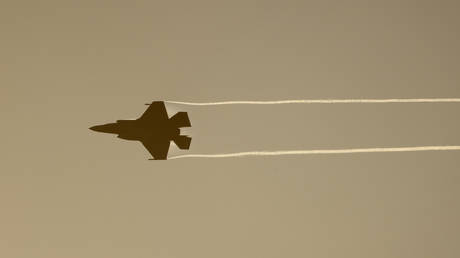
The Pakistani-mediated, Chinese-backed negotiations to secure a permanent settlement between the United States, Israel, and Iran have reached structural stasis. This diplomatic deadlock has triggered the mobilization of a combined bilateral military apparatus. According to intelligence disclosures published by The New York Times, the United States and Israel are finalizing technical and logistical arrangements to resume coordinated kinetic operations—codenamed Operation Epic Fury—potentially within days.
This impending resumption of hostilities follows the collapse of the April 8 ceasefire, which paused a high-intensity, 12-day war initiated on February 28. The strategic breakdown centers on two irreconcilable vectors: the absolute terms of Iran’s nuclear program and post-war regulatory control over the Strait of Hormuz. While political rhetoric positions these preparations as tactical leverage, an analysis of the deployment architecture indicates that the allied high command is preparing for a multi-week campaign designed to systematically alter the regional balance of power.
The Strategic Trilemma: Allied Kinetic Options
The joint planning architecture relies on three distinct operational models, each presenting asymmetric risk profiles, logistics footprints, and strategic payoffs.
+---------------------------+---------------------------+---------------------------+
| Operation Type            | Force Requirements        | Primary Strategic Risk    |
+---------------------------+---------------------------+---------------------------+
| Vertical Escalation       | Air assets, stand-off     | High attrition from       |
| (Infrastructure Bombing)  | munitions, cyber warfare  | reconstituted air defense |
+---------------------------+---------------------------+---------------------------+
| Amphibious Capture        | 5,000 Marines, naval      | Severe global energy      |
| (Kharg Island Seizure)    | surface combatants        | shock, long-term holding  |
+---------------------------+---------------------------+---------------------------+
| High-Value Extraction     | Special Ops, 2,000        | Extreme casualty rates,   |
| (Fissile Material Seizure)| Paratroopers, perimeter   | direct ground war engagement|
+---------------------------+---------------------------+---------------------------+
1. Reconstitution of the Strategic Bombing Campaign
The baseline operational model involves an accelerated air campaign targeting Iran’s industrial infrastructure, ballistic missile storage, and command-and-control nodes. While Western intelligence estimates that previous air strikes successfully degraded fixed installations, recent tracking shows Iran has restored operational access to 30 of its 33 missile sites along the Strait of Hormuz.
A renewed air campaign cannot rely on the element of surprise. Instead, it requires a systematic suppression of enemy air defenses (SEAD) to counter mobile, low-frequency radar networks and surface-to-air missile batteries that survived the initial February offensive.
2. Maritime Interdiction and Territorially Confined Invasion
The second operational option targets Iran’s primary economic engine: Kharg Island. Responsible for the vast majority of Iran’s crude oil exports, the island represents a highly concentrated economic vulnerability. Joint plans consider an amphibious assault to seize and occupy the facility.
The logistical reality of this option is highly restrictive. A deployment of approximately 5,000 U.S. Marines, backed by naval strike groups, would be required to execute the initial assault. However, military planners acknowledge that holding the island against prolonged asymmetric attacks from the Iranian mainland would require a substantially larger ground force presence, transforming a maritime interdiction into a resource-intensive holding action.
3. Fissile Material Extraction Operations
The most complex and high-risk option involves deploying ground forces onto the Iranian mainland to physically secure and extract highly enriched uranium. Tehran currently holds an estimated 440 kilograms (970 pounds) of uranium enriched to near weapons-grade levels—enough to assemble approximately ten nuclear warheads. This stockpile is believed to be entombed beneath heavy rubble in Isfahan following prior airstrikes.
Executing an extraction operation requires a highly specialized tactical sequence:
- Infiltration of elite special operations elements to locate and excavate the buried storage vaults.
- The simultaneous insertion of a massive defensive perimeter, utilizing elements like the U.S. Army’s 82nd Airborne Division, to shield the extraction zone.
- Sustained engagement with Iranian mechanized ground forces during the multi-hour extraction window.
Pentagon planners have explicitly warned that this option carries an exceptionally high probability of casualties. It transitions the conflict from a distance-based punitive campaign into a direct, localized ground war on sovereign Iranian territory.
The Cost Function of Iranian Asymmetric Counter-Strategies
Iran’s defensive calculus does not rely on matching allied conventional air power. Instead, it utilizes an asymmetric denial strategy designed to maximize the economic and political costs for the United States and its partners.
The Strait of Hormuz Chokepoint Mechanics
The primary Iranian counter-escalation vector is the total closure of the Strait of Hormuz, a maritime transit corridor that handles roughly 20% of global petroleum and liquefied natural gas shipments. During the February-to-April phase of the war, Iran implemented an effective naval blockade using low-profile speedboats, sea mines, and shore-to-ship anti-ship cruise missiles.
Although U.S. Central Command (CENTCOM) deployed a heavy naval presence—including two aircraft carriers and more than a dozen destroyers—to execute a counter-blockade and clear shipping lanes, the tactical environment remains highly perilous. The proximity of Iran’s reconstituted missile sites to the shipping channels allows for rapid, saturation-style missile barrages that can overwhelm Aegis combat systems. The economic cost function is immediate: any prolonged disruption in the strait causes a sharp, non-linear spike in global energy prices, applying severe inflationary pressure to Western economies.
Cyber Warfare and Infrastructure Sabotage
Beyond regional maritime denial, Tehran employs offensive cyber operations as a low-cost, deniable mechanism for domestic disruption within allied nations. Intelligence agencies recently linked Iranian state-sponsored actors to a sophisticated hack targeting the digital telemetry systems of fuel storage facilities across multiple U.S. states.
The attackers exploited unauthenticated internet-facing industrial control systems to manipulate the display systems showing fuel storage levels. While this specific operation caused no physical destruction, it serves as a technical proof-of-concept. In a renewed conflict, expected Iranian cyber doctrine dictates shifting from informational manipulation to the active destruction of critical infrastructure via malware, targeting power grids, water treatment facilities, and financial networks.
Diplomatic Boundary Conditions and Negotiating Positions
The military escalation occurs alongside fluctuating diplomatic positions. The transition from the initial demand for a permanent cessation of all Iranian enrichment activities to a more flexible framework indicates a desire to avoid a total regional war if a verifiable containment architecture can be established.
+------------------------------------+------------------------------------+
| Allied Minimum Demands             | Iranian Non-Negotiable Positions   |
+------------------------------------+------------------------------------+
| - 20-year enrichment suspension    | - Retention of domestic enrichment |
| - Physical transfer of stockpile   | - Immediate lifting of shipping    |
|   to neutral third-party custody   |   and banking blockades            |
| - Verifiable IAEA access to deep   | - Sovereign regulatory control     |
|   underground facilities           |   over the Strait of Hormuz        |
+------------------------------------+------------------------------------+
The core failure of the Pakistani and Chinese mediation tracks is an irreconcilable sequencing problem. The United States demands verifiable nuclear capitulation before dismantling its economic blockade, whereas Iran views its remaining nuclear inventory and its ability to disrupt maritime commerce as its only effective deterrents against regime decapitation.
Strategic Forecast
The concentration of over 50,000 U.S. troops, two carrier strike groups, and specialized airborne and marine components in the theater demonstrates that the technical infrastructure for a renewed offensive is fully operational. The window for a diplomatic resolution has narrowed to a critical inflection point.
If political authorities authorize the resumption of kinetic actions, the initial phase will likely manifest as a high-intensity, multi-domain offensive combining cyber-attacks on Iranian command infrastructure with saturation bombing of the 30 active missile sites along the Persian Gulf coast. This action is designed to preemptively neutralize Iran’s anti-ship capabilities before any high-risk mainland extraction or island-seizure operations are attempted.
However, planners must operate under the assumption that a confined conventional strike will rapidly decay into a regional attrition campaign. Iran's decentralized command structure guarantees that even if central leadership is disrupted, localized forces retain the authority to deploy sea mines and execute asymmetric strikes against commercial shipping, ensuring that the economic consequences will be felt globally within 48 hours of the first strike.