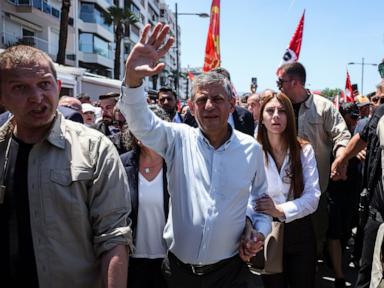
Kemal Kilicdaroglu's reported push to launch a new political entity marks a critical rupture in Turkey’s already fragile opposition front. After losing the high-stakes May 2023 presidential election to Recep Tayyip Erdogan and subsequently being ousted from the leadership of the Republican People’s Party (CHP), Kilicdaroglu is refusing to retire to the political sidelines. His potential splinter movement threatens to split the secular, anti-Erdogan vote at a moment when the ruling Justice and Development Party (AKP) is consolidating its hold on the state apparatus.
To understand why this move matters, one must examine the internal mechanics of Turkey’s political opposition over the past decade.
The Shattered Table of Six
For years, Kilicdaroglu’s primary political strategy was broad-tent coalition building. As CHP chairman, he orchestrated the "Table of Six," a ideological mosaic ranging from center-left secularists and Turkish nationalists to former AKP insiders. The goal was singular: defeat Erdogan under a unified banner.
That coalition collapsed under the weight of its own internal contradictions immediately following the 2023 electoral defeat.
The strategy failed for several distinct reasons:
- Compromised Messaging: Attempting to appeal simultaneously to Kurdish voters and strict Turkish nationalists neutralized the coalition's core policy positions.
- Leadership Ambition: Kilicdaroglu’s insistence on his own candidacy, despite resistance from key alliance partners like Meral Aksener of the Iyi Party, alienated large swathes of the electorate.
- Organizational Friction: Local party machinery spent as much time negotiating internal power-sharing arrangements as they did campaigning on the ground.
When Ekrem Imamoglu and Mansur Yavas—the popular CHP mayors of Istanbul and Ankara—demonstrated vastly higher polling numbers, Kilicdaroglu held firm to his personal bid. The resulting loss triggered deep resentment within the CHP rank and file, culminating in his removal at the November 2023 party congress in favor of Ozgur Ozel.
The Mechanics of Opposition Splintering
In Turkish politics, forming a new party is relatively straightforward on paper, but achieving electoral viability requires overcoming structural hurdles. The nation's electoral threshold, recently reduced from 10 percent to 7 percent, still presents a massive barrier for start-up political factions.
If Kilicdaroglu proceeds, his new movement faces severe operational roadblocks.
Financial and Media Asymmetry
The Turkish political ecosystem heavily favors established institutions and the ruling party. Official state treasury grants are restricted to parties that pass specific vote thresholds in previous general elections. A newly formed entity operates entirely on private donations and the personal funds of its founders.
Furthermore, broadcast media access remains heavily asymmetric. Mainstream channels align overwhelmingly with the government, while independent or opposition-leaning outlets are already allied with the primary CHP leadership under Ozel and Imamoglu. A splinter party risks total media obscurity outside of digital networks.
Voter Fatigue and Fragmentation
The anti-Erdogan coalition is suffering from voter exhaustion. Repeated electoral setbacks have eroded public confidence in traditional political figures. By launching another rival faction, Kilicdaroglu risks further diluting the opposition electorate rather than expanding it.
Consider a hypothetical local election scenario where the opposition electorate is divided:
| Political Entity | Share of Local Vote (Hypothetical) | Outcome |
|---|---|---|
| AKP Candidate | 42% | Plurality Victory |
| Main Opposition (CHP) | 35% | Defeated |
| Kilicdaroglu Splinter Faction | 12% | Defeated (Spoiler) |
| Minor Third Parties | 11% | Defeated |
In a first-past-the-post or plurality-based mayoral contest, a 12 percent vote drain from a secondary opposition party guarantees an AKP victory, even if 58 percent of the total electorate voted against the ruling party.
Internal Warfare within the CHP
The current CHP leadership under Ozgur Ozel, closely aligned with Istanbul Mayor Ekrem Imamoglu, views Kilicdaroglu's maneuvers as an act of political sabotage. Imamoglu remains the opposition's most formidable presidential contender for future cycles. Any attempt by Kilicdaroglu to draw loyal delegates and party veterans away from the CHP directly undermines Imamoglu’s national momentum.
Kilicdaroglu’s supporters argue that the current CHP leadership has drifted too far toward pragmatic populism, abandoning traditional Social Democratic principles. They view a new party not as a spoiler, but as a ideological refuge for purists dissatisfied with the pragmatic posture adopted by Imamoglu and Ozel.
Yet, this ideological friction exposes a fundamental truth: the struggle within Turkey’s opposition is no longer just about defeating Erdogan. It is a battle for the soul and ownership of the anti-AKP movement itself.
Erdogan’s strategic planners benefit directly from these internal rivalries. Every hour the opposition spends engaged in internal factional feuds is an hour spent away from organizing on economic pressures, inflation, and institutional governance. Kilicdaroglu's refusal to exit the stage ensures that Turkey's opposition will remain at war with itself long before it ever faces the ruling party at the ballot box again.