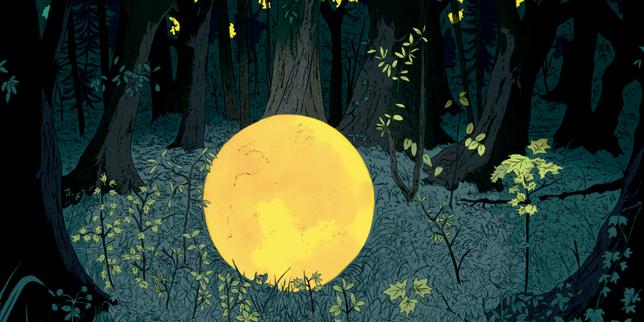
Dust does not settle in a straight line. It falls in quiet, patient layers, draping itself over centuries of human ambition, heartbreak, and genius, waiting for a hand to wipe it away.
Most people think of the Smithsonian Institution as a grand theater. You know the polished marble. You remember the soaring atrium of the National Air and Space Museum, the hushed reverence around the original Star-Spangled Banner, the amber glow of the Hope Diamond. Those rooms are designed to awe. They are the curated highlight reel of human existence, polished to a high sheen for millions of tourists wearing sneakers that squeak against the floor.
That is not where the soul of the museum lives.
To find the beating heart of the institution, you have to leave the crowds behind. You have to walk past the velvet ropes, down utilitarian corridors humming with industrial HVAC units, into the vast, climate-controlled storage facilities that sprawl across Maryland and the District of Columbia.
Imagine walking into a warehouse the size of several airplane hangars. Rows upon rows of high-density compact shelving stretch into the dim distance. On those shelves sit over one hundred and fifty million objects. Less than two percent of them are on view to the public at any given moment.
The rest? They are sleeping.
Consider a hypothetical archivist—let us call her Clara—who spends her days walking these quiet aisles. Clara carries cotton gloves in her pockets and a flashlight that cuts sharp cones through the gloom. Her job is not to entertain the public. Her job is to keep ghosts from fading away.
When you pull out a sliding metal rack in Pod 5, you do not find gold crowns. You find a pair of leather boots worn thin at the heel by an immigrant who walked across three states looking for work in 1894. You find a cardboard box containing thousands of glass-plate negatives capturing the worried faces of sharecroppers whose names were lost to time before the Great Depression even began. You find a cracked wooden clarinet tucked into a velvet-lined case that hasn’t been opened since a smoky jazz club in Harlem closed its doors in 1948.
These are the unseen Smithsonian treasures. They are hidden behind closed doors not out of secrecy, but out of sheer, overwhelming necessity. There is simply no room on the mall for everyone's story.
We forget the scale of what we leave behind. Every generation throws away its own trash, only for the next generation to dig it up and call it a miracle. The archivists and curators working in these subterranean vaults understand a profound truth: history is not just made by presidents and generals. History is an accumulation of ordinary things touched by extraordinary effort.
Take the collection of scientific instruments tucked away in a corner of the Museum of American History storage facility. There are brass astrolabes that helped sailors navigate treacherous seas by the light of dying stars. There are early computing punch cards that look like confetti, holding the fragile code of a world trying to figure out how to count faster.
I remember talking to a senior conservator a few years ago who was working on a collection of nineteenth-century botanical illustrations. She wore a magnifying loupe strapped to her head, her breath catching softly as she used a microscopic brush to remove a speck of mold from a watercolor of a vanishing wildflower.
"People ask me why we keep millions of dried plants and insects no one will ever look at," she told me, her hands steady as a surgeon's. "I tell them that nature is a library. If you burn the books in the back, you won't notice until you need to read the end of the story."
That is the invisible stake of these hidden vaults. They are our insurance policy against collective amnesia.
When a species goes extinct, it vanishes twice: once from the earth, and then again from our memory when the specimens rot in unmonitored drawers. When a community is displaced, its history goes with it unless someone takes the time to box up the sewing machines, the church bulletins, and the wedding photographs. The Smithsonian’s hidden collections hold the receipts of human migration, technological trial and error, and artistic desperation.
Of course, maintaining this massive ark comes with a quiet, grinding tension. Funding ebbs and flows with political tides. Climate control systems fail on humid summer nights, requiring frantic maintenance crews to rush in with industrial dehumidifiers to save nineteenth-century silk gowns from mildew. Space runs out. It always runs out. Every year, trucks pull up to the loading docks bearing more cargo—the digital servers of modern tech pioneers, the protest signs from last week's rallies, the spacesuits worn by commercial astronauts.
The archive is a living organism. It breathes in the debris of our lives and holds its breath, waiting to exhale its lessons to a future that hasn't arrived yet.
When you walk back out into the blinding sunlight of the National Mall, past the families eating ice cream and the school groups herded by whistle-blowing chaperones, the contrast is stark. You realize that the visible museum is just the tip of an immense, silent iceberg.
Beneath the surface, millions of silent witnesses are resting in the dark, waiting for someone to care about who we were before we became who we are.
A single moth-eaten coat in a metal drawer. A rusted wrench dropped in an Ohio factory floor in 1912. A roll of film capturing a smile that faded a century ago.
They are all still here. Waiting in the dark.