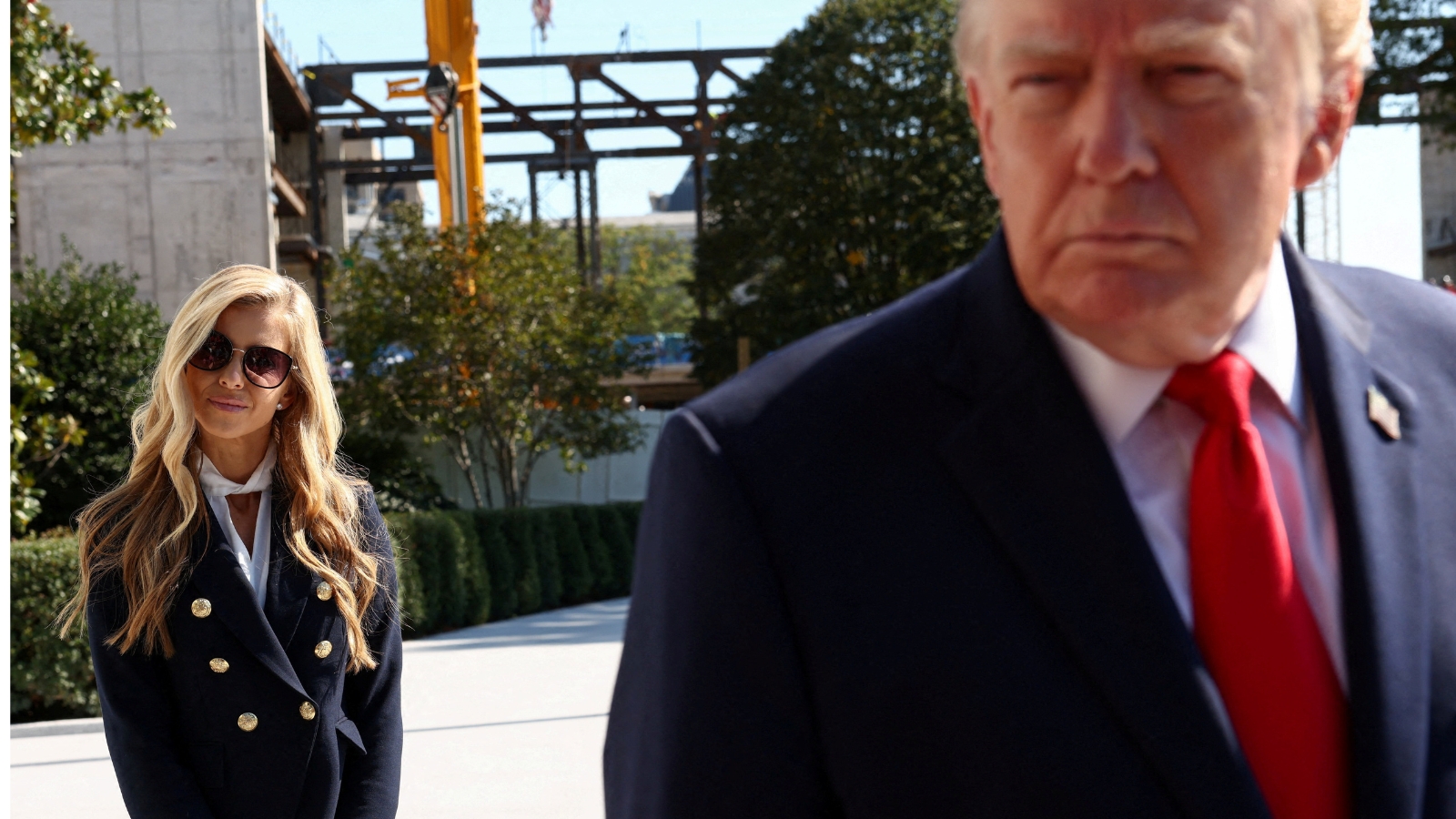
White House press secretary Katie Zacharia lasted just five days in the role in October 2026, making her tenure the shortest in the history of the post, after a roughly 15-minute debut briefing and mounting scrutiny over whether she had ever passed a bar exam. Her rapid exit followed an awkward exchange with reporters over her legal background, an ethics complaint filed in California, and sharp criticism across the political spectrum.
Five days. That is how long a communications job that routinely consumes entire careers lasted before unraveling in public view. Anyone who has spent decades watching the James S. Brady Press Briefing Room knows that a press secretary does not usually implode over a single line of questioning unless there is already a fault line running straight through the resume. When President Donald Trump named Zacharia to succeed Karoline Leavitt in mid-October 2026, he introduced her on Truth Social as a graduate of Pepperdine University and its law school and called her "an attorney," even as public records and reporting quickly pointed to a far more complicated reality. Meanwhile, you can find related stories here: Why Trump Endorsing Netanyahu Is the Biggest Mirage in Middle East Politics.
A Debut That Never Found Its Footing
Her sole formal briefing on October 13, 2026, lasted roughly 14 to 15 minutes. That brevity alone stood out in a room built for sparring, where reporters expect extended exchanges on policy, legislation, and executive decisions.
Zacharia opened with remarks praising Trump and highlighting administration talking points on prescription drug prices and midterm campaign travel. She also addressed the administration's request for Kimberly Guilfoyle to resign and stated that the White House intended to maintain and expand its new media seat. Yet she called on only three reporters before moving to wrap up, leaving a chorus of shouted questions hanging in the air as she ended the session. To explore the bigger picture, we recommend the detailed analysis by Al Jazeera.
In modern Washington, a short briefing is not automatically fatal if the answers are crisp and the command of the room is unmistakable. Here, the pacing felt hurried and defensive. Critics from CNN, The Atlantic, and late-night television pounced on the brevity and tone, while even some conservative observers questioned whether she had been adequately prepared for the spotlight.
A press secretary does not have to win every exchange on day one, but she has to look like she owns the podium.
The Bar Exam Question Unspools
Almost immediately, scrutiny shifted from how Zacharia handled the briefing room to how she had described herself before arriving there. While she earned a Juris Doctor from Pepperdine University School of Law in 2011, reporting indicated she sat for the California bar exam that year and did not pass.
When pressed by reporters about where she passed the bar, Zacharia initially offered a remark tied to moving to China, an answer that baffled listeners and fueled online skepticism. Only Chinese nationals can take the bar exam in China, and past appearances in which she spoke of living in Beijing as a corporate lawyer drew fresh examination.
By Thursday, October 15, Zacharia acknowledged she had never passed the bar exam and said she had misheard the question over the noise of Marine One while keeping a respectful distance behind the president. She also contended that she had previously checked with Pepperdine leadership about calling herself a lawyer rather than using titles like "attorney" or "esquire," a distinction that legal ethics scholars say carries real pitfalls when public statements suggest active licensure.
Consider a hypothetical example outside politics to see why this distinction matters so much to lawyers and regulators. Suppose a marketing executive finishes law school, never passes a bar exam, and tells clients on podcasts that she works as a corporate lawyer and general counsel. Even if she never steps inside a courtroom, regulators in states like California look closely at whether the public was led to believe she held a license to practice law.
Law Licenses, Cable Credentials, and Vetting Gaps
On October 14, the Campaign for Accountability filed a complaint with the State Bar of California urging an investigation into whether Zacharia violated state law by presenting herself as a lawyer without a license. Under California business and professions law, unauthorized practice and holding oneself out as entitled to practice law without a license are serious matters, though ethics complaints do not automatically result in disciplinary action and often involve contested interpretations of titles and context.
White House communications director Steven Cheung forcefully attacked the ethics group on X, dismissing the complaint as a politically motivated stunt by "deranged lowlifes". That response reflects a familiar playbook in modern media warfare: treat every credential dispute as partisan hostility and rally the base around loyalty rather than paperwork.
Still, loyalty rarely substitutes for basic vetting when a high-profile appointee faces aggressive reporters. Zacharia had prior experience in conservative media, communications at Trump Media and Technology Group, and a brief stint in early 2026 at the Department of Homeland Security. None of those roles spared her once basic facts about bar admission became a daily headline.
Why Five Days Became a Cautionary Tale
By Friday, October 16, the administration announced that Zacharia would transition to a new role to be announced later, effectively ending her brief run at the podium after five days and drawing comparisons to Anthony Scaramucci's 11-day stint as communications director in 2017. In a subsequent New York Post op-ed, Zacharia accused the press corps of suffering from "Trump Derangement Syndrome" and reaffirmed her loyalty to the president.
The gray area here is real. Cable news and political communications frequently blur titles in ways that casual viewers barely notice until a spotlight turns harsh. A law degree is a real accomplishment, and commentators often speak loosely about legal backgrounds on television.
Yet the White House press secretary stands in a different place. Every word spoken from that podium is parsed by wire services, foreign governments, opposing lawmakers, and legal watchdogs within minutes.
When a spokesperson has to walk back an answer about passing the bar exam within forty-eight hours of a truncated debut briefing, credibility erodes faster than any talking point can repair it. Anyone recruiting communicators for high-stakes public office should treat credential verification not as a formality, but as the first line of defense before the cameras ever turn on.