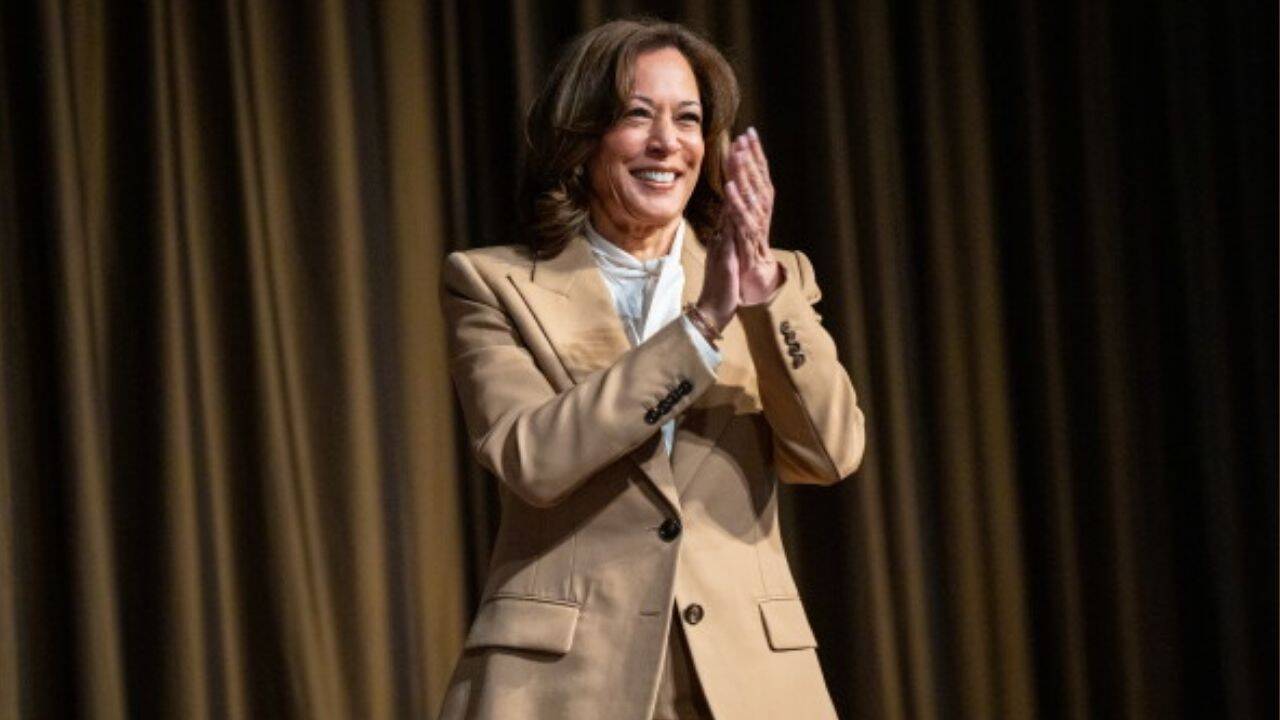
Political pundits love a horse race. Whenever a former presidential nominee steps onto a stage during a midterm election cycle, cable news chyrons immediately flash speculative headlines about the next general election. According to standard media coverage of Kamala Harris’s appearances on the midterm campaign trail, every stump speech, fundraising dinner, and endorsement is being read through a single, narrow lens: whether she is laying the groundwork for a 2028 presidential run.
That consensus misses the actual mechanics of American party politics. You might also find this similar article insightful: Why Mid-Air Plane Crashes Are Actually Proof That Aviation Safety Is Working.
Reducing a former Vice President’s midterm travel schedule to personal presidential ambition ignores how national parties rebuild donor networks, protect down-ballot incumbents, and settle internal organizational debts. In modern political operations, showing up in off-year and midterm cycles is standard maintenance for senior party figures, regardless of whether their name ever appears at the top of a national ticket again.
The Structural Reality of Midterm Surrogacy
To understand what Harris is actually doing on the trail, you have to look at the financial and logistical realities of midterm elections. Presidential campaigns centralize money, data, and media attention. Midterms do the exact opposite. They fracture resources across dozens of competitive House districts, Senate races, and state-level contests where local candidates often struggle to command national press or out-of-state small-dollar donations. As reported in recent coverage by Reuters, the results are widespread.
Political strategists and campaign finance analysts point out that former national nominees serve a very specific operational function in these cycles: they are high-yield fundraising drawcards. A House challenger in a swing district cannot easily pack a ballroom at $2,500 a plate on their own. A former Vice President and major-party nominee can.
When Harris headlines an event for a congressional candidate or a state party committee, the primary transaction is not voter persuasion—it is capital transfer. According to campaign finance principles long documented by organizations like OpenSecrets and the Brennan Center for Justice, joint fundraising committees allow national figures to raise money directly into state party apparatuses and candidate accounts simultaneously.
If you interpret that travel strictly as a shadow primary campaign, you misread the balance sheet. Party leaders expect figures who benefited from national party infrastructure to help replenish it during the midterms. Failing to show up is viewed inside party circles as a breach of political reciprocity, whereas showing up fulfills a baseline obligation.
Why the 2028 Narrative Is Premature
Speculating on a 2028 presidential primary during a midterm cycle relies on a flawed assumption about how modern primaries develop. Political scientists who study nomination contests—such as Marty Cohen, David Karol, Hans Noel, and John Zaller in their foundational work The Party Decides—have shown that early name recognition and midterm travel rarely lock down a nomination years in advance.
Consider the structural variables that make early 2028 predictions unreliable:
- The Midterm Outcome Variable: The political climate after a midterm election looks nothing like the climate before it. If a party overperforms expectations, the incumbent wing gains leverage and younger governors or senators who delivered those wins suddenly become the central figures of the next cycle. If the party underperforms, voters and donors look for an immediate break from past leadership.
- The Donor Class Pivot: Institutional donors treat midterms and presidential primaries as entirely separate investments. Giving to a joint fundraising committee headlined by Harris in a midterm year helps secure legislative majorities or block opposing agendas. That same donor class routinely splits or shifts allegiances once an open presidential primary actually begins.
- The Field Dynamic: A former nominee does not run in a vacuum. Governors with executive records, senators from battleground states, and cabinet officials build independent operations that do not depend on who campaigned hardest two years earlier.
As election analysts at outlets like The Cook Political Report and Sabato’s Crystal Ball frequently note, midterm elections are overwhelmingly referendums on the sitting administration and local economic conditions, not auditions for the next presidential cycle.
What Observers Are Actually Missing
When commentators treat every Harris speech as a 2028 trial balloon, they overlook three concrete dynamics happening right below the surface.
1. Rebuilding the Small-Dollar and Bundler Ecosystem
National campaigns leave behind massive digital infrastructure—email lists, SMS subscriber bases, and bundler networks. Left untouched, those lists decay rapidly as voters change numbers, unsubscribe, or tune out politics. By actively campaigning for midterm candidates, Harris’s political operation keeps those lists active, tests messaging, and maintains relationships with regional fundraisers. Whether she runs again or transitions into an elder-statesperson and kingmaker role, an active list is the currency of influence in Washington.
2. Narrative Rehabilitation and Legacy Control
Every losing presidential nominee faces an immediate battle over how their campaign is remembered inside their own party. Stepping back entirely allows critics and rival factions to define what went wrong. Staying visible on the midterm trail allows Harris to frame her role as a team player fighting for Democratic majorities rather than a sidelined former candidate. In political communications, presence is a defensive strategy as much as an offensive one.
3. Down-Ballot Triaging
In competitive districts, national figures are deployed selectively. Candidates in deep-blue districts welcome high-profile national surrogates to juice base turnout and enthusiasm. Candidates in R+4 or toss-up districts often prefer local messengers, economic surrogates, or targeted fundraising behind closed doors rather than big public rallies that nationalize the race. Watching where Harris holds public rallies versus where she holds private fundraisers tells you far more about Democratic midterm strategy than her 2028 ambitions.
The Trade-Offs of High-Profile Surrogacy
Deploying a former presidential nominee in a midterm election is not a risk-free proposition for the party. Strategists across both parties acknowledge that nationalizing local races can backfire.
When a high-profile national figure enters a swing district, opposition researchers and rival PACs immediately tie the local candidate to every controversial position, past vote, or administration policy associated with that figure. For vulnerable incumbents trying to run localized campaigns focused on constituent services or specific regional issues, a visit from a former national standard-bearer can hand opponents ready-made attack ads.
Furthermore, heavy media coverage of 2028 speculation can drown out the local candidate’s actual message. If a congressional challenger spends a week preparing for a surrogate visit, only for the local evening news to spend ninety percent of the segment asking whether Harris is running for president again, the local campaign loses earned media value.
How to Read the Campaign Trail Without the Hype
If you want an accurate read on what Harris’s midterm schedule actually signals, ignore the pundit panels and track four verifiable indicators:
- Federal Election Commission (FEC) Filings: Look at the quarterly reports for her leadership PAC and joint fundraising committees. Check how much money is flowing directly to state parties and House/Senate challengers versus how much is being spent on consultants, travel overhead, and list acquisition.
- State-by-State Travel Patterns: Distinguish between general battleground states (like Pennsylvania, Michigan, or Georgia) and early presidential nominating states (like South Carolina, New Hampshire, or Nevada). Heavy, unprompted stops in non-competitive midterm states that happen to hold early primary dates point toward national ambition; stops concentrated in competitive House districts point toward party maintenance.
- Staffing and Consulting Hires: Watch where senior aides land. If top strategists from her previous campaign take jobs with state parties, independent expenditure groups, or congressional campaigns, the operation is focused on the midterms. If they remain clustered in a tightly held personal PAC with low disbursement rates to candidates, they are keeping powder dry.
- Message Discipline: Listen to the stump speech itself. A surrogate focused on the midterms talks almost exclusively about the local candidate, the immediate legislative stakes, and turnout mechanics. A candidate testing a presidential message introduces a distinct personal policy agenda that diverges from the party's current consensus.
Midterm elections are grueling, unglamorous exercises in organizational grunt work. Treating every stop on the trail as a prologue to 2028 turns a straightforward story about party fundraising and coalition maintenance into perpetual campaign theater.


