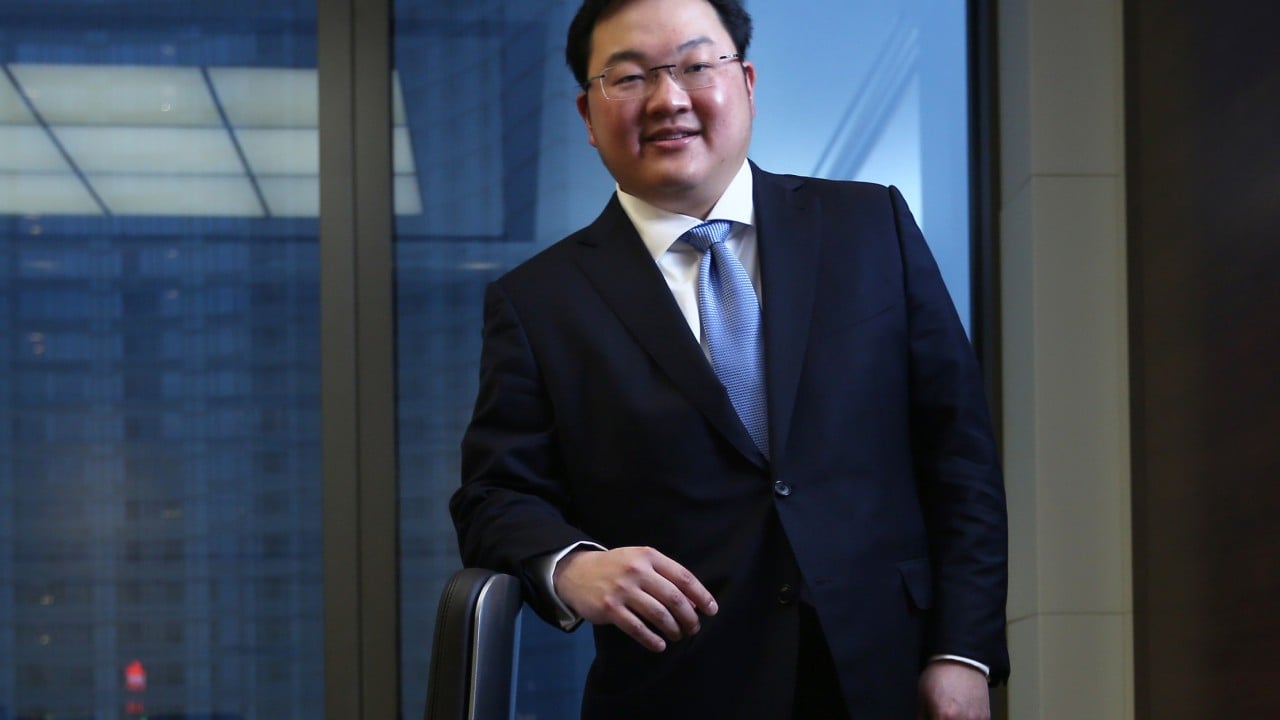
The mainstream media is obsessed with a fairy tale where Jho Low is a fugitive hiding in a basement in Macau, trembling at the thought of a Department of Justice (DOJ) subpoena. They tell you he’s a pariah. They tell you he’s a failed gambler. They tell you that a presidential pardon is his only hope, and because that pardon is "unlikely," his story is over.
They are wrong. They are looking at the 1MDB scandal through the narrow lens of criminal law while ignoring the expansive reality of global finance. Low Taek Jho didn’t just steal money; he stress-tested the integrity of the global financial plumbing and found it wanting. He isn't a common thief. He is a sovereign arbitrageur who leveraged the friction between competing superpowers.
While the "experts" debate the likelihood of a Trump-era pardon or the legal maneuvers of the DOJ, they miss the brutal truth: Jho Low is more valuable to the world’s intelligence and financial agencies as a free man with secrets than as a prisoner in a jumpsuit.
The Myth of the "Failed" Fugitive
Most journalists write about Low as if he’s a cornered animal. They point to the civil forfeiture of over $1 billion in assets as proof of his decline. This is amateur hour.
In high-stakes international money laundering, the "cost of doing business" isn't a jail cell; it’s a settlement. When Low surrendered nearly $700 million in assets—including high-end real estate and a private jet—he wasn't losing. He was buying a stalemate.
Think about the mechanics of the 1MDB heist. We are talking about $4.5 billion diverted from a Malaysian sovereign wealth fund. Even after the DOJ's "historic" seizures, billions remain unaccounted for. Low didn't lose everything. He optimized his portfolio. He traded his visible, seized assets for the invisible, liquid assets that allow him to move through the shadows of the Chinese security apparatus.
The media focuses on the yacht Equanimity. They should be focusing on the ledger of the shell companies that were never named in the indictments.
Why a Pardon is Irrelevant to a Shadow King
The "High Stakes, Low Odds" crowd loves to talk about the political optics of a presidential pardon. They argue that the sheer scale of the 1MDB theft makes Low "too toxic" for any administration to touch.
This assumes Low needs the United States. He doesn't.
We live in a bifurcated global economy. The West operates on the SWIFT system and the rule of law. The East, increasingly, operates on a "favors and leverage" model. Low is currently the ultimate bargaining chip between Washington and Beijing.
Imagine a scenario where the US government actually wants Low back. To get him, they would have to offer China something of equal or greater value. Is the extradition of one financier worth a trade concession? Is it worth a stand-off in the South China Sea?
Low isn't hiding; he is being hosted. He provides the Chinese intelligence services with a map of exactly how Western banks—Goldman Sachs, Deutsche Bank, JPMorgan—fail to monitor their own back doors. He is a walking encyclopedia of Western financial fragility. That information is worth more than a thousand pardons.
Goldman Sachs and the Great Distraction
The narrative that 1MDB was the work of a "rogue financier" is the greatest lie Goldman Sachs ever sold.
The bank paid nearly $3 billion in penalties. Their Malaysian subsidiary pleaded guilty. But notice how the blame was carefully funneled toward Low and a couple of "bad apples" like Tim Leissner.
By making Low the cartoonish villain of the piece—the man who spent millions on Cristal and Vegas suites—the financial system avoids a much darker conversation. 1MDB didn't happen because Jho Low was a genius. It happened because the global banking system is designed to allow $4.5 billion to disappear if the fees are high enough.
Low was a client. A high-value, high-risk client that every major bank was salivating to onboard. He didn't break the system; he used it exactly as it was built.
The Real Search Intent: Why Is He Still Free?
People ask, "Where is Jho Low?" and "Will he ever face justice?"
The honest, brutal answer is that "justice" is a concept for people who can't afford a sovereign defense. Low has effectively achieved what I call Stateless Immunity.
By distributing his remaining wealth across jurisdictions that do not recognize US legal hegemony, he has made himself untouchable.
- Jurisdictional Arbitrage: He moves between territories where the US has zero leverage.
- Asset Fractionalization: His wealth is no longer in "things" like yachts, but in "favors" and "access."
- Information Asymmetry: He knows which politicians in Malaysia, the Middle East, and the US took the money. That is his life insurance policy.
The Fatal Flaw in the Prosecution's Logic
The DOJ’s strategy is based on the idea that they can squeeze Low until he has nothing left. This ignores the "Sunken Cost" of his protectors.
If China hands over Low, they lose a window into the financial mechanics of their adversaries. If Malaysia pushes too hard, their own political foundations might crumble under the weight of Low’s testimony.
Low isn't waiting for a pardon. He’s waiting for the world to get bored. He’s waiting for the next crisis—a war, a pandemic, a financial collapse—to push 1MDB into the history books.
The consensus says he’s a loser because he can't go to New York. I say he’s the winner because he took $4.5 billion from a sovereign nation, humiliated the world’s most powerful investment bank, and is currently living a life of luxury while the best investigators in the world can only write sternly worded press releases.
Stop asking if he will get a pardon. Start asking why he doesn't need one.
The man isn't a fugitive. He’s the ghost in the machine. He is the personification of the fact that if you steal enough, the law stops being a barrier and starts being a negotiation. And Jho Low is the best negotiator we’ve seen in decades.