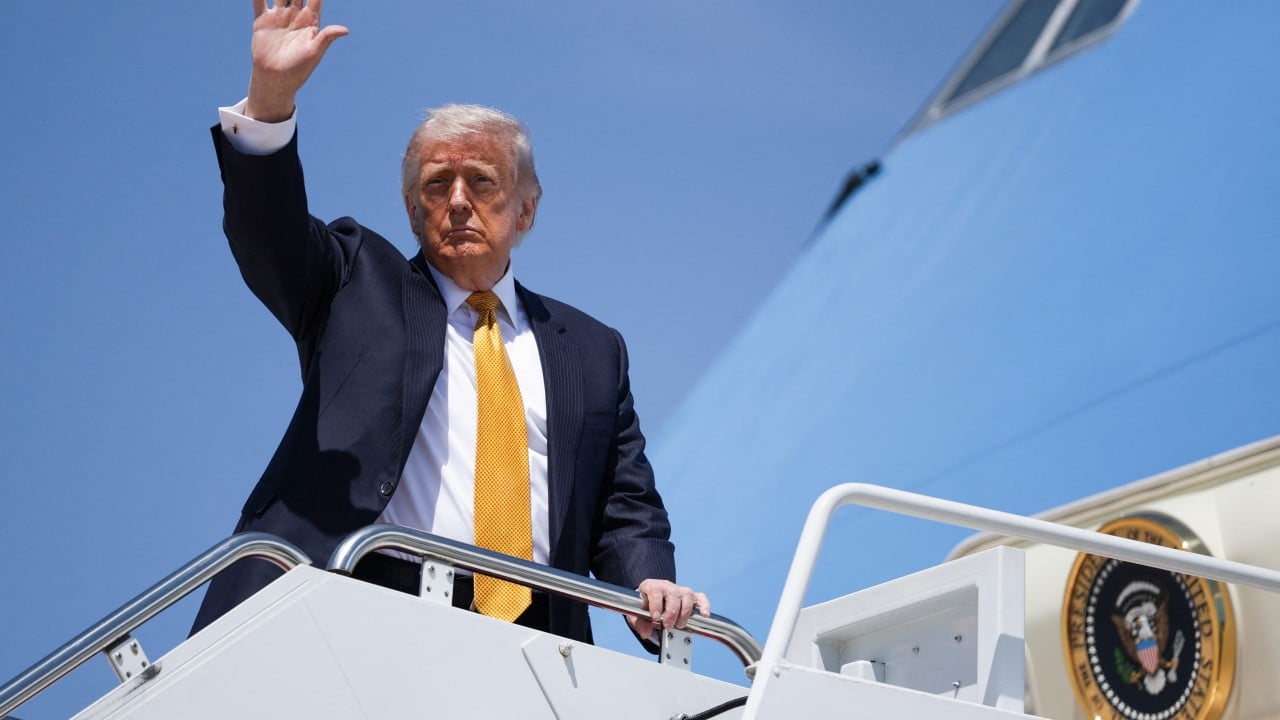
Donald Trump just touched down in Beijing, but the real story isn't the red carpet or the military guard. It's the guy who wasn't supposed to be on the plane. Jensen Huang, the leather-clad engine behind the AI revolution, boarded Air Force One in Alaska after a frantic, 11th-hour invite from the President. This isn't just a business trip. It's a high-stakes play to see if the U.S. can keep its lead in the silicon arms race while reopening a door that's been slammed shut for years.
The news cycle was buzzing with reports that the Nvidia CEO had been snubbed. Trump, never one to let a media narrative settle, took to Truth Social to call those reports "fake news" while Huang was already mid-air. By bringing the world’s seventh-richest man along, Trump is signaling that the U.S. is ready to talk chips, and specifically, the $50 billion opportunity China represents for Nvidia.
The silicon heavyweights in the room
You've got a delegation that looks like a who’s who of American capitalism. Elon Musk, Tim Cook, and Goldman Sachs’s David Solomon are already there. But Huang's presence adds a layer of tension that wasn't there forty-eight hours ago. Nvidia has been stuck in a regulatory purgatory, unable to ship its top-tier H200 chips to Chinese buyers due to strict export controls.
Beijing is starving for these processors. Without them, their AI ambitions are running on a treadmill. Trump’s strategy seems to be dangling the "magic" of these tech leaders to get President Xi to "open up" the Chinese market. It's a classic Trump move: use the crown jewels of American tech as a bargaining chip for broader trade concessions, including help with the ongoing conflict in Iran.
What is actually on the table
Don't let the handshakes fool you. The atmosphere is thick with friction from the 2025 trade war. The agenda is packed into a 36-hour window, covering everything from Taiwan arms sales to the blockage of the Strait of Hormuz. Here is what the tech giants are actually looking for:
- Nvidia: Immediate clearance to ship H200 chips. Every month of delay is billions in lost revenue and a faster path for Chinese domestic rivals to catch up.
- Apple: Stabilizing supply chains that have been hammered by regional instability and seeking assurances against sudden regulatory crackdowns on the iPhone.
- Tesla: Expanded data-sharing permissions for its Full Self-Driving (FSD) software in a market that's increasingly hostile to foreign EVs.
Why Huang’s late arrival matters
If you're wondering why this was a last-minute addition, look at the optics. Initially, the White House likely wanted to keep the focus on traditional trade—beef, soybeans, and Boeing planes. But AI is the only thing that matters in 2026. Excluding the leader of the company that defines the era made the U.S. look disorganized.
By pulling Huang in at the 59th minute, Trump shifted the focus of the entire summit. It’s no longer just about trade deficits; it’s about who controls the intelligence of the future. Huang has been vocal about how vital China is to Nvidia’s long-term health. He’s not there for the sight-seeing. He’s there to lobby for a framework that allows American companies to sell to China without handing over the keys to the kingdom.
The risk of the "magic" approach
Trump’s Truth Social posts claim he’ll ask Xi to let these CEOs "work their magic." That’s a risky bet. Xi isn't looking for magic; he’s looking for parity. China has spent the last two years doubling down on domestic semiconductor lithography to bypass U.S. sanctions. If this summit doesn't result in a concrete loosening of export bans, it might just be a very expensive photo op for the American tech sector.
How to track the fallout
The market already reacted, with Nvidia shares jumping 1.5% overnight. But the real movement will happen when the "tête-à-tête" concludes on Friday. Watch the language used in the joint statements. If there is a shift from "not supporting" Taiwan independence to "opposing" it, or if the U.S. agrees to "collaborative AI safety guidelines," you'll know a deal was struck behind closed doors.
Keep a close eye on the Commerce Department's export list over the next two weeks. If the H200 suddenly gets a green light for specific "civilian" data centers in China, the tech sector is going to rally. If the meetings end with nothing but vague promises about soybeans, expect a sharp correction for the big tech names that hitched a ride on Air Force One.
The immediate move for anyone watching the markets is to hedge against the volatility of the Friday press conference. These summits are notoriously unpredictable, especially when the "Great Jensen Huang" is in the room.