Two people dead, including a child. Another evening shattered by smoke and glass in Jaramana.
When an explosive device packed inside a car went off in this Damascus suburb on Saturday evening, November 14, 2026, the immediate headlines focused on the casualty count. Rightly so. A child died, another person was killed, and at least one more was wounded near a battery factory in a densely populated residential neighborhood. Yet reading a standard wire brief leaves you with a frustratingly flat picture. You get the who, what, and where, then you click away wondering why a suburb outside the Syrian capital keeps getting hit nearly two years after Bashar al-Assad fell in December 2024.
Honestly, treating a blast in Jaramana as just another isolated security incident misses what is actually happening on the ground. It is a symptom of deeper, unresolved fault lines in post-Assad Syria. And if you care about regional stability, humanitarian access, or simply understanding what comes after regime collapse, you have to look past the initial police cordon.
What Actually Happened in Jaramana
Let's start with the facts we have, because early reports from any chaotic blast scene are messy. Syrian state media, including the Syrian Arab News Agency and state television, along with the Interior Ministry, reported that a car bomb exploded on Saturday evening in Jaramana, killing two people, including a child, and wounding another. Security forces quickly set up a perimeter and opened an investigation.
Witness accounts add a chilling detail that makes the attack feel even more deliberate. According to Associated Press archive reporting from the scene, a local concierge and resident named Nashat Issa said an unfamiliar car arrived around noon and parked between residential buildings. When a nearby car owner asked the driver to move it so he could pull his own vehicle out, the driver promised to return in five minutes, walked away, and never came back. Around 7:15 or 7:30 p.m., the car blew up, sending flames and smoke up toward apartments and shattering windows while terrified children were inside.
Notice how different officials and outlets sometimes give slightly varying snapshot figures right after an explosion. In AP's scene documentation, Yasser al-Qaderi, identified as Director of the Eastern Ghouta District, spoke of an explosion in a populated civilian area with one fatality confirmed at that moment and three injured, one seriously, while other reporting citing the Interior Ministry and state outlets put the toll at two killed, including a child, with one or two wounded. That discrepancy isn't a conspiracy. In the first hours after a blast, emergency crews count bodies, triage the wounded, and update tallies as hospital information comes in.
Still, the core reality does not change. Civilians living ordinary lives between apartment blocks and local shops paid the price for a device planted in a parked vehicle.
Why Jaramana Keeps Showing Up in Security Reports
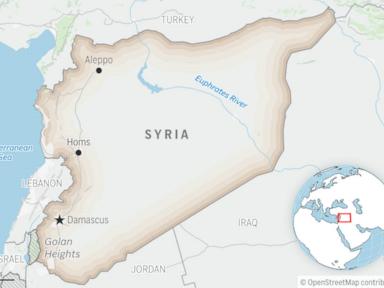
If you haven't followed Syrian local geography closely, you might wonder why Jaramana specifically keeps popping up in news dispatches. Located just southeast of central Damascus, it has a large Druze minority population. That demographic mix matters enormously in a country trying to rebuild political order after December 2024, when opposition forces ousted Assad and an Islamist-led government took power.
Tensions have flared periodically between segments of the Druze community and Sunni Muslim Syrians who back the new authorities. At the same time, armed groups hostile to the transitional order—including factions affiliated with the Islamic State group—have continued to exploit security gaps across Syria.
Jaramana is not a quiet backwater insulated from those pressures. Earlier in 2026, in August, another explosion struck Jaramana when an attack on a bus wounded 14 people, according to SANA. And in July 2026, two explosive devices went off in Damascus near a hotel where French President Emmanuel Macron was staying during a high-profile visit, killing one person and wounding 36, with authorities blaming an Islamic State-affiliated group.
Put those dots together and a pattern emerges. No single incident proves who planted the November car bomb before investigators finish their work. Yet the timing and location show how vulnerable urban spaces remain when local grievances, contested authority, and militant spoilers overlap.
Regime Change Does Not Equal Instant Calm
A common mistake outside observers make—and I've seen it in plenty of commentary—is assuming that once a long-running regime falls, everyday violence stops. It doesn't work like flipping a light switch.
When a central state collapses or transforms rapidly, security institutions have to be rebuilt or reorganized from scratch while weapons, networks, and old resentments are still floating around. Even if Damascus looks calmer on paper than it did during the worst years of Syria's civil war, pockets of instability can flare up in hours. A parked car in a residential alley requires very little logistical scale to cause maximum psychological shock.
That psychological shock is kinda the point of a car bomb in a neighborhood with kids and shops. You don't need hundreds of casualties to rattle an entire suburb. You just need one loud detonation at dinner time so parents hear glass breaking and wonder if the streets are ever truly safe.
The Bigger Danger Threatening Syrian Children Right Now
Car bombs grab global headlines fast, especially near a capital city. Yet there is another, quieter killer stalking children across Syria in late 2026 that gets far less airtime.
Landmines and unexploded ordnance.
On November 10, 2026—just four days before the Jaramana explosion—Save the Children issued an urgent warning after four children were killed by landmines in Syria in less than a week, double the weekly average from earlier in the year. According to the organization's November 10, 2026 release citing UN and local reporting, 269 children had been killed and 1,616 injured by unexploded ordnance across Syria since December 2024.
Think about those numbers for a second. Over sixteen hundred children injured since late 2024.
Save the Children's reporting includes heartbreaking specifics that strip away any abstract policy language. Three children between the ages of eight and twelve were killed in an explosion while herding sheep. A fifteen-year-old boy named Yaser in Deir ez-Zor picked up something that looked like a pen, lost a pinkie finger, and suffered shrapnel injury to his eye and blurred vision. Days later, on November 25, 2026, Anadolu Agency reported another blast in rural Raqqa province that killed three people, including a thirteen-year-old boy.
As Save the Children's Acting Country Director in Syria, Jeremy Stoner, put it, children in Syria face a deadly reality where leaving the house can carry lethal risk. Whether a child is walking past a suspicious parked car in Jaramana or herding animals near contaminated ground in eastern or northern Syria, childhood safety remains fragile.
What Good Coverage Misses and What Remains Debatable
If you only read short breaking-news blurbs, you're gonna miss three critical nuances that separate superficial reporting from real understanding.
First, early casualty numbers from local authorities and wire footage are provisional. When official statements say two people died including a child, and an on-scene district official initially confirms one fatality with three injured before updated figures circulate, responsible readers treat the exact tally as evolving until medical and security confirmations align.
Second, attribution in post-Assad Syria is frequently contested or unverified in the immediate aftermath. Officials may point toward certain groups, or analysts may look at prior attacks—such as the July Damascus blasts blamed on an Islamic State affiliate—yet blaming a specific actor without published forensic or investigative proof is guesswork. Good journalism names what authorities say, notes prior incidents, and stays honest about what hasn't been proven yet.
Third, there is real debate over how best to stabilize communities like Jaramana. Some observers argue that heavy security sweeps and tighter checkpoints are the immediate priority to stop car bombs and militant cells. Others warn that heavy-handed security measures without local trust and minority reassurance can deepen friction between communities and the central authorities. Honestly, both sides are pointing at real risks. Security without trust feels like occupation; trust without basic security leaves residents exposed to attacks like Saturday's.
How to Follow Stories Like This Without Getting Misled
When a breaking story hits about an explosion in Syria—or any conflict-affected place—you don't need to doomscroll rumor threads on social media to stay informed. You can read smarter in a few practical steps.
Start with primary and established reporting rather than unverified viral clips. Look for wire dispatches, established regional outlets, and humanitarian agencies such as Save the Children or ReliefWeb for verified context on civilian harm. Check the date and exact location—Jaramana near Damascus is a very different setting from rural Raqqa or Deir ez-Zor, even though both show how uneven security is across the country.
Watch for updates 24 to 72 hours after the initial blast. Casualty counts often shift slightly, and investigators sometimes release clues about how the device was planted or whether anyone claimed responsibility. Finally, keep both acute attacks and chronic hazards in view at the same time. Car bombs make sudden noise, while unexploded ordnance grinds away at families week after week. Paying attention to both gives you a far clearer, more honest view of what life in Syria actually looks like right now.