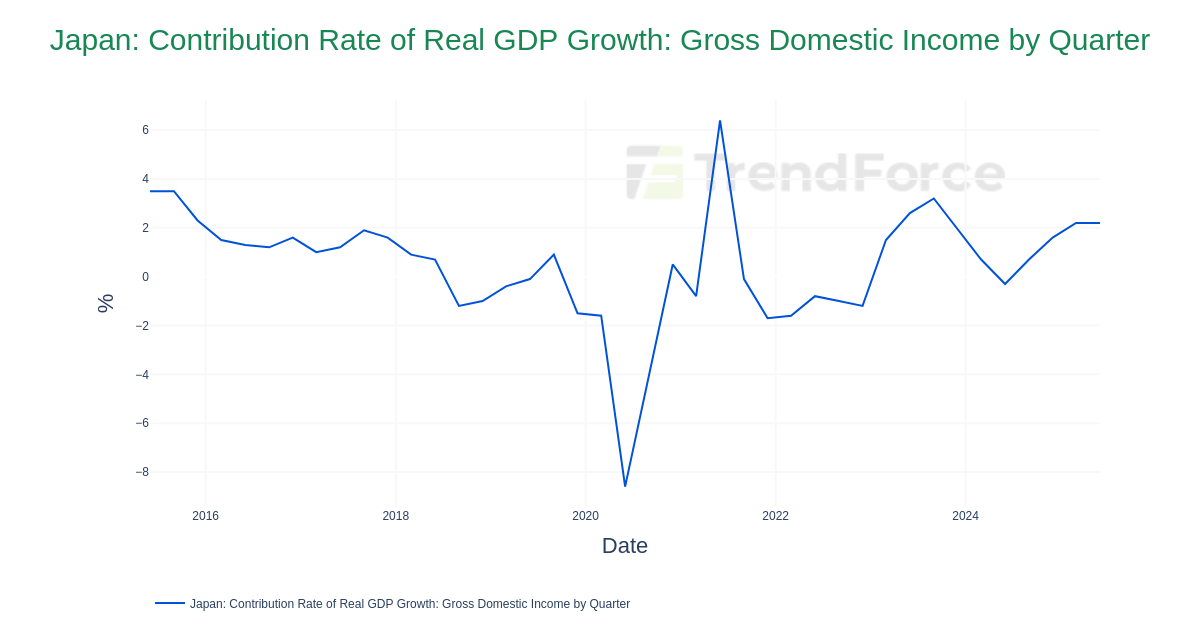
Every quarter, financial journalism serves up the same tired fairy tale. Tokyo prints a modest GDP expansion, commentators pop metaphorical champagne, and headlines trumpet how Japan managed a resilient 1.1 percent growth rate despite global headwinds. It sounds reassuring. It sounds like proof that decades of structural stagnation are finally yielding to a quiet turnaround.
It is also complete nonsense.
I have spent years watching institutional investors swallow this comfort food while actual balance sheets bleed out in the open. When you strip away the statistical accounting tricks, the depreciating currency illusion, and the demographic arithmetic that no central bank can print away, that 1.1 percent figure looks less like a recovery and more like the twitch of a nervous system long after brain death.
Stop asking why Japan keeps beating expectations. The real question is how long Tokyo can sustain a debt-soaked illusion before the bond market stops pretending to believe it.
The Nominal GDP Mirage and the Weak Yen Trap
Let us address the foundational misunderstanding that powers every bullish macro report out of East Asia. Journalists love to cite headline growth without asking what currency that growth is denominated in, or how much of it comes from external pricing power versus domestic vitality.
When the yen collapses to historic lows against the dollar, multinational conglomerates headquartered in Tokyo report inflated yen-denominated revenues when repatriating overseas profits. Toyota sells a car in Ohio, brings the dollars home, and watches the exchange rate turn a flat performance into a bookkeeping victory. That is not economic expansion. That is currency devaluation disguised as productivity.
I have watched corporate boards celebrate record profits while their domestic purchasing power shrivels to dust. Real wages adjusted for inflation have spent most of the decade moving in the wrong direction. If your population has to spend more yen to buy imported energy and groceries while domestic output stagnates in real terms, a 1.1 percent headline growth print is nothing more than a statistical condolence prize.
Nominal growth fueled by a cheap currency is a sugar rush. Once the energy import bill outpaces export margins, the sugar wears off, leaving behind a heavily indebted state with structurally impaired consumption.
The Demographic Reality Nobody Wants to Quantify
Every conversation about Japanese productivity eventually hits a wall of silence regarding demographics. Economists prefer to talk about robotics, artificial intelligence, and corporate governance reform because those topics fit neatly into PowerPoint presentations.
They do not like to talk about the shrinking denominator.
Imagine a scenario where a country's total economic output stays flat or inches up by a fraction of a percent, but the workforce contracts by half a percent every single year. Mathematically, per capita metrics might look mildly acceptable on a spreadsheet. In reality, you are running a society where shrinking towns are abandoned, rural infrastructure is left to rot, and pension funds are caught in a perpetual deficit spiral.
Japan's modest expansion is largely an artifact of labor force participation rates creeping upward among seniors and women. Grandparents are returning to retail counters and corporate reception desks not because they discovered a newfound passion for office life in their seventies, but because the social safety net cannot support retirement at scale.
Calling this growth is like praising a marathon runner who finishes the race by crawling on their hands and knees after amputating both legs to drop weight. Technically, motion occurred. Functionally, a disaster unfolded in slow motion.
Corporate Hoarding Versus Capital Allocation
For thirty years, monetary authorities pushed interest rates into negative territory, flooded the banking sector with liquidity, and practically begged corporations to invest in future productivity. What did corporate Japan do?
They hoarded cash.
Corporate cash reserves reached astronomical heights, sitting comfortably in low-yield vaults while management teams preached conservatism. Why take capital risk when domestic demand is anemic and demographic decline guarantees a shrinking consumer base?
When the Bank of England or the Federal Reserve injected liquidity, it usually found its way into asset bubbles or venture capital. When the Bank of Japan bought exchange-traded funds and forced bond yields to zero, Japanese corporations used the cheap credit to hoard liquidity or engage in defensive cross-shareholding arrangements.
The recent uptick in shareholder activism and modest dividend increases has been hailed as a governance revolution. Let us be honest about the scale. It is a drop of water on a scorching sidewalk. Foreign private equity firms score occasional wins against legacy conglomerates, but the core engine of corporate risk-taking remains ice cold.
The Unspoken Danger of the Sovereign Debt Trap
You cannot discuss Japanese macroeconomic data without confronting the elephant in the room: the government debt-to-GDP ratio sits north of two hundred and sixty percent.
For years, analysts dismissed this risk by pointing out that the debt is held domestically. Japanese households and the central bank own the Japanese Government Bonds, meaning Tokyo owes the money to itself. It is a neat theoretical defense until reality intrudes.
When the Bank of Japan finally abandons yield curve control and allows interest rates to normalize, the servicing cost on that mountain of debt explodes. If nominal interest rates rise even a few hundred basis points, the national budget will drown in interest payments, squeezing out defense, social security, and infrastructure spending.
This is why every tiny step toward monetary normalization by the Bank of Japan is met with immediate panic in the financial press. They know the entire architecture relies on repressed interest rates. A 1.1 percent growth rate cannot service a debt burden of that magnitude if borrowing costs ever return to historical averages. The system is cornered.
Unconventional Strategies for a Trapped Market
If you are an investor or business leader still looking at Japan through the lens of traditional Western metrics, you are flying blind. Stop looking at headline GDP. Stop celebrating temporary export bumps driven by a weak currency.
To navigate this environment, focus on three actionable rules:
- Isolate domestic exposure from global cash flows. Companies tethered to domestic Japanese retail or housing are fighting a demographic headwind that marketing cannot fix. Look exclusively for firms that arbitrage Japanese engineering excellence into global markets while keeping their cost bases flexible.
- Discount currency gains immediately. If a Japanese stock or partner is outperforming purely because of the exchange rate, treat it as a temporary arbitrage window rather than a structural turnaround. Hedge your currency risk ruthlessly.
- Watch the Japanese Government Bond yield curve, not the stock market. The Tokyo Stock Exchange can dance all it wants, but the moment the bond market forces the central bank's hand on interest rates, the entire valuation paradigm shifts overnight.
The myth of steady, resilient Japanese growth is a comforting narrative for a global economy desperate for stability. Comfort is expensive, and in this case, it is entirely fictional.
The underlying engine is stalled, the demographic clock is running out, and the debt math refuses to balance. Stop cheering the 1.1 percent. Prepare for the reckoning that follows.