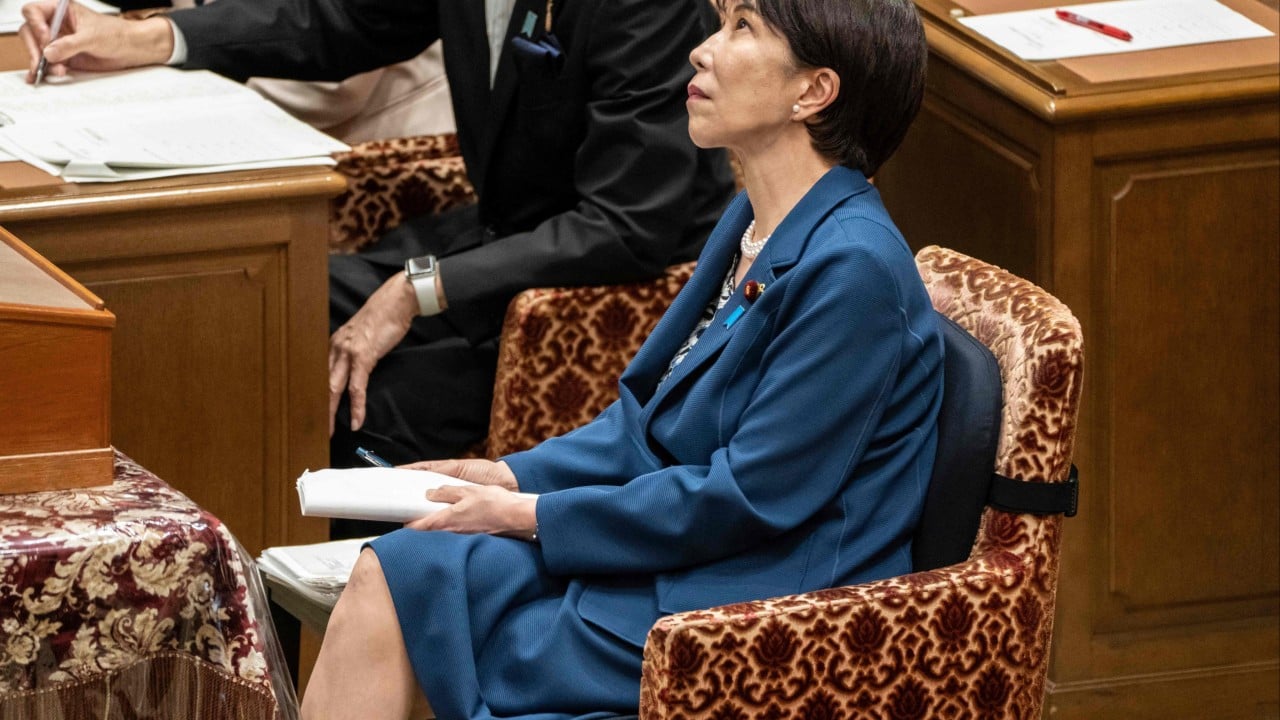
When Prime Minister Sanae Takaichi took office as Japan’s first female leader, she rode a massive wave of public support. She promised to tackle soaring electricity bills, fix real wage stagnation, and handle inflation driven by imported energy spikes.
Now, her honeymoon period is officially over.
Public polling across major media outlets in July shows her support ratings tumbling sharply. The Mainichi Shimbun saw her approval drop to 41%, while an ANN survey recorded a 10-point slide to 49.2%. The reason isn't complicated. Japanese voters are watching their purchasing power shrink while their leader spends precious political capital pushing right-wing ideological bills through parliament.
Instead of pushing through economic relief, Takaichi prioritized two deeply divisive laws: a controversial revision to the Imperial House Law and a strict ban on flag desecration. It’s a huge miscalculation that exposes a growing disconnect between her administration and ordinary citizens.
Culture Wars vs Inflation Reality
Living in Tokyo or Osaka right now means watching groceries get steadily more expensive while utility bills climb month after month. Voters expect their head of state to obsess over economic survival.
Instead, Takaichi used her parliamentary majority to push items straight out of her conservative base's wishlist.
In an Asahi Shimbun poll, 57% of respondents stated that the administration wasn't doing enough to control inflation. Takaichi had campaigned heavily on a temporary two-year sales tax cut on food. Yet, once in office, her government quietly kicked discussions on that tax cut down the road while rushing nationalist cultural policy through the Diet.
When voters are hurting financially, ideological legislation comes across as indifferent. It's a classic case of misreading a mandate.
The Imperial Succession Law Backlash
The biggest flashpoint in Takaichi's agenda is the overhaul of the Imperial House Law.
The Japanese monarchy faces a serious demographic crisis with a shrinking pool of male heirs. Rather than allowing women to inherit the Chrysanthemum Throne—a step supported by roughly 70% of the public—the new law takes a far more convoluted path. It permits the imperial family to adopt male descendants from long-defunct 19th-century royal branches. While those adopted men won't become emperor, their future sons would be eligible.
"The drop in approval ratings appears to be a backlash against the patriarchal overhaul of the law," noted Shigenobu Tamura, a former Liberal Democratic Party staff member.
The public finds this maneuver hard to swallow. Princess Aiko, the only child of Emperor Naruhito, remains widely popular across the country. The public overwhelmingly prefers a simple, modern fix: allow Princess Aiko and future female royals to reign.
The fact that Japan’s first female prime minister pushed a law explicitly designed to keep women off the throne struck many as deeply ironic. In the Asahi poll, 60% of respondents said the imperial revision failed to gain public understanding.
The Free Speech Trap of the Flag Law
Alongside the royal succession law, Takaichi pushed through a law criminalizing the desecration of the national flag, the Hinomaru.
Under the new statute, anyone who damages, removes, or defiles the Japanese flag in a way that causes "extreme discomfort or disgust" faces up to two years in prison or a 200,000 yen fine.
The government argued this fix was necessary because Japan already criminalized desecrating foreign national flags to prevent diplomatic incidents, leaving its own flag legally unprotected. However, legal scholars and opposition parties aren't buying it. Over 150 academics petitioned against the bill, warning that phrases like "extreme discomfort" are dangerously vague.
When a law punishes people based on subjective emotional reactions, it creates a chilling effect on free speech, political expression, and public protest.
Why Her Fragile Position Matters
Takaichi does not possess a deep factional power base inside the ruling LDP. Her political influence depends almost entirely on public popularity and strong electoral performance.
By burning public goodwill on ideological pet projects instead of economic relief, she risks isolating herself from both the public and her own party colleagues. Conservative lawmakers will praise flag protection and traditional royal rules, but they won't hesitate to replace a leader whose popularity dips too low ahead of regional elections.
If Takaichi wants to stabilize her cabinet, she needs to pivot immediately back to household economics.
- Fast-track the promised consumption tax cuts on food to provide immediate relief at grocery checkouts.
- Provide direct, visible energy subsidies to offset global fuel price spikes.
- Pause additional symbolic, ideological bills that trigger unnecessary constitutional battles.
- Re-open public consultations on pragmatic, long-term imperial succession options that align with public consensus.
Takaichi demonstrated she can pass controversial legislation through sheer parliamentary will. Now she must prove she can govern for the everyday economic realities of the average citizen, or watch her numbers slide even further.