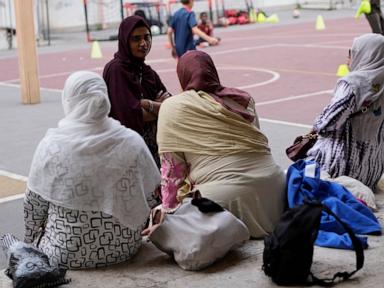
The headlines wept. Liberal commentariat columns across Europe hyperventilated. Rome, according to the predictable outrage machine, was locking the schoolhouse door against the modern world, erecting linguistic walls, and criminalizing cultural diversity because lawmakers dared debate caps on non-Italian speakers and restrictions on veils in classrooms.
Here is the lazy consensus: Integration fails when you enforce rules. Let everyone speak whatever they want, wear whatever they want, congregate in linguistic enclaves, and somehow a cohesive civic society will materialize out of pure vibes.
It is a comforting fantasy for people who do not have to live inside the chaotic reality of a fracturing public school system in Milan or Rome.
Strip away the emotional hysteria. Look at the mechanics of institutional survival. A public school is not a cultural community center. It is an assimilation engine. When you dilute the primary operating system of that engine—the national language—you do not protect diversity. You manufacture isolation.
I have watched progressive education bureaucrats in major European capitals run this exact experiment for two decades. They threw open the doors to unmanaged linguistic fragmentation, patted themselves on the back for being open-minded, and watched entire urban districts turn into parallel societies where children graduate functionally illiterate in the language of the state that issues their passports. That is not compassion. That is institutional malpractice.
The Myth of Organic Integration
The core delusion of modern educational policy is that integration happens organically.
It does not. Integration is hard, unnatural, and friction-heavy. Left to its own devices, human tribalism defaults to comfort. If a twelve-year-old immigrant arrives in a Roman middle school and can spend the entire day speaking Arabic or Mandarin, interacting only with peers from the same background, they will do so. Why wouldn't they? The friction of learning complex Italian syntax is brutal.
When schools permit classrooms to operate as multilingual holding pens, they remove the necessary pressure cooker that forces language acquisition.
Let us define terms precisely. A public education system funded by taxpayers has one non-negotiable mandate: social cohesion through shared civic competency. If you cannot read, write, and debate fluently in the national language, the doors of economic mobility remain bolted shut. You are not liberated; you are ghettoized.
Rome imposing a cap on non-Italian speakers per classroom is not xenophobia. It is mathematical common sense. If a classroom exceeds a critical mass of students who lack basic proficiency in the instructional language, the teacher stops teaching the curriculum and starts running an emergency language clinic. The educational ceiling drops for every single child in that room, native and newcomer alike.
Pretending this does not happen is how you ruin public education.
The Veil and the Architecture of Neutrality
Then comes the second lightning rod: the restriction on religious veils and garments in classrooms.
The knee-jerk defense from civil liberties lawyers is that banning garments infringes upon individual expression. But this argument misses the entire architectural purpose of the public school desk.
The classroom is a space designed to flatten inherited hierarchies. It is an equalizer where family wealth, tribal loyalties, and religious demands are supposed to take a back seat to a shared intellectual project. When you introduce hyper-visible markers of patriarchal or sectarian identity onto the bodies of minors, you reintroduce those exact fractures.
Children do not wear full head coverings or religious signifiers in primary schools because of deep, unassailable theological maturity at age nine. They wear them because families and communities enforce them. By establishing a neutral baseline of dress, the state sends an unambiguous message: inside these walls, you belong to the civic republic first, your tribe second.
My contrarian admission? This approach hurts. It causes immediate, loud friction. Families feel alienated, activists scream on television, and politicians posture on both sides. Neutrality is never comfortable because it forces people to strip away the badges of belonging that give them security.
Yet the alternative is worse. The alternative is the balkanization of the classroom, where children sit segregated by the religious and cultural boundaries of their parents, unable to look each other in the eye as equal citizens.
The Economic Brutality of Linguistic Drift
Let us talk about the labor market, because abstract moralizing pays zero bills.
I have seen companies blow millions trying to retrain young adults who graduated from European public schools with a fragmented grasp of the national language. They can code, they can think, but they cannot write a professional corporate memo, navigate bureaucratic compliance, or negotiate a contract because their education was compromised by well-meaning multilingual experiments.
Languages are economic keys. When a state refuses to enforce linguistic standards in its formative years of schooling, it is effectively picking which children will end up trapped in the gig-economy margins and low-wage service sectors.
Italy is pulling the emergency brake on a slide toward civic atomization.
Call it harsh. Call it old-fashioned. Call it whatever progressive Twitter needs to type to feel morally superior this afternoon. But remember this: a nation that loses its common language loses its ability to govern itself, and a school system that refuses to demand integration is just a nursery for future social unrest.
Stop mourning the illusion of unguided harmony. Start protecting the mechanics of actual belonging.