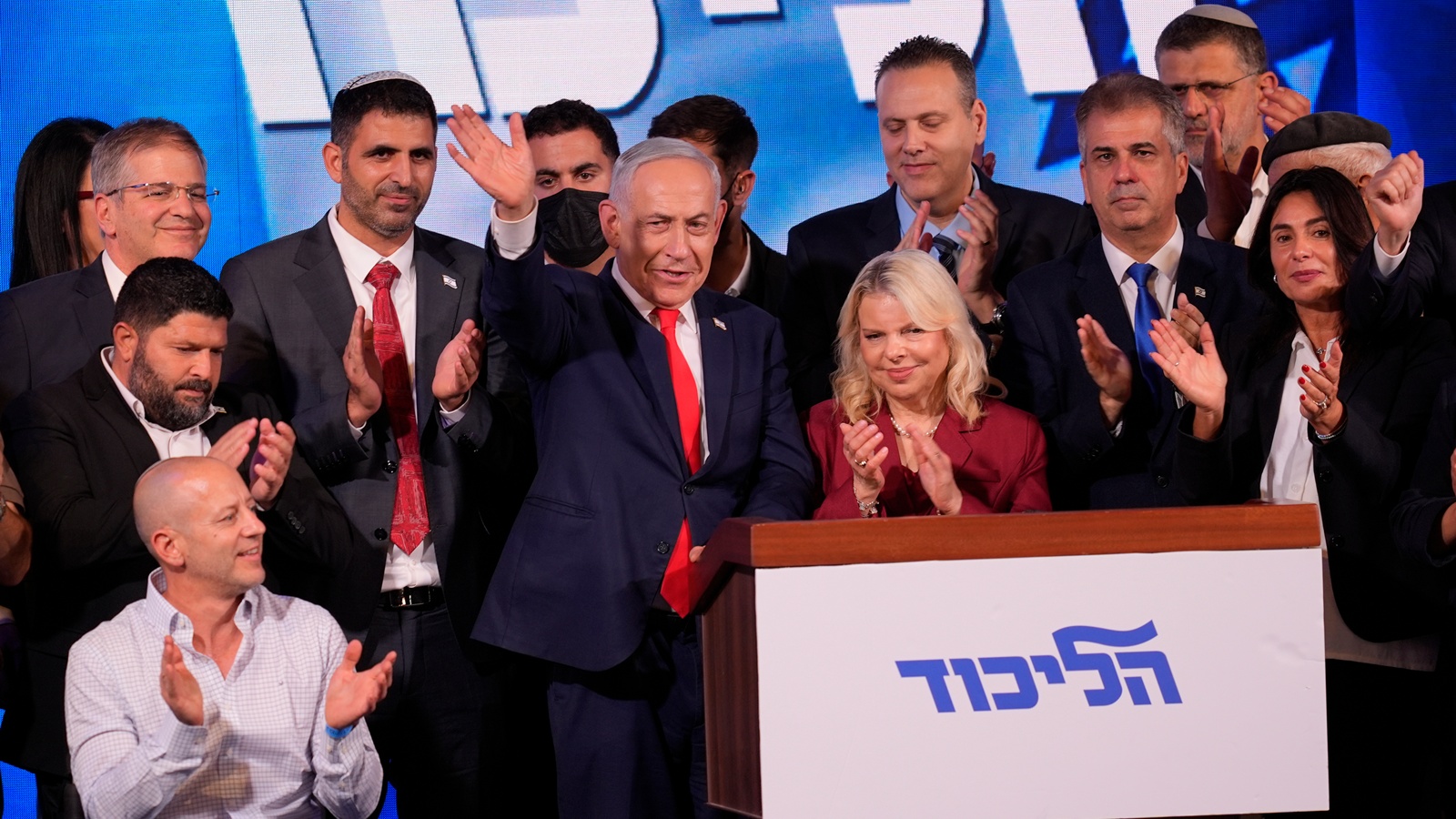
When neither Prime Minister Benjamin Netanyahu nor challenger Gadi Eisenkot secures a 61-seat majority in the 120-member Knesset, Israel's parliamentary system does not enter a vacuum; it triggers a rigid, time-bound statutory sequence governed by Basic Law: The Government. Under this framework, deadlock does not automatically produce immediate snap elections. Instead, it initiates a multi-stage bargaining cascade designed to force minority compromise before triggering automatic parliamentary dissolution.
The Structural Threshold of the 120-Seat Knesset
Israel operates under a closed-list proportional representation system with a 3.25% electoral threshold. Because the entire country functions as a single electoral district, power distribution frequently fragments across ten or more parties. To govern, a bloc must pass an absolute mathematical threshold: 61 mandates.
Standard political commentary treats a failure to reach 61 seats as an immediate governance collapse. In practice, Israeli constitutional law separates the formation of a government from its survival. A coalition requires a 61-vote majority of those voting to pass an investiture vote, provided abstentions do not outnumber affirmative votes, though in operational terms a functioning cabinet requires 61 guaranteed seats to pass a state budget and survive no-confidence motions.
When Netanyahu’s right-religious bloc and Eisenkot’s centrist-opposition bloc both stall below 61 seats—typically landing in the 52 to 58 seat range—the bottleneck shifts from electoral arithmetic to institutional game theory. The remaining seats are held by kingmaker factions, non-aligned Arab parties, or ideological defectors whose policy demands impose severe political costs on either primary candidate.
The Statutory Mandate Sequence
Basic Law: The Government (2001) dictates the exact timeline and transfer of executive formation authority following an inconclusive election. This process unfolds across four distinct phases.
- Presidential Consultations (7 Days): Following the publication of official election results by the Central Elections Committee, the President of Israel conducts formal consultations with representatives of every faction elected to the Knesset. Each faction recommends a candidate for Prime Minister. The President is not legally bound to select the leader of the largest party; the statutory mandate requires selecting the Member of Knesset (MK) with the highest probability of assembling a viable coalition.
- The Primary Mandate Window (28 Days + 14-Day Extension): The designated candidate—whether Netanyahu or Eisenkot—receives 28 days to present a government to the Knesset. If negotiations stall, the President holds discretionary authority to grant a single extension of up to 14 days. The President can withhold this extension if the candidate demonstrates zero mathematical or political progress toward a majority.
- The Secondary Mandate Transfer (28 Days): If the first candidate fails to form a government within the allotted 42-day maximum, the mandate does not automatically trigger elections. The President has two options: assign the mandate to a rival MK (such as transferring it from Netanyahu to Eisenkot, or vice versa) for a strict, non-extendable 28-day window, or inform the Knesset Speaker that no candidate possesses a viable path to a majority.
- The 21-Day Knesset Plenum Period: Should both primary contenders fail, the mandate enters its final, decentralized phase. For 21 days, any group of at least 61 MKs may submit a written request to the President nominating any sitting MK—including a compromise third-party figure—to form a government. If a nominee secures 61 signatures, that individual receives 14 days to finalize coalition agreements and present a cabinet.
If the 21-day period expires without a 61-signature petition, or if the resulting nominee fails to win a Knesset vote of confidence within 14 days, the Knesset automatically dissolves by law. New elections must then be held on the last Tuesday before the end of 90 days following dissolution.
Caretaker Government Mechanics and Executive Constraints
Throughout this 70-to-91-day negotiation cycle and the subsequent 90-day election campaign, the incumbent administration remains in office as a transitional, or caretaker, government. This status alters the balance of power between the executive branch, the judiciary, and the civil service.
- The Doctrine of Restraint: Under Israeli Supreme Court precedent, a caretaker government lacks a fresh democratic mandate and must exercise heightened restraint. It cannot make major long-term policy shifts, sign binding strategic treaties, or appoint senior civil servants (such as the Attorney General, Police Commissioner, or State Comptroller) unless an urgent, demonstrable public necessity exists.
- Budgetary Paralysis: If a new government is not formed and a state budget is not passed by the statutory deadline—typically March 31 of the budgetary year, or within 100 days of a new government's swearing-in—the Knesset dissolves automatically. During a prolonged caretaker period, the state operates on a 1/12th monthly continuing resolution based on the previous year's budget, freezing new capital expenditures and stalling multi-year defense or infrastructure procurement.
- Asymmetric Incumbency Advantage: Despite legal constraints, the sitting Prime Minister retains control over the security cabinet, emergency decrees, and diplomatic agendas. If Netanyahu enters the deadlock as the incumbent, he controls the executive apparatus during negotiations. If Eisenkot holds the mandate while Netanyahu sits in the caretaker chair, Eisenkot negotiates without institutional leverage, forcing him to rely entirely on legislative concessions to attract defectors.
Bargaining Friction and Coalition Cost Functions
Why do two seasoned political operators fail to close a 3-to-5-seat gap? The failure stems from asymmetrical coalition cost functions. In multi-party parliamentary systems, adding a marginal partner to reach 61 seats often alienates an existing core partner, resulting in a net zero or negative seat change.
Netanyahu’s Structural Constraints
Netanyahu’s negotiation perimeter is defined by the rigid ideological commitments of his base partners: ultra-Orthodox (Haredi) factions and far-right nationalist parties.
To bridge a deficit to 61 seats, Netanyahu must either poach moderate right-wing MKs from Eisenkot’s camp or seek external support from non-Zionist Arab factions. Poaching centrist MKs requires offering senior ministerial portfolios (Defense, Finance, or Justice) and freezing judicial overhaul initiatives or Haredi military draft exemptions. Doing so triggers immediate defection threats from his ultra-Orthodox allies, for whom draft exemptions and yeshiva funding are existential red lines. Conversely, relying on Arab parties—even for passive abstention during an investiture vote—causes immediate collapse among his nationalist partners.
Eisenkot’s Structural Constraints
Eisenkot’s bloc faces an inverse coordination problem: high ideological heterogeneity. His coalition pool spans secular centrists, traditional right-wingers opposed to Netanyahu, left-wing social democrats, and potentially Arab parties.
To reach 61 seats without Netanyahu’s core bloc, Eisenkot must construct a narrow technical alliance where every single faction holds absolute veto power. If Eisenkot offers concessions to Arab factions regarding municipal funding or security policy in the West Bank to secure their external support, right-wing members within his own bloc defect. If he pivots rightward to attract defectors from Netanyahu’s Likud party, left-wing and Arab factions withhold their votes. The transaction costs of satisfying mutually exclusive demands exceed the political capital available to distribute.
Alternative Resolution Pathways Short of Dissolution
When bilateral bloc negotiations hit an impasse, Israeli political history demonstrates three primary escape valves that circumvent a fifth or sixth consecutive election cycle.
1. The Parity Rotation Government
This mechanism bypasses the 61-seat ideological barrier by uniting the two largest rival blocs into a national unity government. Under Basic Law: The Government (amended in 2020 to institutionalize the "Alternate Prime Minister" role), Netanyahu and Eisenkot can legally split the premiership.
- Operational Structure: One leader serves as Prime Minister for the first 24 months while the other serves as Alternate Prime Minister with veto power over cabinet agendas and ministerial dismissals. At the midpoint, the roles invert automatically without requiring a new Knesset vote of confidence.
- Failure Mode: Rotation agreements suffer from severe commitment problems. The first Prime Minister holds an incentive to engineer a budgetary collapse prior to the rotation date—using the automatic budget-dissolution trigger to force new elections while still holding the incumbent seat, thereby denying the Alternate Prime Minister their turn.
2. Targeted Individual Defections (The "Split Faction" Maneuver)
Israeli parliamentary law restricts individual MKs from defecting in exchange for immediate rewards. Under the Knesset Law, a single MK who leaves their party without formally splitting the faction cannot run in the next election on the list of any party represented in the current Knesset, nor can they be appointed as a Minister or Deputy Minister during the current term.
However, if at least one-third of a party's MKs (or a minimum of two MKs in smaller factions) break away simultaneously, they are recognized as an independent faction. This removes the statutory penalties, allowing them to legally accept cabinet seats and state party-funding allocations. Both Netanyahu and Eisenkot actively target vulnerable multi-member factions within the opposing bloc to engineer a legal one-third split, trading top-tier ministries for the exact number of votes needed to cross the 61-seat threshold.
3. Minority Government via Tactical Abstention
A government does not need 61 affirmative votes to take office; it only needs more "yes" votes than "no" votes at the moment of investiture. If Eisenkot commands 57 seats and Netanyahu commands 58, Eisenkot can form a minority government if five opposition MKs—typically from Arab factions unwilling to sit in a Zionist cabinet—agree to leave the plenum or abstain during the vote.
While legally valid, a minority government is operationally fragile. Without a 61-seat floor, the government cannot pass primary legislation or the annual budget without ad-hoc deals for every single reading, leaving it perpetually vulnerable to a 61-vote constructive no-confidence motion.
Strategic Projections Under Persistent Impasse
If both Netanyahu and Eisenkot exhaust their respective 42-day and 28-day mandates without breaking the 61-seat barrier, the decisive battleground shifts to the 21-day Knesset plenum period. During this window, party discipline erodes rapidly as backbench MKs face the prospect of losing their seats in an unscheduled election.
The highest-probability outcome in a frozen 21-day window is not a sudden ideological breakthrough between Netanyahu and Eisenkot, but a backchannel effort by second-tier power brokers to assemble 61 signatures around a compromise Likud or centrist figure—effectively sidelining the primary bloc leaders to preserve parliamentary tenure. Absent a successful palace coup within the largest factions, the statutory clock runs out, locking the country into a 90-day election cycle under a legally constrained caretaker administration where neither side possesses the legislative authority to alter the underlying political gridlock.



