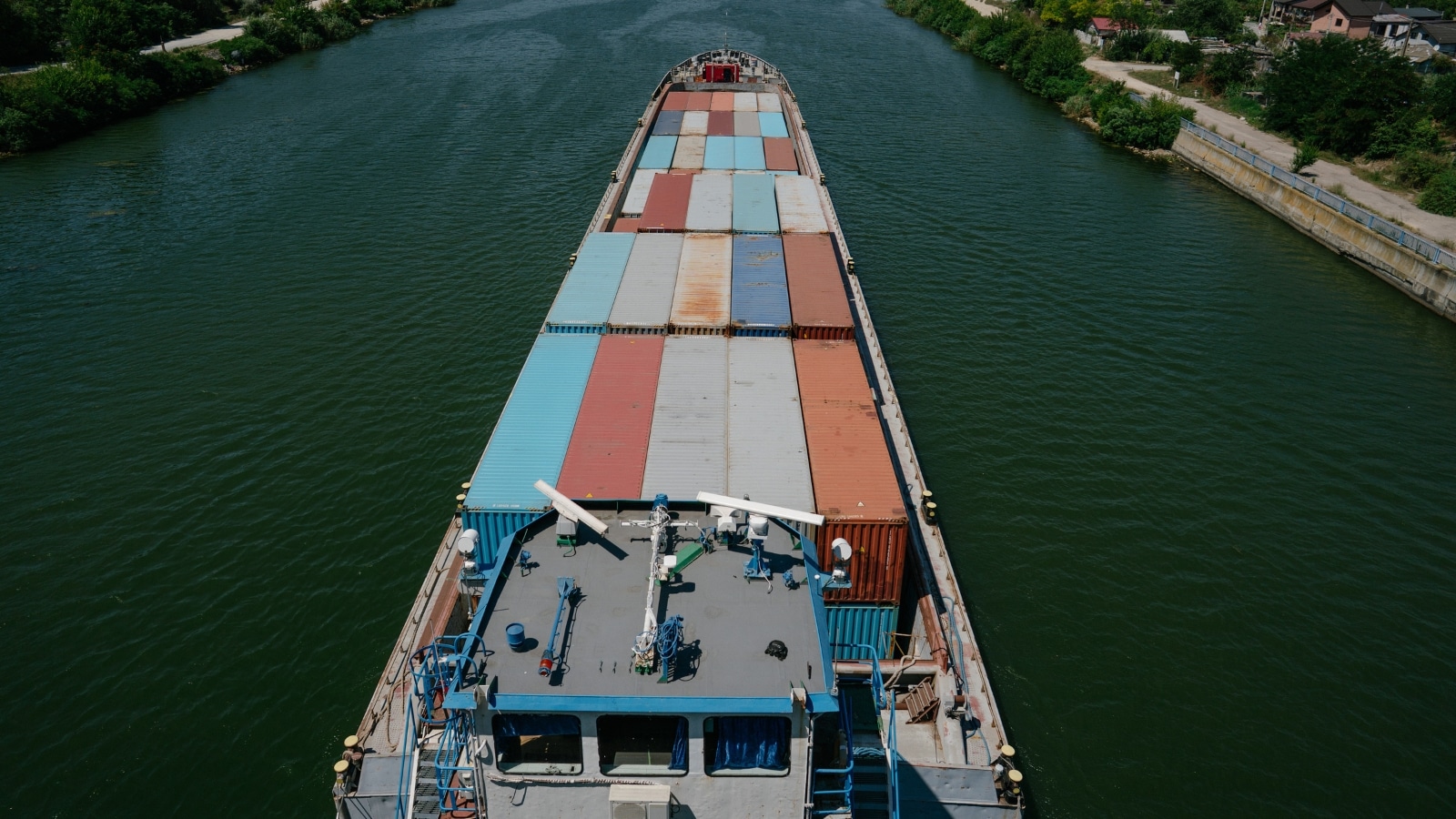
In the quiet hum of a Berlin ministry office just before midnight, coffee cups sit cold and half-empty. Outside, the German capital sleeps beneath a heavy winter blanket, oblivious to the quiet administrative earthquake unfolding behind frosted glass. Two men, one carrying the cautious weight of Berlin’s economic future, the other bearing the strategic anxieties of Paris, stare at a sprawling map of supply chains, port terminals, and digital grids.
They are drafting a switch. Not a light switch. A circuit breaker. Don't forget to check out our previous post on this related article.
For decades, the engine of the European Union ran on a simple, comforting faith: trade would cure division. We bought the solar panels, the rare earths, the specialized chemicals, and the high-tech machinery, trusting that economic interdependence would act as a permanent anchor against geopolitical storm. It was a cozy agreement. Europe provided the sophisticated consumer market and the high-end industrial design; Asia provided the muscular manufacturing capacity and the raw materials that kept the assembly lines humming from Stuttgart to Lyon.
Then the gears jammed. If you want more about the background of this, Reuters Business provides an informative breakdown.
What Berlin and Paris are quietly engineering now—the push for an emergency power to sever economic ties or slap targeted trade embargoes on the fly—is not merely a policy shift. It is an admission of vulnerability. It is the realization that the old world of frictionless globalization is dead, replaced by a ruthless arena where supply chains are weaponized and economic dominance is traded like ammunition.
To understand why two of the continent's most steadfast champions of open markets are suddenly reaching for the emergency brake, you have to look at the shop floor.
Imagine Henrik, a veteran plant manager at a mid-sized robotics firm in the industrial heartland of Baden-Württemberg. For thirty years, Henrik has watched his factory transform. The heavy clank of locally forged steel has been steadily replaced by precision-engineered subassemblies arriving in crates marked with characters from overseas. It was efficient. It drove profit margins up and made European manufacturing competitive on a global stage.
Yet, last autumn, Henrik received a notice that turned his stomach cold. A key component used in every single robotic arm his factory produces—a specialized magnet containing rare earth elements—suddenly doubled in price, followed by a delivery delay stretching from three weeks to eight months. There was no war. There was no natural disaster. There was simply a quiet regulatory adjustment whispered in a distant capital, restricting exports.
In that moment, Henrik’s factory became a hostage to geography and political will.
Multiply Henrik’s workshop by ten thousand. Scale it up from industrial magnets to electric vehicle batteries, semiconductor components, critical telecommunications infrastructure, and green energy technology. You begin to see the shape of the trap. Europe built a house of glass, entirely reliant on single-source suppliers for the very items required to build its future. And as trade tensions with Beijing escalated—fueled by subsidies, market access disputes, and the looming specter of overcapacity flooding European ports—the vulnerability became an existential risk.
This is why the joint French-German initiative for an anti-coercion instrument with teeth—often discussed in diplomatic corridors as a market cut-off power—matters so profoundly.
Historically, the European Union is a lumbering giant. Its twenty-seven member states bicker over agricultural subsidies, tax harmonization, and foreign policy declarations. To enact a trade sanction or retaliatory measure traditionally required a laborious, months-long consensus. By the time Brussels finished debating a response, the economic damage was already done, the factory floor was empty, and the market share was lost.
Beijing knew this. Washington knew this. Everyone knew that Europe's democratic deliberation was its greatest administrative virtue and its ultimate strategic Achilles' heel.
The proposed cut-off mechanism changes the physics of the game. It allows the European Commission, backed by a qualified majority of member states, to snap the cable. It grants Brussels the legal authority to restrict foreign direct investment, block public procurement bids, or restrict market access almost overnight when a third country attempts to squeeze a member state through economic blackmail.
It is economic deterrence in its purest form.
Critics worry about the precedent. They point out that building walls invites retaliation, that protectionism is a slippery slope leading straight back to the beggar-thy-neighbor policies of the 1930s. They argue that Europe, as a massive trading bloc dependent on exports, shoots itself in the foot the moment it starts slamming doors.
They are not entirely wrong. Trade wars have no winners, only survivors. But to treat this new mechanism as simple protectionism is to misunderstand the modern reality. This is not about keeping better products out; it is about keeping the lights on. It is about ensuring that the continent’s green transition and digital modernization cannot be brought to a screeching halt by the stroke of a foreign pen.
Consider what happens next if Europe fails to act.
Without a credible defense mechanism, European industries will continue to face a slow, agonizing choice: submit to external political pressure or watch their supply chains evaporate. Capital will flee to safer jurisdictions. Innovation will stall as critical inputs are choked off. The grand European experiment in autonomy will dissolve into a collection of vassal economies, begging for scraps from whichever superpower holds the monopoly on tomorrow's technology.
The midnight meeting in Berlin ends without fanfare. No dramatic handshakes, no champagne toasts. Just the scratch of a fountain pen on thick parchment and the quiet click of a briefcase latching shut.
The ministers know what they are building is an iron gate. They also know that building gates is a melancholy business, a confession that the open fields of global trust are no longer safe. But as the first pale light of dawn breaks over the Spree, touching the steel and glass of a changing continent, they also know a simple, hard truth.
Sometimes, you have to lock the door to keep the room.


