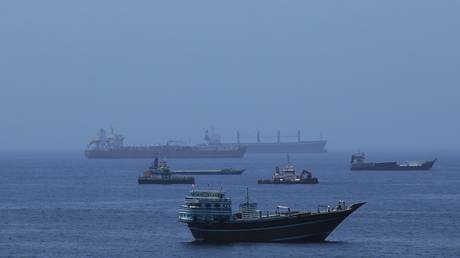
Oil prices don't care about political posturing until the world's most vital choke point gets dragged into the crosshairs. When Iran announced its intention to declare the Strait of Hormuz closed until the United States halts its military interventions in the region, the global energy sector felt an immediate jolt. It's easy to dismiss this as standard geopolitical theater. We've seen similar rhetoric dance across headlines for decades. But brushing this off as an empty threat ignores how fragile the global supply chain truly is.
If you think this is just a regional dispute somewhere far away, you're missing the bigger picture. A disruption here hits your wallet directly. It changes how much you pay to fill up your car, how much it costs to heat your home, and how international trade moves across the globe.
Let's look at what is actually happening on the water.
The Reality Behind the Choke Point
The Strait of Hormuz is a narrow stretch of water separating Iran from Oman. At its narrowest point, the shipping lanes are only about two miles wide. Through this tiny geographical bottleneck flows roughly a fifth of the world's total petroleum consumption. That translates to around 20 million barrels of oil every single day.
When Iran declares the Strait of Hormuz closed, it throws a massive wrench into global logistics. Saudi Arabia, the United Arab Emirates, Kuwait, and Iraq rely heavily on this pathway to get their crude oil to international buyers. Asia absorbs the vast majority of this supply. Countries like China, Japan, and India watch these developments with extreme anxiety because their industrial engines run on Persian Gulf oil.
Iran claims its actions are a direct response to illegal US interventions. Washington maintains that its naval presence ensures the free flow of commerce. The truth lies somewhere in the messy friction of international power dynamics. Iran knows it holds a massive economic card, and it isn't afraid to flash it when pressure mounts.
Can Iran Actually Shut It Down
The short answer is yes, but it comes at a devastating cost.
Shutting down the strait completely doesn't require a massive conventional navy. The Iranian military and the Islamic Revolutionary Guard Corps possess an extensive arsenal of sea mines, fast-attack boats, and anti-ship missiles hidden along their mountainous coastline. They can deploy these assets quickly to terrorize commercial shipping.
History gives us a grim blueprint for this scenario. During the Tanker War in the 1980s, both Iran and Iraq targeted commercial vessels in the Gulf. The US responded with Operation Earnest Will, escorting reflagged Kuwaiti tankers with American warships. That conflict proved that even limited harassment can skyrocket maritime insurance rates and disrupt steady shipping schedules.
If Iran drops mines into the shipping lanes tomorrow, commercial traffic stops instantly. No shipping company will risk a billion-dollar vessel and a massive crew in a live combat zone. The US Fifth Fleet, stationed nearby in Bahrain, would inevitably step in to clear the lanes. That means a direct military confrontation. It means war.
What Most People Get Wrong About Energy Security
A common misconception is that Western nations are safe from this chaos because they produce more of their own oil now. The US is a massive oil producer, but oil is a globally traded commodity. If 20 million barrels a day vanish from the global supply pool, prices spike everywhere. It doesn't matter if your oil comes from Texas or North Dakota. You still pay the global market price.
Local oil companies would instantly redirect their supply to the highest bidder overseas, driving domestic prices up along the way. The ripple effect hits everything. Transportation costs soar. Food production becomes more expensive. Inflation, which central banks fight so hard to control, ticks upward again.
This reality exposes the myth of complete energy independence in an interconnected world. We are all tied to the same global energy grid, and that grid runs straight through a two-mile-wide shipping lane controlled by a hostile nation.
The Economic Aftershocks You Can Expect
Market analysts frequently run simulations on what a prolonged closure looks like. The numbers are terrifying. Crude oil could easily surge past one hundred and fifty dollars a barrel within days of a confirmed closure.
A spike like that acts as an immediate tax on global consumers. Consumer spending drops because people spend all their cash at the gas pump. Airlines face crushing fuel costs, forcing ticket prices out of reach for average travelers. Shipping conglomerates divert their vessels around the Cape of Good Hope at the southern tip of Africa. That detour adds thousands of miles, weeks of travel time, and millions of dollars in extra fuel costs to every single voyage.
Global supply chains, which are already vulnerable to geopolitical shifts, would face an unprecedented logjam. The sudden scarcity of ships and the massive delays would trigger shortages of consumer goods, electronics, and industrial components worldwide.
Moving Beyond the Panic
If you are trying to navigate these turbulent financial waters, panic isn't a strategy. You need to understand the structural realities of the energy market.
Diversifying your exposure away from pure oil-dependent assets is a smart start. Keep a close eye on structural changes in global shipping routes and defense spending. Companies specializing in maritime security and alternative energy logistics often find their services in high demand during these specific crises.
Monitor official statements from the US Energy Information Administration and the International Energy Agency. These organizations track emergency oil reserves. In a true crisis, coordinated releases from strategic petroleum reserves can soften the initial blow, giving markets time to adapt. Understand the risk, track the shipping data, and adjust your personal and business financial strategies before the crisis hits the pumps.