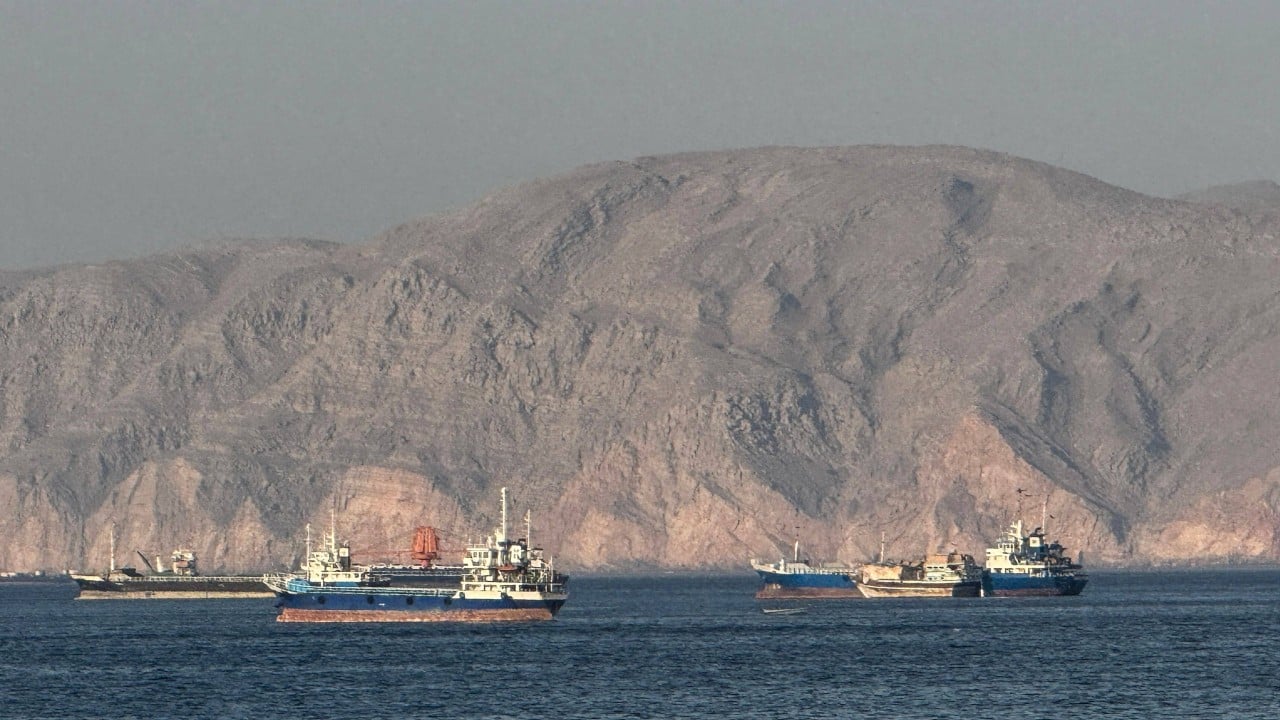
The Strategic Shift in the Gulf
Twenty percent of the world's petroleum passes through a narrow bottleneck that is barely twenty-one miles wide at its absolute minimum. The Strait of Hormuz has long functioned as a geopolitical choke point where every tanker crossing becomes an implicit hostage to Iranian naval posture.
When Tehran and Oman announced their new maritime transit agreement, conventional analysis missed the primary driver. This arrangement is not merely a bilateral convenience. It is an economic survival mechanism designed to bypass Western maritime monitoring and insurance penalties that have choked Iranian non-oil exports for years.
Oman has quietly acted as the diplomatic hinge of the Middle East for decades. By positioning itself as a neutral arbiter, Muscat provides Tehran with a functional safety valve. The new route establishes designated maritime corridors that hug Omani territorial waters closer than traditional paths, complicating conventional interdiction efforts by foreign navies.
Shipping companies operating in the Persian Gulf now face a transformed risk calculus. The route alters transit times by hours, but it introduces a far more significant variable: jurisdictional ambiguity. When vessels operate closer to Omani waters while moving Iranian cargo, enforcement actions by coalition forces become legally and operationally hazardous.
Anatomy of an Ignored Corridor
To understand why this specific corridor matters, you have to look at the hydrography and the radar screens of the Persian Gulf. Most commercial traffic relies on Traffic Separation Schemes established decades ago to prevent collisions in crowded waters. These lanes are heavily monitored, digitally tracked, and easily patrolled by foreign warships stationed in Bahrain.
The newly consolidated route exploits the outer edges of these established lanes, sliding traffic into territorial zones where international policing authorities hold significantly less leverage.
- The Depth Factor: The seabed in these alternative channels requires precise bathymetric clearance for ultra-large crude carriers, limiting the route primarily to smaller product tankers and container vessels.
- The Radar Shadow: High volumes of regional fishing traffic and dhow operations create constant clutter on surface-search radars, making targeted electronic surveillance difficult.
- The Insurance Arbitrage: Underwriters based in London and Singapore are scrambling to re-evaluate war-risk premiums for vessels utilizing these specific coordinates.
This is not an accident of geography. It is a carefully engineered path of least resistance. Tehran needed a way to move goods without flashing bright signals to maritime intelligence outfits, and Oman provided the diplomatic cover by formalizing safety protocols for smaller vessels navigating its outer shelf.
The Insurance Trap and Financial Mechanics
Cargo does not move on goodwill. It moves on paper, specifically the backing of protection and indemnity clubs that underwrite maritime liability. When the United States and European Union enforced sweeping sanctions on Iranian shipping vectors, they weaponized the insurance industry. If a ship lacked Western P&I coverage, it could not dock at legitimate ports without risking immediate seizure.
The Iran-Oman arrangement attempts an end-run around this structural blockade. By utilizing Omani ports as transshipment hubs, goods originating in Iran can be repackaged, re-documented, and assigned new certificates of origin.
A hypothetical scenario illustrates the mechanism clearly. A cargo of Iranian petrochemicals is loaded onto a regional feeder vessel bearing Omani registry flags. The vessel navigates the new Hormuz transit corridor, hugging the southern lip of the strait. Upon reaching an Omani port facility, the paperwork is adjusted. The cargo is officially logged as Omani-exported stock, clearing the path for standard international banking transfers and third-party insurance backing.
This process involves friction. It costs money to transship. It adds days to delivery schedules. But for an economy starved of hard currency, the added expense is a necessary tax paid to maintain sovereign trade survival.
Regional Friction Points and Foreign Reaction
Washington and Riyadh are watching these developments with quiet alarm. For years, the primary containment strategy relied on absolute visibility over every vessel entering or leaving the Persian Gulf. If Tehran can normalize alternative corridors through cooperative regional partners like Oman, that visibility degrades.
The United Arab Emirates occupies an uncomfortable middle ground in this realignment. Dubai has historically served as the primary financial clearinghouse for grey-market trade with Iran, yet Emirati authorities face constant pressure from Western allies to clamp down on sanctions evasion. When Oman facilitates a legal, sovereign maritime corridor that legitimizes increased traffic near the mouth of the gulf, it pulls economic gravity away from Emirati ports and toward Muscat's expanding maritime infrastructure at Duqm and Salalah.
Muscat plays a dangerous diplomatic game. By offering sanctuary to Iranian commercial maneuvers, Oman leverages its independence to secure economic investments and cheap energy supplies from its northern neighbor. At the same time, it maintains deep security ties with Western powers. It is a balancing act that requires absolute precision. One miscalculated incident involving a detained tanker or a stray missile test could shatter Muscat's carefully curated image of neutrality.
The Long-Term Reality of Fragmented Waters
The era of unified, predictable maritime governance in the Persian Gulf is over. What replaces it is a patchwork of bilateral agreements, localized security arrangements, and shadow logistics networks that defy simple oversight.
As more regional actors realize they can carve out independent maritime corridors outside traditional Western-backed frameworks, the authority of international maritime law erodes. The Strait of Hormuz will remain a vital artery of global energy and commerce, but the plumbing has changed. Tehran has found a viable pressure release valve, Oman has secured its economic relevance for the next generation, and the global shipping industry must now navigate a fractured sea where the old rules no longer apply.