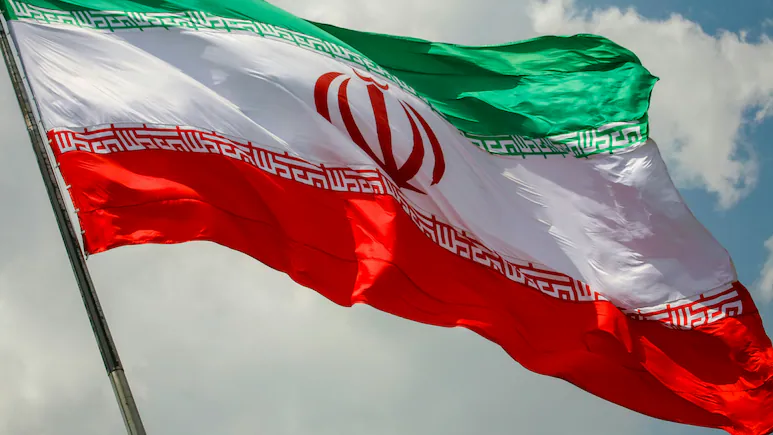
Mainstream foreign policy desks love a good summit photo-op. When Tehran rolls out the red carpet for regional foreign ministers under the banner of "preventing renewed escalation," wire services dutifully transcribe the talking points. They frame it as a diplomatic pivot. A sign of maturity. A desperate bid for regional stability.
They are completely missing the board.
When a revisionist power hosts de-escalation talks, the goal is rarely peace. The goal is friction. Specifically, friction applied to an adversary's momentum. By convening neighbors in Tehran, Iran is not waving a white flag or suddenly discovering the virtues of multilateral harmony. It is executing a classic geopolitical stalling maneuver designed to lock regional actors into a diplomatic holding pattern while facts on the ground harden in its favor.
If you read the standard coverage of Iran hosting regional powers, you walk away believing the Middle East is teetering on the edge of an accidental war that everyone desperately wants to avoid. That is lazy consensus. It assumes all parties share the same definition of "stability." They do not. For the Gulf states, stability means predictable trade routes, uninterrupted capital flows, and domestic quiet. For Tehran, stability means the unchallenged survival of its regional deterrence network and the gradual erosion of Western security guarantees in the Persian Gulf.
Treating a diplomatic summit in Tehran as an olive branch is like mistaking a boxer clinching in the eighth round for a gesture of affection. He is not trying to hug his opponent. He is trying to stop getting hit so he can catch his breath and set up his next combination.
The Architecture of Diplomatic Delay
To understand what is actually happening in those closed-door sessions in Tehran, you have to strip away the polite vocabulary of statecraft. Diplomats talk about "confidence-building measures," "mutual security frameworks," and "de-confliction." In practice, these summits function as diplomatic shock absorbers.
I have spent years watching state actors use multilateral forums to neutralize superior military or economic pressure. The playbook is remarkably consistent. When a state faces compounding pressure—whether from crippling sanctions, domestic economic stagnation, or a credible threat of military retaliation—it invites its neighbors over for tea.
Here is why that move works so well:
- It shifts the burden of restraint. Once a regional neighbor accepts an invitation to Tehran and signs onto a vague communiqué about "regional dialogue," that neighbor becomes diplomatically invested in the process. If a crisis flares up two weeks later, the host can point to the ongoing talks and argue that any forceful response undermines a fragile peace process.
- It fractures unified coalitions. Regional powers do not share identical threat perceptions. By bringing them into a single room, Tehran can exploit subtle differences between Riyadh, Abu Dhabi, Doha, and Baghdad. What looks like a unified regional bloc from the outside quickly fractures into bilateral side-deals behind closed doors.
- It buys operational runway. Diplomacy moves at the speed of translation and protocol. Military logistics and proxy supply chains move at the speed of trucks and cargo ships. Every month spent debating the agenda for the next round of talks is another month used to replenish stockpiles, harden underground facilities, and recalibrate deterrence.
International relations theorists have a precise term for this: strategic hedging. Coined and dissected by scholars like Evelyn Goh and Randall Schweller, hedging occurs when smaller or mid-sized powers refuse to align completely with a single dominant hegemon, choosing instead to maintain ambiguous, multi-directional ties to insure against sudden shifts in the balance of power. Gulf capitals are not naive about Tehran's intentions. They know the summit will not produce a lasting peace treaty. They attend because hedging against an unpredictable neighbor is cheaper than bearing the brunt of a localized war while waiting to see if Washington will actually show up.
Dismantling the "Accidental War" Myth
A core pillar of the mainstream coverage is the idea that Tehran is hosting these talks because it is terrified of an uncontrollable regional conflagration. Pundits constantly warn that the Middle East is a tinderbox where one stray rocket could trigger an existential war nobody wants.
This framing fundamentally misunderstands how asymmetric deterrence operates.
Tehran does not fear escalation indiscriminately. It fears uncontrolled escalation on terms dictated by its adversaries. There is a massive difference between wanting to avoid a war and wanting to manage the tempo of a conflict. Iran’s entire regional security doctrine—often referred to as "forward defense"—is built on maintaining a state of controlled, low-grade friction outside its own borders. By operating through a decentralized network of allied militias and political movements across the Levant and the Arabian Peninsula, Tehran can apply pressure without triggering a conventional state-on-state war.
When the heat gets too high—when retaliatory strikes hit too close to core assets or threaten vital economic infrastructure—Tehran activates its diplomatic track. The summit is a pressure release valve. It signals to regional capitals that if they keep their distance from Western military coalitions and refuse to host offensive operations, they will be spared the fallout.
Let’s look at what the mainstream press gets wrong about the "People Also Ask" questions surrounding these summits.
Are regional powers actually aligning with Iran?
No. Attendance is not alignment. When foreign ministers from Saudi Arabia, the UAE, Turkey, or Egypt sit across from their Iranian counterparts, they are engaging in transactional risk management. Following the March 2023 Beijing-brokered normalization deal between Riyadh and Tehran, Gulf states realized that direct diplomatic channels allow them to pick up the phone when maritime security in the Strait of Hormuz or the Red Sea is threatened. They are buying an insurance policy, not joining an alliance.
Will these talks stop proxy attacks in the region?
They will pause them, redirect them, or lower their intensity temporarily—which is precisely what makes the talks dangerous for outside observers. A temporary lull in kinetic activity is routinely misread by Western analysts as proof that diplomacy is working. In reality, a pause ordered from Tehran simply proves command-and-control is intact. If an actor can turn the volume down on regional friction during a summit, that same actor can turn the volume back up the moment the diplomatic utility expires.
Does hosting these talks prove sanctions are working?
Quite the opposite. A state on the verge of total collapse does not successfully convene its regional rivals on its own turf to dictate the terms of regional security architecture. Hosting the summit demonstrates that Tehran has successfully broken out of the diplomatic isolation that Western sanctions were designed to enforce. Neighboring states have calculated that isolating Iran is no longer viable, so they have pivoted to managing it instead.
The Structural Flaw in Regional Security Frameworks
Imagine a scenario where three neighbors live on a cul-de-sac, and one neighbor keeps stockpiling fireworks in his garage while occasionally tossing firecrackers onto the street. Eventually, the other two neighbors get tired of the noise and property damage. The guy with the fireworks invites them over for a neighborhood watch meeting. During the meeting, everyone agrees that fire on the cul-de-sac is bad, and they sign a pledge to keep the street safe. Nobody, however, mentions the fireworks in the garage, and nobody agrees to let the local fire marshal inspect the property.
That is the exact anatomy of a Tehran-hosted security summit.
For a regional security framework to actually prevent escalation, it has to address the underlying drivers of insecurity. In the Middle East, those drivers are structural and deeply entrenched:
- Asymmetric Capabilities: Conventional militaries in the Gulf possess advanced Western hardware, air superiority, and sophisticated missile defense systems. Iran relies on ballistic missiles, one-way attack drones, naval mines, and non-state partner forces. You cannot easily trade a drone program for an air defense battery in a diplomatic communiqué.
- Competing Legitimacy: The Islamic Republic’s revolutionary ideology views the existing regional order—and the presence of external security guarantors—as inherently illegitimate. Meanwhile, the monarchies of the Gulf Cooperation Council derive their legitimacy from stability, economic modernization, and institutional continuity. Those two worldviews can coexist tactically, but they cannot merge strategically.
- The External Guarantor Problem: Every conversation between Tehran and its neighbors is shadowed by the invisible chair at the table—Washington. Gulf states engage with Tehran largely because they harbor doubts about the durability and predictability of American security commitments. Conversely, Tehran engages with Gulf states specifically to drive a wedge between them and Washington, arguing that regional security should be handled exclusively by regional powers.
Until those structural realities change, summits in Tehran will remain exercises in tactical crisis management. They are band-aids applied to a structural fracture.
How to Read Geopolitical Summits Like an Insider
If you want to understand what is really happening when adversaries sit down to talk, stop reading the joint statements. Joint statements are written by mid-level bureaucrats to say as little as possible while sounding profound. Instead, track the friction points that get left out of the press releases.
Watch the sequencing of concessions. In genuine de-escalation, tangible, verifiable actions precede diplomatic normalization. Forces pull back, weapons shipments halt, or prisoners are released before the photo-op happens. When the photo-op happens first, and the promises of future working groups are pushed down the road, you are looking at a stalling tactic.
Follow the logistics, not the rhetoric. While foreign ministers are shaking hands in Tehran, look at maritime insurance rates in the Persian Gulf, satellite imagery of port activity, and flight tracking data for cargo planes moving between Tehran, Damascus, and Baghdad. If the logistics networks are still humming at full capacity during a peace summit, the diplomacy is purely cosmetic.
Look at who is absent. The most telling detail of any regional summit is the guest list. Notice which stakeholders are excluded or only represented by low-level envoys. When a summit excludes the primary external security guarantors or ignores the non-state actors actually pulling the triggers on the ground, the participants are deliberately avoiding the core mechanics of the conflict.
The Uncomfortable Truth About Containment
There is an obvious downside to viewing every diplomatic overture from Tehran as a cynical stalling tactic. If you treat every summit as a trap and refuse to engage, you surrender the diplomatic narrative entirely. You allow Tehran to paint itself as the reasonable adult in the room while casting its critics as warmongers addicted to endless conflict. Furthermore, total diplomatic isolation blinds you. You lose the intelligence value of face-to-face contact, misread red lines, and increase the odds of a catastrophic miscalculation.
Engagement is necessary. Gulf states are making a rational, cold-blooded calculation by showing up in Tehran. They know the game being played, and they are playing their own version of it—using dialogue to protect their trillion-dollar economic diversification plans from stray missiles.
The mistake is not attending the summit. The mistake is believing the press release afterward.
Real de-escalation requires altering the cost-benefit calculus of the party driving the friction. It requires credible deterrence, economic leverage that actually bites, and clear red lines that carry immediate, automatic consequences when crossed. Talking without leverage is just stalling with better catering.
Tehran knows this. Its neighbors know this. The only people still falling for the illusion that a weekend of speeches prevents a war are the ones writing the headlines.