Step off the plane at Incheon International Airport, and the sensory overload hits you immediately. Neon signs flash in hyper-saturated pinks and blues. K-pop music blares from high-tech storefronts. Ultra-fast 5G networks pulse invisibly through the air while autonomous delivery robots glide down the sidewalks. It feels like stepping straight into the year 2050.
But watch a young businessman in a tailored suit approach a street food cart. When he hands over his cash, he does not just pass the bills. He uses both hands, his head bowing in a precise, practiced angle. Watch a group of college students entering a noisy barbecue restaurant. Before anyone takes a seat, there is a silent, lightning-fast calculation of ages. The youngest automatically reaches for the metal chopsticks, pours the water, and serves the elders first. For a more detailed analysis into this area, we recommend: this related article.
This is South Korea. It is a nation that looks like cyberpunk but breathes like an ancient dynasty.
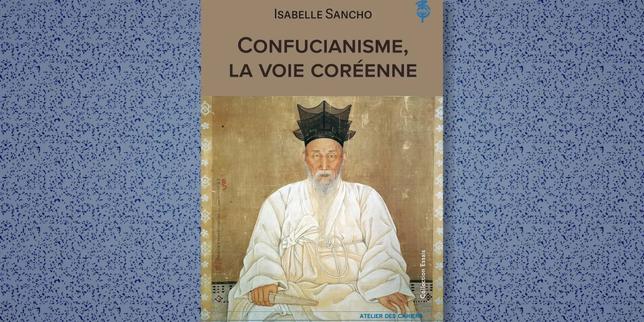
Behind the glitzy facade of the economic miracle lies an invisible operating system. It dictates how people speak, where they sit, when they drink, and how they love. It is not religion, though it demands devotion. It is not law, though its violations carry brutal social penalties. It is Neo-Confucianism, an ancient philosophy imported from China over half a millennium ago, chewed up, refined, and woven directly into the DNA of the Korean peninsula. For further details on this issue, in-depth coverage is available at ELLE.
To truly understand modern South Korea, you have to stop looking at the skyscrapers. You have to look at the invisible lines connecting the people moving between them.
The Ghost in the Boardroom
Consider Min-ho. He is a hypothetical twenty-eight-year-old marketing assistant at a major conglomerate in Seoul, but his daily existence represents millions of real corporate workers. Min-ho is exhausted. He clocked sixty hours this week. His eyes are bloodshot from staring at spreadsheets under harsh fluorescent lights.
Tonight, his manager announces an impromptu hoesik—a company dinner. Min-ho’s heart sinks. He wants to go home to his tiny studio apartment, play video games, and sleep.
He cannot. To refuse the invitation is not just a minor social faux pas; it is a direct strike against the cosmic order of his workplace.
At the restaurant, Min-ho sits at the edge of the table. He watches his boss's glass. The moment the liquid dips below the halfway mark, Min-ho must grab the bottle with two hands and refill it. When the boss pours a shot for him, Min-ho must turn his head away entirely to drink it, hiding his mouth out of respect.
This corporate ritual is not a modern invention of capitalism. It is a direct adaptation of Oryun, the Five Core Relationships outlined by Confucius thousands of years ago. Specifically, it satisfies the bond between ruler and subject, updated for the modern corporate ladder.
In the Confucian worldview, society is not a collection of independent individuals chasing personal happiness. It is a massive, interconnected organism. For the organism to survive, every part must know its exact place and function. The ruler must be benevolent, and the subject must be loyal. If Min-ho breaks the chain, the harmony of the entire department collapses.
The weight of this collective responsibility is staggering. It produces a hyper-efficient workforce capable of building global empires like Samsung and Hyundai in a single generation. But the human cost is measured in sleepless nights, burning anxiety, and a crushing sense of obligation that never truly turns off.
The Language of the Scale
Westerners often view language as a tool for transferring data from point A to point B. In Korea, language is a continuous, real-time mapping of social hierarchy.
When you learn Korean, you are not just learning vocabulary. You are learning how to calculate your worth relative to the person standing in front of you. The grammar itself forces you to choose a side.
If you speak to a stranger, a boss, or anyone older than you, you must use jondetmal—honorific language. The verbs stretch out, weighted with syllables of respect. If you speak to a close friend or someone younger, you can use banmal—casual language.
Imagine meeting someone at a party. In the West, you might ask about their hobbies or their job. In Seoul, one of the very first questions will often be: "What year were you born?"
To a foreigner, it sounds incredibly nosy, even rude. To a Korean, it is an act of social preservation. Until they know your birth year, they do not know how to conjugate their verbs. They do not know whether to bow or to nod. They are trapped in a state of linguistic paralysis.
This obsession with age and status creates an intense, claustrophobic pressure. It means that even in moments of leisure, a younger person can rarely speak with complete freedom. The hierarchy is baked into the very vowels escaping their mouth. It freezes relationships into strict vertical tracks, making true horizontal friendships across different age groups incredibly rare.
The Shadow of the Exam
The pressure cooker peaks every November. On the morning of the Suneung—the national college entrance exam—the entire country holds its breath.
Airplane takeoffs are grounded for thirty minutes during the English listening comprehension section so the roar of jet engines won’t distract the students. Construction projects halt. The stock market opens late to keep the roads clear for teenagers rushing to testing centers. Police officers on motorcycles patrol the streets, hunting for frantic students running late, ready to ferry them to their desks with sirens wailing.
It looks like madness. It is actually a modern reincarnation of the Gwageo—the civil service examinations of the Joseon Dynasty.
For centuries, the only path to power, prestige, and wealth in Korea was passing this brutally difficult exam on Confucian classics. It was a system that promised meritocracy but demanded total, agonizing submission to study.
Today, the books have changed from ancient scrolls to advanced calculus and English grammar, but the stakes remain identical. A student's score on this single day determines whether they enter a top-tier university, which in turn determines their career, their social standing, and their marriage prospects.
The ghost of Confucius whispers in the ear of every Korean mother spending half her household income on private tutoring academies, known as hagwons. The philosophy teaches that human nature is malleable through sheer effort and education. If you fail, it is not because you lack talent; it is because you did not work hard enough.
This belief fuels a spectacular level of academic achievement. South Korea routinely ranks at the top of global education metrics. But walk past a hagwon at ten o'clock at night. Watch the pale, exhausted faces of middle schoolers pouring out into the dark streets, their childhoods sacrificed to the altar of an ancient exam system.
The Crack in the System
No culture can sustain this level of pressure forever without something beginning to fracture. Today, the cracks are showing, and they are deep.
The most terrifying manifestation of this strain is found in the demographics. South Korea currently has the lowest fertility rate in the world. Women are collectively staging a quiet, unprecedented revolution. They are refusing to have children.
To understand why, you have to look at the Confucian expectation placed on a daughter-in-law. In the traditional hierarchy, a woman who marries does not just join a new family; she becomes the servant of her husband’s family. During major holidays like Chuseok (the harvest festival), women are expected to spend days in hot kitchens, preparing elaborate, traditional feasts to honor their husband's ancestors, while the men sit in the living room, drinking and talking.
Modern Korean women are highly educated, independent career professionals. They look at the traditional bargain offered by the patriarchal Confucian structure and they are simply saying: No.
They are choosing freedom over the heavy burden of ancestral duty. The result is a looming demographic crisis that threatens the very survival of the nation, driven by the refusal to play a game where the rules were written five hundred years ago by men in silk robes.
The Resilient Thread
It is easy to look at these struggles and paint Neo-Confucianism as a villain, a dusty relic holding a brilliant nation back. But that would be a profound misunderstanding.
The same philosophy that creates corporate burnout and intense academic stress also creates a society of profound beauty, safety, and mutual care.
It is the reason why you can leave your expensive laptop on a cafe table in the middle of Seoul, walk away for an hour, and return to find it exactly where you left it. There is a deep, internalized understanding that taking that laptop would disrupt the communal harmony, violating the trust that binds society together.
It is the reason behind Jeong—a uniquely Korean concept of deep, emotional, and collective attachment. It is the invisible glue that makes strangers offer help when you are lost, or causes a restaurant owner to pile extra food onto your plate just because you look hungry.
When the Asian Financial Crisis struck in 1997 and the nation faced bankruptcy, millions of ordinary citizens did not riot. Instead, they lined up for miles outside banks, holding their personal wedding bands, gold necklaces, and family heirlooms. They donated their private wealth to the government to help pay off the national debt. That is Confucian solidarity in its purest, most breathtaking form.
South Korea is trapped in a permanent, beautiful, agonizing dance between its hyper-modern future and its ancient soul. It is a place where a teenager can watch a K-pop idol on a folding smartphone while riding a bullet train, all while silently practicing the exact angle of the bow they will give their grandmother when they arrive home.
The neon lights of Seoul will continue to flash, growing brighter and more futuristic with every passing year. But the code that runs the city will remain written in the quiet, ancient ink of the scholars who came before.