The flickering light of a kerosene lamp has a distinct smell. It is heavy, oily, and sharp enough to sting the back of a young child’s throat. For decades, across the sprawling neighborhoods of Chennai and the rural heartlands of Uttar Pradesh, that smell was the scent of nightfall. It meant the power grid had failed again. It meant studying for exams under a dim, smoky amber glow while the humid summer air pressed down like a wet wool blanket.
When you grow up with an unstable power grid, energy is not an abstract commodity traded on a digital ticker in New York or London. It is life. It is the difference between a small family business keeping its meat fresh or watching its entire inventory spoil overnight. In related updates, we also covered: The Belarus Illusion Why Minsk Was Never Going to War and What the West Misses About Sovereignty.
Thousands of miles away, on the flat, wind-scoured plains of West Texas, energy looks entirely different. There, the horizon is dominated by steel towers and the rhythmic, mechanical bobbing of pump jacks. The air smells of dust and sweet crude. To the oil field worker pulling a double shift in the Permian Basin, that machinery represents a paycheck, a mortgage paid, and an economic engine that runs so hot it shakes the ground.
For a long time, these two worlds existed in entirely different dimensions. They were separated by vast oceans, complex geopolitics, and old Cold War alliances that cast long, rigid shadows over international trade. NPR has analyzed this fascinating issue in great detail.
Then, the world shifted.
The Chemistry of Alliance
Geopolitics used to be about shared ideology. Today, it is written in British thermal units and barrels per day.
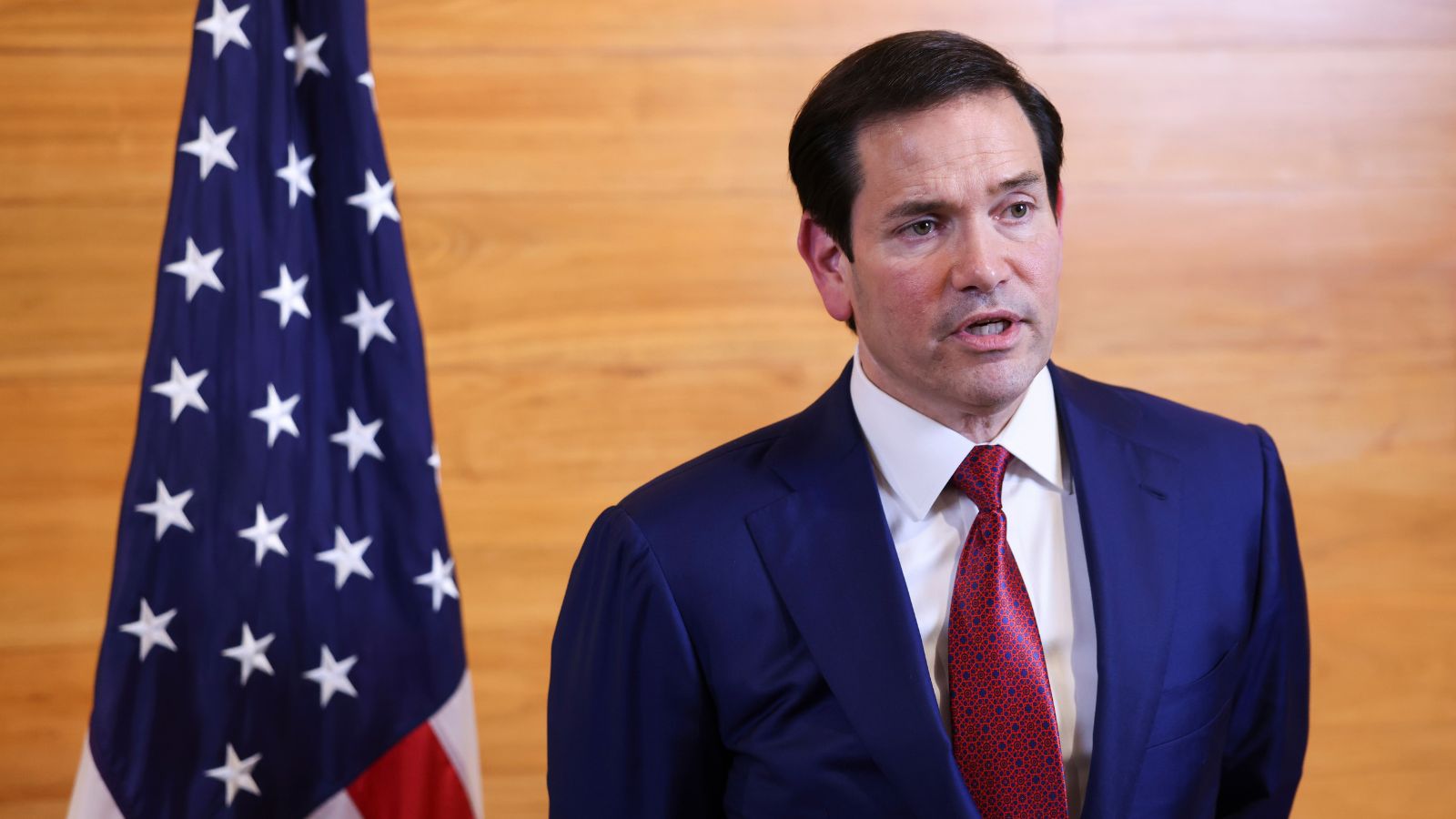
When US Secretary of State Marco Rubio stood before a room of diplomats and industry leaders recently to declare India a great partner and announce a major expansion of American energy exports, the words sounded like standard diplomatic theater. It is easy to let the eyes glaze over when politicians talk about strengthening strategic ties and diversifying supply chains.
But look beneath the bureaucratic phrasing. What is actually happening is a massive, tectonic realignment of how our world is fueled.
Consider the sheer mathematics of the situation. India is home to more than 1.4 billion people. Its economy is accelerating at a pace that demands an insatiable, non-stop influx of power. Millions of citizens are entering the middle class every year, buying their first refrigerators, installing air conditioning units, and starting enterprises that require a steady, uninterrupted heartbeat of electricity. The country cannot grow if its factories are starved of power.
Meanwhile, the United States has undergone an energy revolution over the past two decades. The vast shale deposits beneath Texas, New Mexico, and North Dakota turned a country that used to worry about resource scarcity into a global exporting powerhouse.
It is a simple puzzle where the pieces finally match. One nation has an ocean of excess energy; the other has a continent-sized thirst for it.
The Break from Old Anchors
To understand why this new trade route matters, you have to understand the anxiety of vulnerability. For decades, India’s energy security was tightly bound to the volatile waters of the Middle East and the complex legacy of its relationship with Russia. Every time a tanker was harassed in the Strait of Hormuz, or a localized conflict erupted in Europe, price shocks reverberated through the markets of Mumbai.
When global oil prices spike, the consequences hit the most vulnerable first. It is the auto-rickshaw driver who finds that his daily earnings no longer cover the cost of filling his tank. It is the small-scale farmer whose diesel-powered irrigation pump suddenly becomes too expensive to run, threatening an entire season's harvest.
Relying on a narrow band of suppliers is like walking a tightrope in a windstorm.
By opening the valves wider toward the United States, India isn't just buying oil and liquefied natural gas. It is buying an insurance policy. Secretary Rubio’s declaration that Washington is ready to expand these exports is a signal that the old geopolitical map has been redrawn. The American energy architecture is now explicitly positioning itself as the bedrock upon which India’s industrial future can be built.
This is not a charitable endeavor. It is hard-nosed, mutually beneficial commerce. For the American worker, an open pipeline to the world’s fastest-growing major economy means long-term job stability. It means the massive capital investments made in export terminals along the Gulf Coast—monolithic structures of stainless steel and cooling towers that turn natural gas into a liquid at minus 260 degrees Fahrenheit—will have guaranteed buyers for decades to come.
The Human Friction Behind the High Finance
Yet, transitioning a nation’s energy dependency is never as simple as turning a valve. It requires navigating an intricate web of shipping lanes, port capacities, and financial instruments.
Imagine a massive liquefied natural gas carrier, a vessel longer than three football fields, navigating the choppy waters of the Atlantic, passing through the Cape of Good Hope, and steaming across the Indian Ocean. Every day that ship is at sea is a high-stakes gamble against weather, piracy, and fluctuating market prices.
When that ship docks at a terminal like Dahej on the western coast of India, a massive logistical ballet takes place. The liquid must be regasified, pumped into cross-country pipelines, and distributed to power plants that feed cities hundreds of miles inland.
There is a strange, quiet beauty to this process. The gas that lay trapped for millions of years beneath the Texas scrub brush is burned in a turbine in Gujarat to power a computer lab where a young girl is learning to code. The connection is direct, tangible, and profound.
But the critics raise valid questions. They ask about the environmental cost of shipping fossil fuels across thousands of miles of open ocean. They point out that both nations are grappling with the urgent need to transition to renewable sources like solar and green hydrogen.
The reality on the ground, however, refuses to yield to idealistic timelines. The transition to clean energy is a marathon, not a sprint. In the interim, a developing nation cannot simply turn off the lights. Natural gas serves as the bridge—a fuel that burns cleaner than the coal India has traditionally relied upon, providing the reliable baseline power needed while solar grids and wind farms are built out at scale. It is a pragmatic compromise between the world we want and the world we currently inhabit.
A Partnership of Choke Points and Open Seas
The alliance between Washington and New Delhi extends far beyond energy, stretching into deep-sea naval cooperation and technological co-development. But energy is the lifeblood that makes all other cooperation possible. A nation preoccupied with keeping its factories running cannot effectively project power or maintain regional stability.
By securing its energy flanks, India gains the geopolitical breathing room it needs to navigate its complex neighborhood. It reduces its exposure to coercion from adversarial neighbors and solidifies its position as the democratic anchor of the Indo-Pacific region.
For the United States, a prosperous, stable, and economically vibrant India is the ultimate counterweight to shifting balance-of-power dynamics in Asia. Secretary Rubio's statements underscore a realization that has been quieted for too long: American security is directly tied to the economic resilience of its democratic allies.
The next time you read a headline about trade volumes, export quotas, or bilateral agreements, look past the dry text. Think of the dockworkers in Houston loading the vessels under the blazing sun. Think of the engineers in terminal control rooms monitoring pressures and flow rates across thousands of miles of pipe.
Most of all, think of that small shopkeeper in Chennai. The next time a storm rolls in and the local grid falters, the lights might flicker, but they will stay on. The cooling fans will keep spinning. The air will remain clear of kerosene smoke.
Far out at sea, another supertanker ploughs through the dark water, carrying a piece of the American prairie to keep the lights burning bright on the other side of the earth.