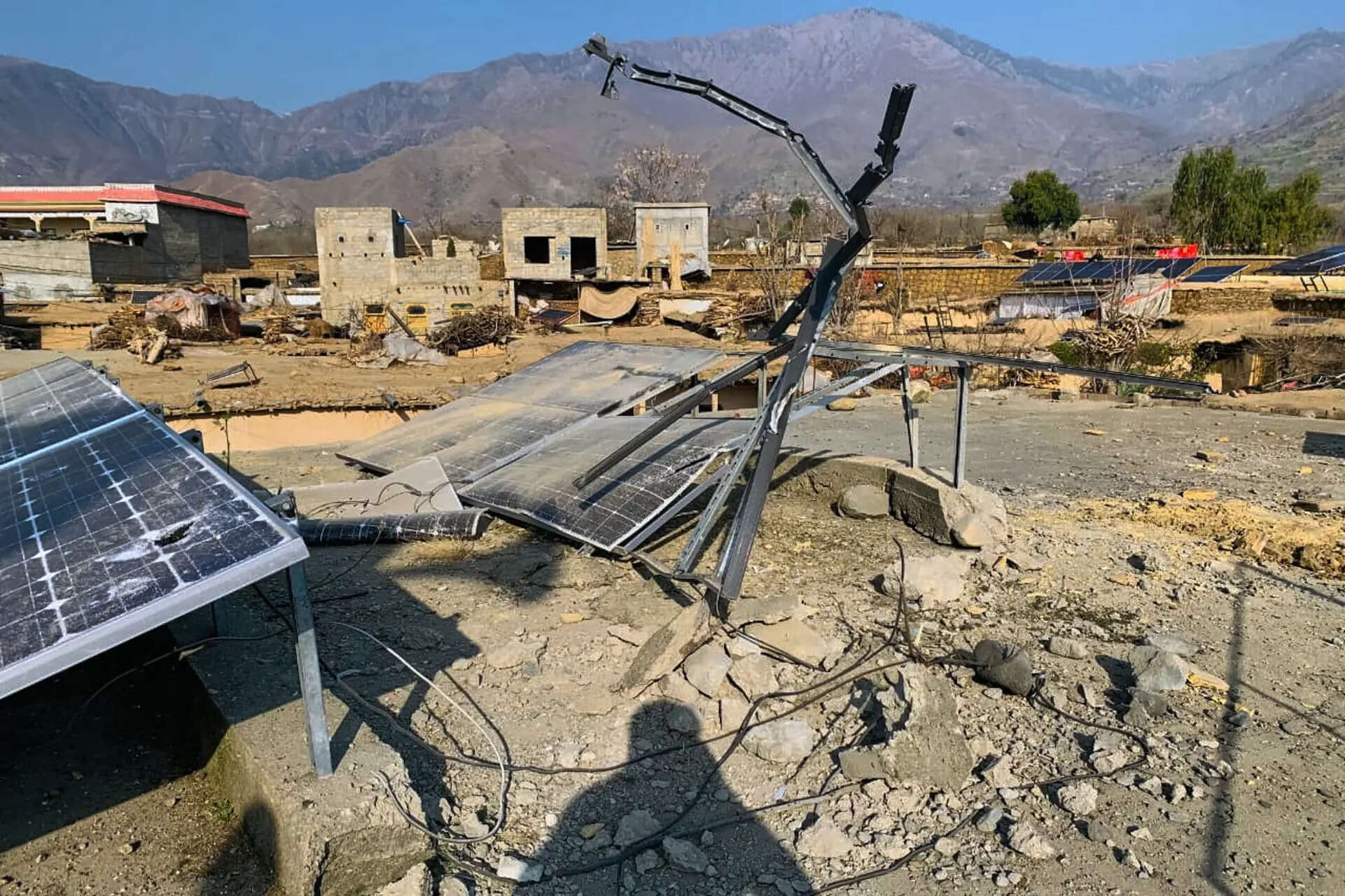
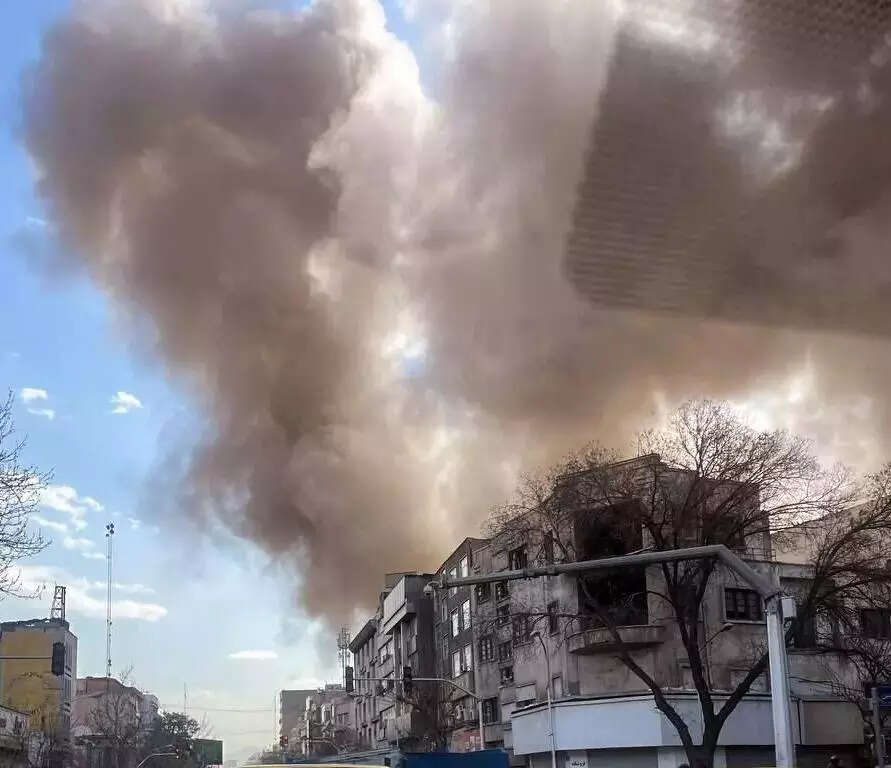
In a small, sun-bleached neighborhood in Kettleman City, the air often carries a weight that has nothing to do with the heat. It is a stillness that masks a frantic, microscopic reality. Here, the soil holds secrets that the state has spent decades trying to catalog. This is the frontline of California’s relationship with its own trash—not the plastic bottles or the lawn clippings, but the caustic, the flammable, and the quietly lethal.
For years, the Department of Toxic Substances Control (DTSC) has been the quiet architect of this relationship. They are the ones who decide which zip codes bear the burden of the state's industrial leftovers. Recently, a new blueprint was approved: the first-ever Statewide Hazardous Waste Management Plan. On paper, it looks like progress. In practice, for the people living near the chain-link fences of treatment plants, it feels like a surrender.
The problem with hazardous waste is that it never truly disappears. We merely move it. We shuffle it across county lines, track it with manifests, and bury it in lined pits. But the new plan introduces a shift in how we measure the "safety" of these movements, and critics argue it creates a loophole large enough to drive a semi-truck through.
The Math of Human Suffering
Imagine a scale. On one side, you have the economic necessity of disposing of waste from tech manufacturing, oil refining, and hospital operations. On the other, you have a child’s respiratory health. For decades, activists have fought to ensure that the scale isn't tipped by the wealth of a zip code. They wanted a "cumulative impact" standard—a way of saying that if a community already has three refineries and a freeway, you cannot add a fourth source of poison.
The DTSC’s new plan was supposed to be the shield. It was marketed as a way to finally address the "vulnerability" of certain neighborhoods. However, as the board moved toward approval, the language shifted. Instead of firm mandates that would block new permits in overburdened areas, the plan offers "frameworks" and "considerations."
It is a subtle distinction that changes everything.
When a regulatory body moves from must to should, the community loses its primary weapon. If the DTSC only has to "consider" the fact that a neighborhood is already saturated with toxins, they can still ultimately sign the permit. They can acknowledge the pain while allowing the cause of it to break ground.
A Legacy of Leaks
To understand why this matters, you have to look at the ghosts of California’s industrial past. Consider a hypothetical resident named Elena. She lives in a tract home in East Los Angeles. Her life is measured in the rhythmic hum of the nearby 710 freeway and the knowledge that the soil in her backyard might contain lead from a shuttered battery recycler.
For Elena, "hazardous waste management" isn't a white paper or a PowerPoint presentation. It is the dust on her windowsill. It is the reason she doesn't let her kids play in the dirt. When the state approves a plan that softens the criteria for new waste facilities, they aren't just managing chemicals; they are managing Elena’s future.
The DTSC has a spotted history. It has been criticized for years by the State Auditor for failing to clean up contaminated sites and for being too cozy with the industries it regulates. This new plan was supposed to be their redemption arc. It was meant to prove that the department had finally grown teeth.
Instead, the final version of the plan removed specific requirements that would have forced waste to be treated closer to where it was generated. This concept, known as "proximity," is vital. When waste travels long distances, the risk spreads. Every mile a truck carries toxic sludge is a mile where a collision or a leak could occur. By removing the push for local treatment, the state essentially voted to keep the trucks rolling through the same vulnerable corridors they have traveled for half a century.
The Language of Evasion
The board meetings leading up to this decision were filled with the kind of sterile, bureaucratic language that acts as a sedative. They spoke of "balancing stakeholder interests" and "maintaining capacity."
What does "maintaining capacity" mean?
It means making sure there is always a place to put the bad stuff. And because it is politically and economically difficult to build new facilities in affluent areas like Marin County or Beverly Hills, "maintaining capacity" almost always means expanding the footprint in places like the Central Valley or the Inland Empire.
The critics—ranging from environmental lawyers to local health advocates—pointed out a glaring omission in the plan: a lack of clear, enforceable limits on total pollution. The plan tracks where the waste goes, but it doesn't effectively cap how much a single community can be forced to take. It’s like a doctor acknowledging a patient has a broken leg but refusing to set the bone, opting instead to just take more X-rays of the fracture.
The Ghost in the Machine
We are currently witnessing a strange paradox in California. We are a state that prides itself on being a global leader in green energy and environmental protection. We ban gas-powered leaf blowers and phase out internal combustion engines. Yet, we remain one of the largest producers of hazardous waste in the country.
Our "green" transition has a footprint. Solar panels eventually die. Electric vehicle batteries reach the end of their lives. These are the new frontiers of hazardous waste. If the DTSC’s plan is weak now, it will be disastrous when the wave of "green" waste hits its peak.
The board argues that the plan is a "living document" and that they can tighten the strings later. But history suggests otherwise. Once a regulatory framework is set, it becomes the foundation for billions of dollars in industrial investment. Unsetting that foundation is nearly impossible. Companies crave certainty. If the state tells them today that they can operate with vague "considerations" rather than hard limits, those companies will fight any future attempt to sharpen the rules.
The Human Cost of Data
There is a tendency to view these debates as "jobs versus the environment." That is a false choice designed to end the conversation. The real choice is between short-term convenience and long-term survival.
When we look at the maps provided by CalEnviroScreen—the state’s tool for identifying burdened communities—the red zones almost perfectly overlap with the areas where the DTSC has historically been most lenient. These are the "sacrifice zones." The new plan, despite its hundreds of pages of data, fails to provide a mechanism to turn those red zones green.
The activists who sat through the hours of testimony didn't ask for miracles. They asked for a "no-go" zone. They asked the state to look at a map of California and draw a circle around the neighborhoods that have given enough. They asked for the power to say, "Not here. Not anymore."
The board’s approval of the plan without those protections is a message. It says that the logistics of waste are more important than the logic of justice. It says that as long as the paperwork is in order, the reality on the ground is secondary.
The Weight of the Air
Late in the afternoon in the San Joaquin Valley, the sky often turns a hazy, bruised purple. It’s beautiful if you don't know what you're looking at. But for those who live there, the beauty is bittersweet. They know that the haze is a cocktail of particulates, ozone, and the invisible signatures of a thousand industrial processes.
The DTSC’s hazardous waste plan was an opportunity to clear that air, at least a little. It was a chance to say that California’s environmentalism isn't just for the people who can afford a Tesla, but also for the people who live downwind of the facilities that make the modern world possible.
By choosing a path of "flexibility" over "protection," the board didn't just approve a plan. They validated a status quo that has been failing Californians for generations. They chose the comfort of the spreadsheet over the complexity of the human lung.
The trucks will keep moving. The manifests will be signed. The pits will be filled. And in the neighborhoods where the fences are high and the air is heavy, the people will keep waiting for a plan that actually sees them. They aren't looking for a "framework." They are looking for a way to breathe.
The ink on the approval is dry, but the consequences are just beginning to soak into the soil. We have mapped the waste, but we have yet to find the courage to stop producing so much of it, or the decency to stop dumping it on the people least equipped to fight back.
One day, we will have to answer for the invisible map we’ve drawn across this state. We will have to explain why we thought some lives were worth the "consideration" and others were just part of the capacity. Until then, the silence in Kettleman City remains, heavy and expectant, waiting for the wind to change.