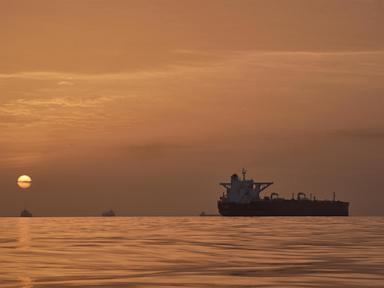
Hundreds of seafarers are currently trapped on rusting steel hulls across the Persian Gulf, victims of a maritime legal vacuum that allows shipowners to walk away from their debts while leaving crews to rot. This is not a story of a sudden natural disaster or a momentary supply chain glitch. It is the result of a calculated business maneuver known as vessel abandonment. When a shipping company hits financial insolvency, the cheapest exit strategy is often to simply stop answering the radio. They cut off the flow of wages, fuel, and food, effectively turning their employees into high-seas prisoners. Because maritime law dictates that a crew must remain with a vessel to maintain its safety and legal standing, these men cannot leave without forfeiting years of back pay or risking criminal charges for desertion.
The crisis in the Gulf represents the sharpest edge of a global shipping industry that prioritizes corporate shielding over human survival. While headlines often focus on the carbon footprint of mega-freighters or the price of consumer electronics, the actual mechanics of how these ships stay afloat during a financial collapse remain hidden. These sailors are not just "tired and worried." They are the collateral damage of a system designed to vanish when the bills come due.
The Financial Architecture of Abandonment
Shipping is a high-stakes shell game. Most vessels operate under "flags of convenience," registered in nations like Panama, Liberia, or the Marshall Islands. This allows owners to bypass the stricter labor laws and tax codes of their home countries. When a ship enters the Persian Gulf—a region defined by intense heat and complex geopolitical tensions—the stakes for the crew double. If the owner stops paying the Port State Control fees or the bunker fuel invoices, the ship is often "arrested" by local authorities.
An arrested ship cannot move. The crew, however, is required by international maritime conventions to stay on board to man the engines and ensure the vessel doesn't drift into oil platforms or shipping lanes. The owners, safe behind a wall of offshore LLCs, wait for the bank to foreclose or for the ship to be sold for scrap. During this period, which can stretch from months into years, the seafarer is the only one who cannot walk away. They are effectively guarding an asset for the very creditors who are refusing to pay them.
The Shell Company Shield
To understand how a captain can be left without drinking water for six months, you have to look at the corporate registry. A single shipping magnate might own forty ships, but each ship is its own independent legal entity. If "Ship A" incurs massive debt, the parent company lets that specific entity go bankrupt. The creditors seize the ship, but they have no legal obligation to pay the crew’s back wages. The sailors find themselves at the bottom of the priority list, behind banks, port authorities, and fuel suppliers.
Life on a Dead Ship
Living on an abandoned vessel in the Persian Gulf is an exercise in slow-motion survival. During the summer, deck temperatures regularly exceed 50°C. When the fuel runs out, the generators die. This means no air conditioning, no refrigeration for food, and no power to run the desalination plants that provide fresh water. The men sleep on deck to catch a breeze that never feels cool. They fish over the side not for sport, but because the pantry has been empty for three weeks.
The psychological toll is a quiet, grinding erosion. These men are often the sole breadwinners for families in India, the Philippines, or Ukraine. Every month they spend trapped in the Gulf is a month their families go without rent or school fees. The "worry" mentioned in softer reporting is actually a desperate, frantic pressure. They are caught in a trap: if they leave the ship to seek help from their embassy, they lose the legal "lien" on the vessel that represents their only hope of getting paid. If they stay, they may starve.
The Failure of the Maritime Labour Convention
The 2006 Maritime Labour Convention (MLC) was supposed to be the "Bill of Rights" for seafarers. It includes amendments that require shipowners to have insurance to cover up to four months of back wages and repatriation costs in cases of abandonment. On paper, it is a safety net. In the Persian Gulf, it is often a ghost.
Many of the vessels currently rotting off the coast of the UAE or in the outer anchorages of Kuwait are older tankers or bulk carriers that operate on the fringes of legality. Their insurance has lapsed. Their flags of convenience have been revoked. When the system fails, these men fall through the cracks of a jurisdictional no-man's land where no single country wants to take responsibility for the cost of sending them home.
The Role of Port States and Global Indifference
The Persian Gulf is one of the busiest maritime corridors in the world, yet the legal infrastructure to handle abandoned crews is remarkably thin. Port states are often reluctant to intervene because once they allow a crew to disembark, the port becomes responsible for the "dead ship." A vessel with no crew is a massive liability—a fire hazard and a navigation risk. Consequently, local authorities sometimes prohibit crews from coming ashore, effectively using them as unpaid security guards for a derelict hull.
This indifference is fueled by the fact that seafarers are a transient, invisible workforce. They don't vote in the countries where they are stranded. They don't shop in the local malls. They are simply lights on the horizon that eventually go out when the batteries die.
The Economics of Scrapping
There is a dark irony in the eventual resolution of these cases. Often, the only way a crew gets paid is when the ship is sold to a "cash buyer" for breaking. The vessel is towed to the beaches of Alang or Gadani, where it is torn apart for its steel. The crew might receive a fraction of what they are owed, just enough to buy a flight home and settle a few debts. The shipowners, meanwhile, have already moved on to their next "single-vessel LLC," repeating the cycle with a fresh crew and a different name painted on the bow.
The Necessary Shift in Maritime Liability
Fixing this crisis requires more than just charitable donations of food and bottled water from local NGOs. It requires a fundamental shift in how maritime liability is enforced.
- Mandatory Financial Security: Port states must refuse entry to any vessel that cannot provide verified, third-party proof of abandonment insurance that is paid up for the duration of the voyage.
- Piercing the Corporate Veil: International maritime courts need the power to hold parent companies and individual directors personally liable for crew wages, regardless of the "single-ship" corporate structure.
- Fast-Track Judicial Sales: The legal process for selling an abandoned ship must be compressed. Currently, it can take years for a court to authorize a sale. In that time, the ship's value depreciates, leaving less money for the crew. A mandatory "sale trigger" should occur within 60 days of a declared abandonment.
The current state of the shipping industry in the Persian Gulf is a remnant of a 19th-century mindset operating in a 21st-century economy. We rely on these men to move 90 percent of global trade, yet we allow them to be discarded like rusted machinery when the ledger turns red. Every day a seafarer spends stranded on a dead ship is a testament to a regulatory framework that is intentionally broken.
The maritime industry does not need more "awareness" or sympathetic profiles. It needs a hard enforcement of the laws already on the books and a refusal to let the sea be used as a hiding place for corporate cowards. If a company cannot afford to bring its crew home, it has no business putting a ship in the water. The solution is not complex, but it is expensive, and that is exactly why it hasn't happened yet. Stop treating abandonment as an unfortunate side effect of business and start treating it as the human rights violation it is.