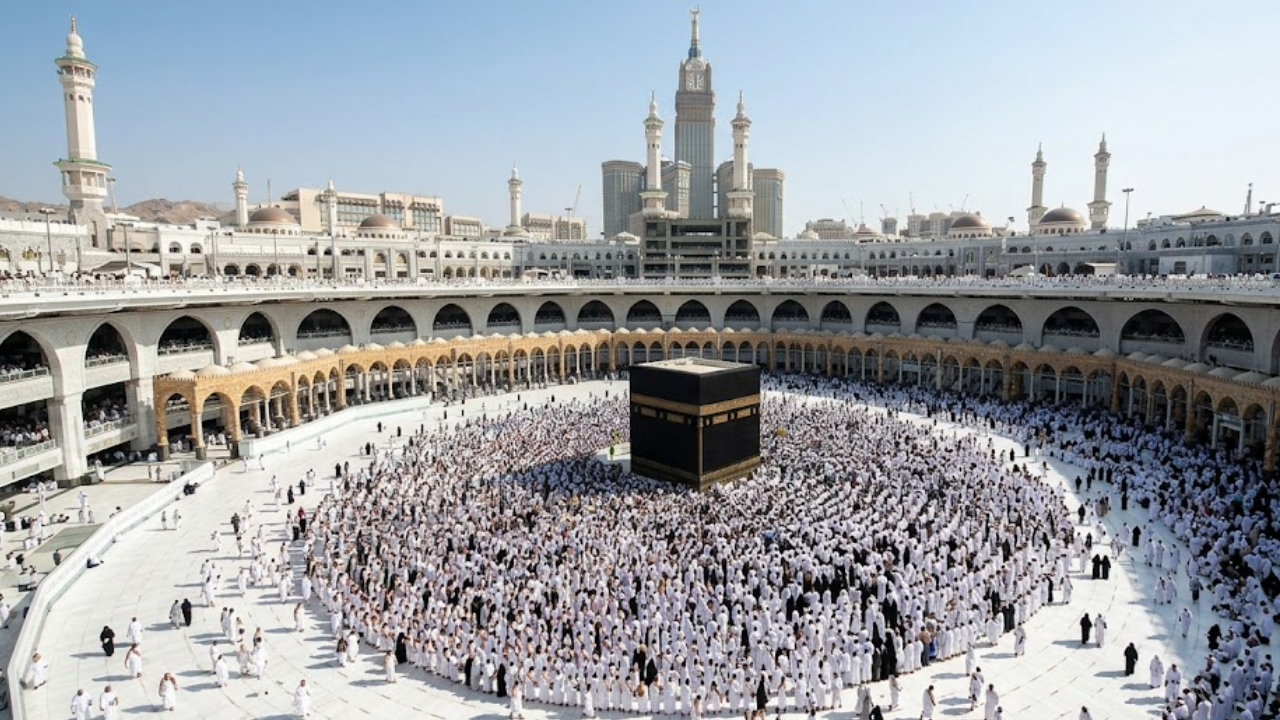
The air in the terminal is thick with the scent of oud and the electric hum of a thousand different languages colliding. Somewhere in the middle of this organized chaos stands a man named Omar. He has saved for twelve years to be here. He is carrying a small worn suitcase and the prayers of an entire village in his pocket. Omar represents a tidal wave. He is one of the millions descending upon Saudi Arabia as the country witnesses a staggering 214% surge in overseas Umrah pilgrims compared to just a few years ago.
When you increase the volume of human movement by that magnitude, the traditional systems of hospitality do not just bend. They shatter.
In 2022, the influx was a manageable stream. Today, it is a flood. To prevent the spiritual journey from becoming a logistical nightmare, a silent revolution has taken place behind closed doors. It isn’t found in the marble hallways of the Grand Mosque, but in darkened rooms filled with glowing screens and the rhythmic clicking of keyboards. These are the new special operations rooms, the central nervous system of a pilgrimage that has grown too large for human intuition alone to manage.
Imagine the complexity of a clock with twenty million moving parts. Now imagine those parts are people—tired, hopeful, and often speaking languages that the local taxi driver doesn’t understand. This is the reality of the modern Umrah.
The Ghost in the Machine
The problem with a 200% increase in any industry is that the "human touch" becomes a bottleneck. If every pilgrim needs to ask a physical person for directions, the system grinds to a halt. The Ministry of Hajj and Umrah realized that to save the soul of the pilgrimage, they had to digitize the skeleton of the journey.
These operations rooms are not mere call centers. They are predictive engines. They monitor the flow of arrivals at King Abdulaziz International Airport in Jeddah and Prince Mohammad bin Abdulaziz International Airport in Medina with the precision of an air traffic control tower. They see the bottlenecks before they happen. They know that a flight from Jakarta delayed by two hours will create a ripple effect at the bus terminals three hours later.
Omar doesn't see the screens. He only notices that when he steps off the plane, a digital notification on his phone guides him toward his transport in his native tongue. He doesn't see the frantic coordination between the operations room and the ground staff to ensure his bus is waiting. He only feels the relief of being one step closer to the Kaaba.
Safety is the silent passenger on every one of these journeys. In a crowd of millions, a single wrong turn or a blocked exit can escalate from an inconvenience to a tragedy in seconds. The operations rooms serve as a digital shield. By integrating AI-driven crowd analytics with real-time sensor data, the authorities can now see the density of a crowd through heat maps. If a specific courtyard in the Haram becomes too congested, the "room" sends an instant directive to ground security to divert the flow.
It is a delicate dance between ancient devotion and futuristic surveillance.
The Weight of the Digital Promise
There is a certain vulnerability in admitting that a spiritual experience now requires a massive server rack to function. We like to think of pilgrimage as a raw, unfiltered connection between the seeker and the divine. But the reality of 2026 is that the path to the divine is paved with data points.
The surge in arrivals is fueled by the Nusuk platform, a digital gateway that has effectively democratized access to the holy sites. Previously, the "overseas pilgrim" was at the mercy of complex agency bundles and opaque visa processes. Now, a person in a small town in South Africa can secure their entry, book their hotel, and arrange their transport through a single interface.
This ease of access is what drove that 214% spike. But convenience creates its own set of problems. When you lower the barrier to entry, you increase the diversity of the crowd. You have people who have never traveled internationally, people with varying levels of physical ability, and people who are entirely dependent on their mobile devices for survival in a foreign land.
Consider the stakes for the Ministry. If the technology fails, it isn't just a "bad user experience." It is a catastrophic failure of a sacred duty. The operations rooms operate 24/7 because the sun never sets on the Umrah. As one group finishes their Tawaf under the moonlight, another is just landing in the heat of the midday sun.
The Pulse of the Hubs
The specific operations rooms launched for overseas pilgrims act as a specialized filter. Overseas travelers have different needs than domestic ones. They need visa verification, lost-passport assistance, and multilingual support that spans the globe.
Inside these rooms, the air is cool and smells of coffee. The walls are covered in massive LED displays showing the movement of thousands of buses across the Hijaz region. It looks like a war room, but the objective is peace.
One screen might show the health status of various sectors. Another tracks the feedback coming in through the Ministry’s various apps. If multiple pilgrims in a specific hotel district report a lack of water or a transportation delay, a red light flashes. A human operator intervenes. They call the service provider. They fix the glitch before the pilgrim even realizes it was a systemic issue.
The "invisible stakes" here are the reputations of a nation and a faith. For many, this is the most important trip of their lives. A single bad experience—a lost suitcase, a stranded night at a terminal—can tarnish a decade of longing. The operations rooms are there to ensure that the only thing the pilgrim carries home is the weight of their prayers, not the frustration of a logistical breakdown.
The Human at the End of the Data
Data is cold. A 214% increase is just a number on a spreadsheet until you look at the faces in the terminal.
Omar finally reaches the plaza of the Grand Mosque. He is exhausted. The transition from his village to the gleaming high-tech terminals of Saudi Arabia was a whirlwind. He doesn't know about the special operations rooms. He doesn't know about the algorithms that balanced the bus schedules or the sensors that ensured the path he walked was safe and clear.
He only knows that he is here.
He looks up at the minarets, and for the first time in his life, the world feels small and manageable. The chaos he expected was absent. The fear he had of getting lost in a sea of millions evaporated because, at every turn, there was a sign, a guide, or a digital prompt that knew exactly who he was and where he needed to go.
This is the ultimate paradox of modern Saudi Arabia. The more people come, the more high-tech the infrastructure must become to keep the experience feeling personal. To handle the millions, you must see the individual.
The glowing screens in the operations rooms continue to flicker. A new flight from Istanbul has just touched down. Three hundred more stories are beginning. The operators adjust their headsets, the heat maps shift on the wall, and the silent machinery of hospitality hums back to life.
Omar steps forward into the crowd, unnoticed by the world, but perfectly tracked by the system that ensures he is never truly alone.