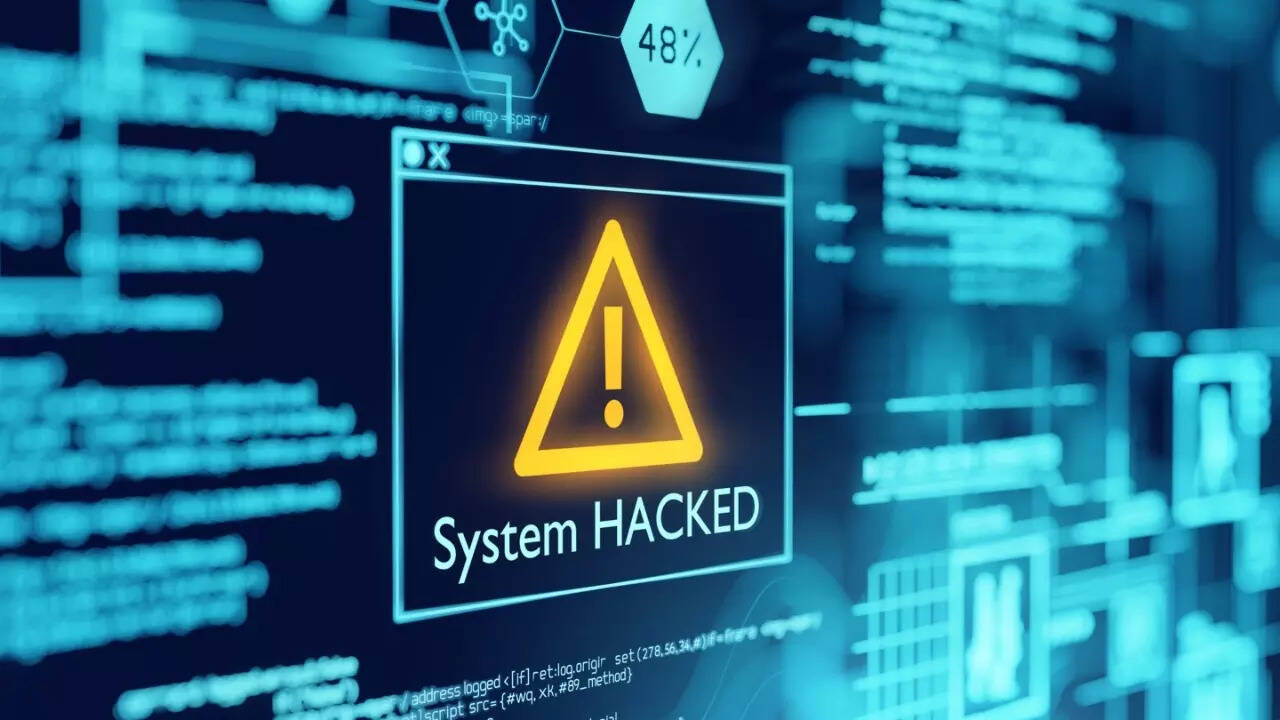
A nurse in a suburban Pennsylvania clinic clicks a mouse. It is a reflex, a movement repeated three hundred times a shift. She expects a patient record—a history of allergies, a list of medications, the name of a child’s emergency contact. Instead, the screen freezes. A flicker. Then, a message appears that has nothing to do with healthcare and everything to do with a war being fought ten thousand miles away.
The digital pulse of American medicine just skipped a beat.
We often think of cyber warfare as a clash of titans—monolithic governments trading lines of code like intercontinental missiles. We imagine darkened rooms in Arlington or Tehran. But the reality is far more intimate. When the Iranian-linked hacking collective known as "Cyber Av3ngers" infiltrated the systems of a U.S. based medical technology firm, they didn’t hit a military base. They hit a server that holds the private, vulnerable details of human lives.
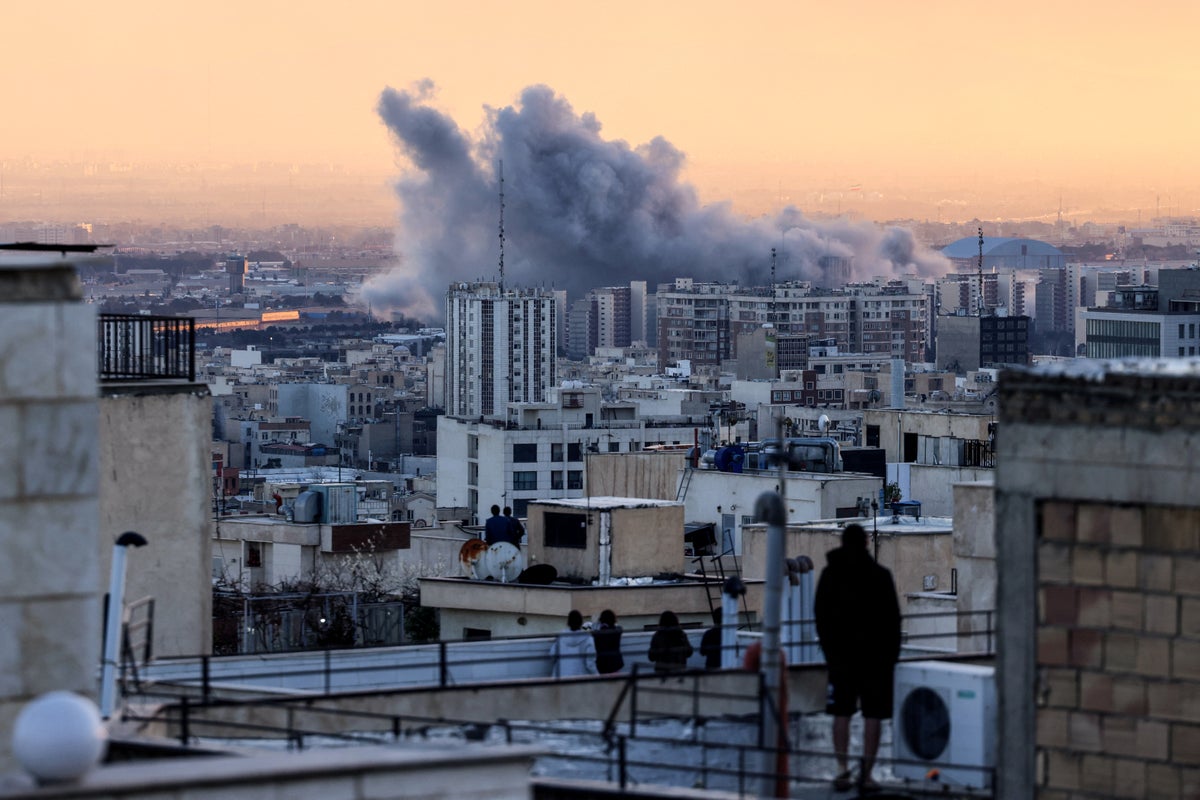
This wasn't a random act of digital vandalism. It was a calculated strike, a "tit-for-tat" in a ledger written in blood and binary. The group claimed the attack was a direct response to a strike on a girls' school—a tragedy they laid at the feet of Western influence. In the twisted logic of modern geopolitics, a server in the American Midwest becomes a legitimate target for grief and rage originating in the Middle East.
The Anatomy of a Digital Vendetta
Most people view data as abstract. It is the "cloud," a weightless vapor of ones and zeros. But ask a diabetic patient whose insulin pump settings are stored on a compromised server if data is abstract. Ask a cancer patient whose chemotherapy schedule is locked behind an encrypted wall.
When Cyber Av3ngers breached the medical firm, they weren't looking for credit card numbers to sell on the dark web. They were looking for leverage. By targeting the medical sector, they exploited the most sensitive friction point in society: our physical survival.
Consider the mechanics of the breach. It usually begins with something embarrassingly simple. A single employee ignores a security prompt. An outdated VPN remains unpatched because the IT department is underfunded and overworked. These are the cracks in the armor. Through these slivers of neglect, state-sponsored actors slide into the system. They don't announce themselves immediately. They linger. They observe. They wait for the moment when their presence will cause the most psychological trauma.
The Ghost in the Machine
Let’s look at a hypothetical scenario to ground this. Imagine "Sarah," a systems administrator for a regional healthcare provider. Sarah is excellent at her job, but she is fighting a losing battle against time. The hardware is a decade old. The budget was slashed to pay for a new MRI wing.
One Tuesday morning, Sarah notices a spike in outbound traffic. It’s heading to an IP address that shouldn't exist. By the time she realizes that a backdoor has been kicked open, the intruders have already mapped the network. They have administrative privileges. They own the data.
This is the "experience" of a cyber-attack. It isn't a movie with scrolling green text and high-octane music. It is a cold pit in the stomach. It is the realization that the barrier between a patient’s private agony and a foreign operative’s keyboard has evaporated.
Why Medicine?
The choice of target reveals the changing philosophy of global conflict. In the past, if a nation wanted to retaliate for a perceived grievance, they might target a pipeline or a power grid. Those are high-value, high-consequence targets. But targeting medicine is different. It is personal.
Medical firms are often the "soft underbelly" of national infrastructure. They prioritize accessibility and ease of use for doctors and nurses, which often comes at the direct expense of ironclad security. A hospital needs to share data quickly to save a life. A hacker uses that same speed to end a system’s functionality.
The Iranian group's messaging was clear: If you strike our children, we will strike your healers. It is a terrifying symmetry. It turns every doctor’s office into a proxy battlefield. We are living in an era where a geopolitical decision made in a boardroom can lead to a computer failure in a rural clinic. The "invisible stakes" aren't just about privacy; they are about the erosion of the sanctuary. We used to believe that certain spaces—hospitals, schools, houses of worship—were off-limits. The digital age has corrected that naivety.
The Logic of the Aggressor
To understand the threat, we have to look past the "hacker" stereotype. These are not teenagers in hoodies. These are professionals. They operate with the blessing, and often the funding, of a nation-state. Their goals are twofold: disruption and demoralization.
When they leak data or lock systems, they aren't just looking for a ransom. They are looking to prove a point. They want the American public to feel that their government cannot protect them in the most basic ways. Every time a medical firm is breached, the social contract frays. We begin to wonder if our most intimate secrets are merely chips on a global poker table.
The Cyber Av3ngers have been linked to multiple attacks on critical infrastructure, including water treatment plants. Their pivot to medical firms suggests an escalation. It's a move toward the "human-centric" attack. They know that a broken water pump is an inconvenience, but a compromised medical record is a crisis of faith.
The Cost of Being Connected
We are caught in a paradox. We demand a world where our medical data follows us. We want to walk into any ER in the country and have the doctor know our blood type instantly. That connectivity is a miracle of modern engineering. It is also a massive, blinking target.
The more we interlink our lives, the more we expand the "attack surface."
Think of it like a house. In 1990, the house had two doors and four windows. You locked them, and you were safe. Today, that house has a thousand doors, and some of them are made of glass. Every smart device, every cloud-synced record, every remote-access portal is a door. We have traded security for convenience, and the bill is coming due in the form of state-sponsored intrusion.
Truth and its Alternatives
There is a temptation to see these events as isolated incidents. They are not. They are a narrative arc. The strike on the girls' school—whether it happened as described or was used as a convenient pretext—serves as the "moral" justification for the hackers. This is how they recruit. This is how they stay motivated. They don't see themselves as villains; they see themselves as digital freedom fighters.
But the "truth" is found in the logs. The truth is found in the thousands of patients whose data is now sitting in a database in Tehran. The truth is found in the millions of dollars that must be spent on "recovery" and "remediation"—money that should have been spent on actual healthcare.
We must be honest: the defense is losing.
The attackers only have to be right once. The defenders have to be right every single second of every single day. In a world of infinite connections, "perfect security" is a myth we tell ourselves so we can sleep at night.
The Human Toll
Let’s go back to the clinic.
The nurse calls the IT department. The IT department calls a forensic firm. The forensic firm calls the FBI. Meanwhile, a man sits in the waiting room. He is there for a biopsy result. He has been waiting for three days. He is terrified.
Because the system is down, the nurse can't find his file. She can't tell him if he is going to be okay. She can't tell him what the next steps are. He sits in a plastic chair, staring at a blank television screen in the corner, caught in the crossfire of a war he didn't know was happening.
His anxiety is the real product of the Cyber Av3ngers' work. They didn't need to pull a trigger. They just needed to stop a screen from loading.
The battle for the 21st century isn't being fought over territory. It is being fought over the integrity of our reality. It is being fought over the right to exist in a digital space without being used as a pawn in a game of global vengeance.
As the sun sets over the Pennsylvania clinic, the lights stay on, but the spirit of the place has changed. There is a new, cold reality settled into the bones of the building. The walls are no longer a barrier. The front line has moved inside.
A doctor walks out to the waiting room. He has a paper chart in his hand—a relic of a simpler time. He looks at the man waiting for his results. He has to deliver the news manually, the old way, because the digital world has failed them both.
The man stands up. He looks at the doctor's face. In that moment, the geopolitics of the Middle East, the strike on the school, and the code of the Cyber Av3ngers don't matter. Only the silence matters.
The screen remains black.