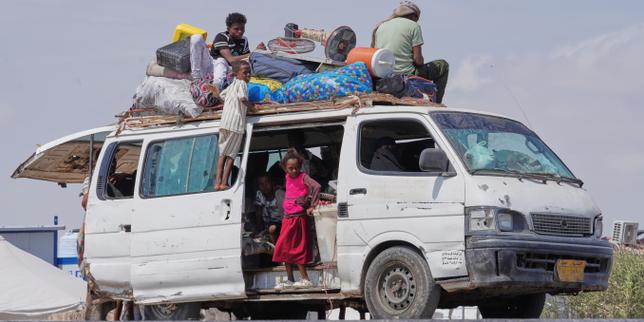
Millions of Yemenis wake up each day with a singular, agonizing certainty: there is nothing left. No secure roof overhead, no predictable ration of flour, and no functioning safety net to catch a population sliding deeper into systemic collapse. While international news cycles drift toward newer geopolitical flashpoints, the humanitarian catastrophe in Yemen has mutated from an acute emergency into a grinding, permanent structural decay. The underlying drivers are not merely the scars of a protracted civil conflict, but a calculated matrix of economic strangulation, institutional fragmentation, and a catastrophic retreat of global donor support. Currency devaluation has rendered basic staples mathematically impossible to acquire for ordinary families, while fractured governance structures block the distribution of vital aid to the most vulnerable pockets of the country.
The Mechanics of Economic Strangulation
Wars are rarely fought solely with rifles and artillery shells. In the contemporary theater of conflict, currency and trade controls serve as devastating instruments of attrition. Yemen is split between competing financial authorities, each operating distinct monetary policies that have effectively shattered the national economy into disconnected fiefdoms.
To understand why families are starving in a country with active ports and functioning trade routes, one must look directly at the liquidity crisis. Two separate central banks issue conflicting directives, tax imports differently, and maintain divergent exchange rates. In areas managed by the internationally recognized government, the Yemeni rial has experienced steep depreciation, driven by declining foreign exchange reserves, halted crude oil exports due to targeted strikes on shipping infrastructure, and runaway inflation.
Conversely, northern authorities operating under the Sanaa administration enforce a strict ban on newly printed banknotes circulating in the south. This monetary schism created a heavily localized artificial shortage of physical cash in the north, while devaluing the currency in the south to the point where paper money is literally worth less than the material it is printed on.
Prices climb while wages evaporate entirely. A public sector employee, whether a teacher in Taiz or a nurse in Hodeidah, might go months without a reliable salary, watching their purchasing power vanish before they can even touch their cash. When the central bank cannot stabilize exchange rates or pay public wages, commerce grinds down to a survivalist barter system. Families sell off ancestral land, livestock, gold jewelry, and household goods just to secure a single sack of wheat or a canister of cooking gas. The economy has been hollowed out from the inside, transforming ordinary citizens into paupers within their own borders.
The Geopolitics of Aid Fatigue and Operational Bottlenecks
Humanitarian agencies face an unprecedented crisis of resources and operational freedom. Donor fatigue has set in globally, accelerated by competing crises in Ukraine, Sudan, Gaza, and other high-profile conflict zones. Annual humanitarian response plans for Yemen routinely face massive funding gaps, forcing major international organizations to scale back food distributions, shutter mobile health clinics, and reduce therapeutic feeding programs for malnourished children.
This funding shortfall creates a cruel triage environment. Relief workers must make impossible choices about which community receives emergency rations and which community must wait, knowing that waiting often means irreversible physiological stunting for infants or death for the elderly.
Bureaucratic impediments further compound these operational hurdles. Access restrictions, bureaucratic delays, and interference from local authorities hinder the movement of relief supplies across frontlines. Warehouses sit empty or blocked while trucks wait weeks for security clearances. Humanitarian personnel face constant harassment, detention threats, and restrictive visa policies that prevent experienced specialists from deploying where they are needed most. The humanitarian space has shrunk to a narrow corridor, choked by political suspicion and the cynical exploitation of aid as a tool of control.
Hydrological Collapse and the Quiet Erasure of Infrastructure
The physical landscape of Yemen bears the deep trauma of targeted and collateral destruction. Hospitals, water treatment plants, power grids, schools, and agricultural irrigation systems have sustained severe damage over years of airstrikes, artillery exchanges, and neglect. Rebuilding these vital assets requires capital and political stability that currently do not exist anywhere in the country.
Water scarcity presents an existential threat independent of the active conflict. Groundwater tables in the Sanaa basin, Taiz, and surrounding highlands are dropping at alarming rates, exacerbated by unregulated drilling for cash crops like qat and climate-induced shifts in rainfall patterns. Without functional desalination plants or piped municipal water networks, families rely on private water truckers who charge extortionate rates for contaminated, brackish supplies.
Waterborne diseases flourish in these conditions with terrifying consistency. Cholera and acute watery diarrhea outbreaks recur seasonally, sweeping through crowded displaced person camps where sanitation infrastructure is completely absent. A child weakened by chronic hunger who contracts cholera faces a steep uphill battle for survival, especially when local health clinics lack intravenous fluids, antibiotics, and reliable electricity to power basic medical equipment.
The Invisible Toll on Children and the Loss of a Generation
Numbers on a spreadsheet cannot convey the human cost of chronic deprivation. Millions face crisis levels of food insecurity, with pockets of catastrophic hunger teetering on the edge of famine. Severe acute malnutrition silently claims the lives of children whose immune systems have been compromised by months of inadequate caloric intake.
Mothers routinely water down infant formula or feed their babies boiled flour water because they cannot afford commercial milk or proper nutritional supplements. Children drop out of school in droves to scavenge for scrap metal, beg at traffic intersections, or work in hazardous brick kilns and agricultural fields, sacrificing their futures to keep their families fed for a single day.
Psychological trauma runs deep throughout the population. A generation is growing up under the constant rumble of military aircraft, drone surveillance, and the heavy, crushing anxiety of wondering where the next meal will originate. The long-term societal cost of this trauma is immeasurable. When education systems collapse and child labor becomes the primary economic survival strategy, the foundation for any future national reconstruction is systematically eroded.
Diplomatic Stalemate and the Cost of Inaction
The international community watches from a distance, issuing periodic diplomatic warnings and expressing deep concern while substantive peace talks remain deadlocked. Regional and international powers view Yemen primarily through the lens of proxy competition and maritime security, often subordinating humanitarian imperatives to strategic calculations about Red Sea shipping lanes and regional deterrence.
Local peace initiatives flare up periodically at the governorate or tribal level, managing local ceasefires or reopening secondary roads, but these micro-agreements lack the structural weight required to reverse national economic collapse. Without comprehensive political settlements that address central bank reunification, public sector salary payments, revenue sharing from oil and gas resources, and the lifting of internal trade barriers, any talk of recovery is an illusion.
The descent will continue until the structures supporting human life are completely exhausted. The people of Yemen are not asking for charity; they are surviving an engineered catastrophe while the world looks elsewhere.