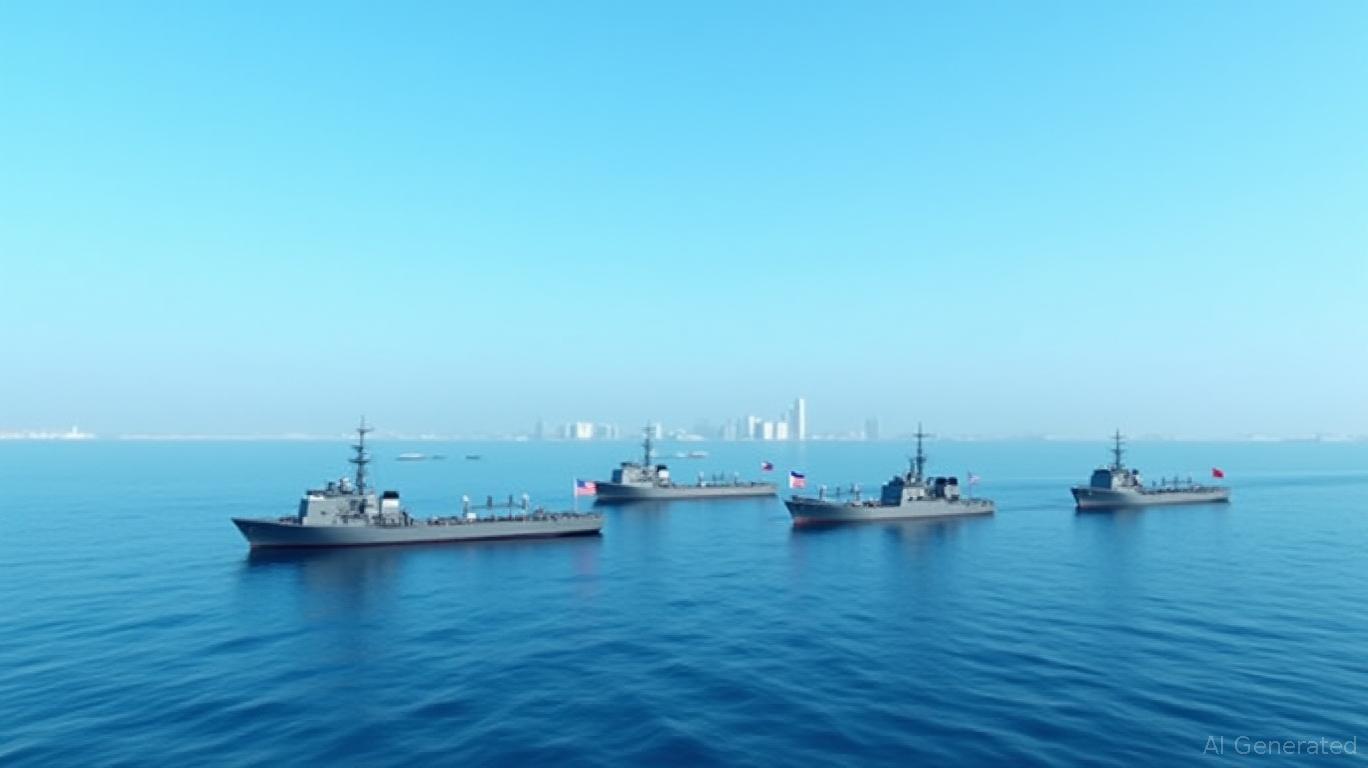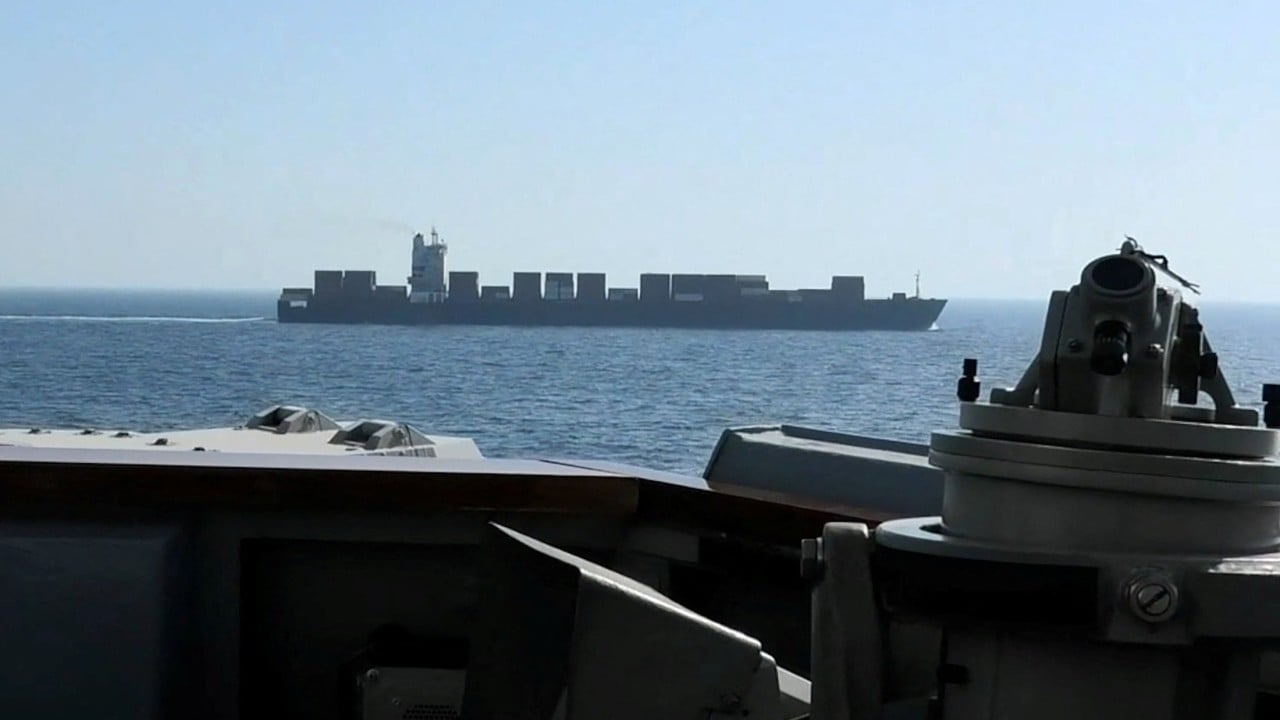
The sea does not care about diplomacy. To a merchant sailor standing on the deck of a tanker in the Strait of Hormuz, the water is a flat, shimmering expanse of heat and salt. But beneath that surface, and within the radar pings of the warships circling the perimeter, the water is thick with a different kind of tension. It is the weight of global oil prices, the ghost of ancient empires, and the very real possibility of a steel hull being boarded by men with assault rifles.
Most people experience the Strait of Hormuz as a line on a map or a cent-per-gallon fluctuation at a suburban gas station. They don't see the rust on the railings. They don't smell the heavy scent of crude oil and sweat. Yet, this narrow strip of water—barely twenty-one miles wide at its tightest point—is the carotid artery of the modern world. When Iran seized a cargo vessel in these high seas recently, they didn't just grab a ship. They put their fingers on the world’s pulse and squeezed.
The Steel Ghost in the Strait
Consider the captain of a mid-sized tanker. Let’s call him Elias. Elias is not a politician. He is a man who worries about engine maintenance, crew fatigue, and the precise salinity of the water. When his radar shows a fast-moving blip approaching from the Iranian coast, his heart doesn't beat for "geopolitical leverage." It beats for his crew.
The seizure of a ship is a choreographed theater of power. It begins with a radio shadow—a voice demanding a change in course—and ends with boots on a deck that should be sovereign. This latest spark in the Hormuz tensions isn't an isolated incident. It is a recurring fever. Iran’s Revolutionary Guard has mastered the art of the "tit-for-tat" maritime game. One week, a Western power freezes Iranian assets or seizes a tanker carrying sanctioned oil; the next week, a commercial vessel finds itself diverted to an Iranian port.
This isn't just about ships. It’s about the air in the room.
While the steel is being seized on the water, something else is happening in the air: the whisper of talks. Diplomats in expensive wool suits are sitting in climate-controlled rooms in Muscat or Doha, trying to bridge a gap that has widened over decades. The timing is never accidental. You seize the ship to remind the person across the table that you can stop the world from spinning. You offer the talk to show you are willing to let it start again.
The Arithmetic of Fear
To understand why this matters to someone who has never seen the Persian Gulf, you have to look at the math. Roughly one-fifth of the world’s total oil consumption passes through this strait every single day. If that flow stops, the math breaks.
The global economy is a giant, interconnected machine that assumes the roads will stay open. When a ship is seized, insurance premiums for every other vessel in the region skyrocket. Those costs don't vanish into the ether. They trickle down. They end up in the price of a plastic toy in Ohio, a bus ticket in London, and a bag of grain in Ethiopia.
There is a specific kind of vertigo that comes with realizing how fragile our "robust" systems actually are. We built a world on the assumption of liquid transit. We assumed the oceans were a neutral commons. But the Strait of Hormuz is a reminder that geography is destiny. You cannot move the oil fields of Saudi Arabia or Iraq. You cannot widen the gap between the jagged rocks of the Musandam Peninsula and the Iranian coast. You are stuck with the neighbors history gave you.
The Ghost of 1979 and the Weight of 2026
The shadow over these waters isn't just cast by the ships; it’s cast by memory. For the United States, every interaction with Iran is colored by the 1979 hostage crisis, a wound that never truly scarred over. For Iran, every interaction is filtered through the memory of the 1953 coup and decades of crushing sanctions.
When we talk about "US-Iran talks," we act as if we are starting a fresh page. We aren't. We are writing in the margins of a book that is already full of blood and ink.
The current tension is a high-stakes poker game where the chips are the lives of sailors and the stability of the global energy market. The Biden administration, and whoever follows, faces a grueling paradox. To engage in talks is to be accused of rewarding "piracy." To refuse to talk is to watch the shadow of war grow longer over the water.
Elias, our hypothetical captain, sees none of this. He sees the gray hull of a patrol boat. He sees the sun setting over a horizon that feels increasingly like a cage. He knows that if a mistake is made—a nervous finger on a trigger, a misunderstood radio transmission—the "talks in the air" will evaporate, replaced by the sound of sirens.
The Invisible Stakes
Why should you care if a ship you’ve never heard of, flying a flag of convenience from a country you’ve never visited, is held in an Iranian port?
Because the world is smaller than we want to admit.
The "high-seas ship seizure" is a signal. It’s a flare sent up to see who is watching. It tells us that the old rules—the ones where the US Navy guaranteed the safety of the seas without question—are being rewritten. We are moving into a period of friction.
In this new era, the "seamless" flow of goods is a luxury, not a right. The tension in the Hormuz is a localized symptom of a global disease: the breakdown of the post-war order. We are seeing it in the Red Sea with the Houthis, in the South China Sea, and now, with renewed vigor, in the Persian Gulf.
The "human element" isn't just the crew on the ship. It’s the person at the gas pump who can’t afford the commute. It’s the factory worker whose plant shuts down because the supply chain snapped. It’s the diplomat who hasn't slept in three days because they know how close we are to the edge.
A Language of Steel and Silence
There is a peculiar rhythm to these crises. There is the "Outrage Phase," where headlines scream about international law. There is the "Quiet Phase," where intelligence officials swap messages through intermediaries. And then, there is the "Resolution Phase," where the ship is released, the oil is moved, and everyone pretends the status quo has been restored.
But the status quo is never restored. Each seizure adds a layer of scar tissue. Each failed round of talks makes the next round feel more futile.
The real story isn't the seizure itself. It’s the silence that follows. It’s the way we have become used to the unthinkable. We have normalized the idea that one of the world's most vital trade routes is a combat zone. We have accepted that the price of our modern life is a permanent state of low-grade maritime warfare.
The Horizon’s Edge
As the sun dips below the horizon in the Strait, the water turns a deep, bruised purple. The tankers look like slow-moving islands, their lights blinking in the gathering dark. On one side, the lights of the Iranian coast flicker, a reminder of a civilization that has been there for millennia and isn't going anywhere. On the other side, the silent, jagged peaks of Oman watch the traffic.
We want to believe that someone is in control. We want to believe that the "talks in the air" will lead to a grand bargain, a "game-changer" that fixes the Middle East forever.
The truth is much grittier. There is no grand bargain coming. There is only the constant, grinding work of preventing a spark from becoming a blaze. There is only the hope that the men on the ships and the men in the conference rooms understand the cost of failure.
The ship in the harbor, the soldiers on the deck, and the diplomats at the table are all part of the same machinery. It is a machine fueled by a lack of trust and a surplus of history. Until that changes, the Strait of Hormuz will remain a place where the world holds its breath, waiting to see if the next wave brings a breakthrough or a wreck.
The sea remains indifferent. It carries the weight of the steel and the blood of the past with the same cold, rhythmic pulse. The only thing that changes is the depth of the shadows we cast upon it.