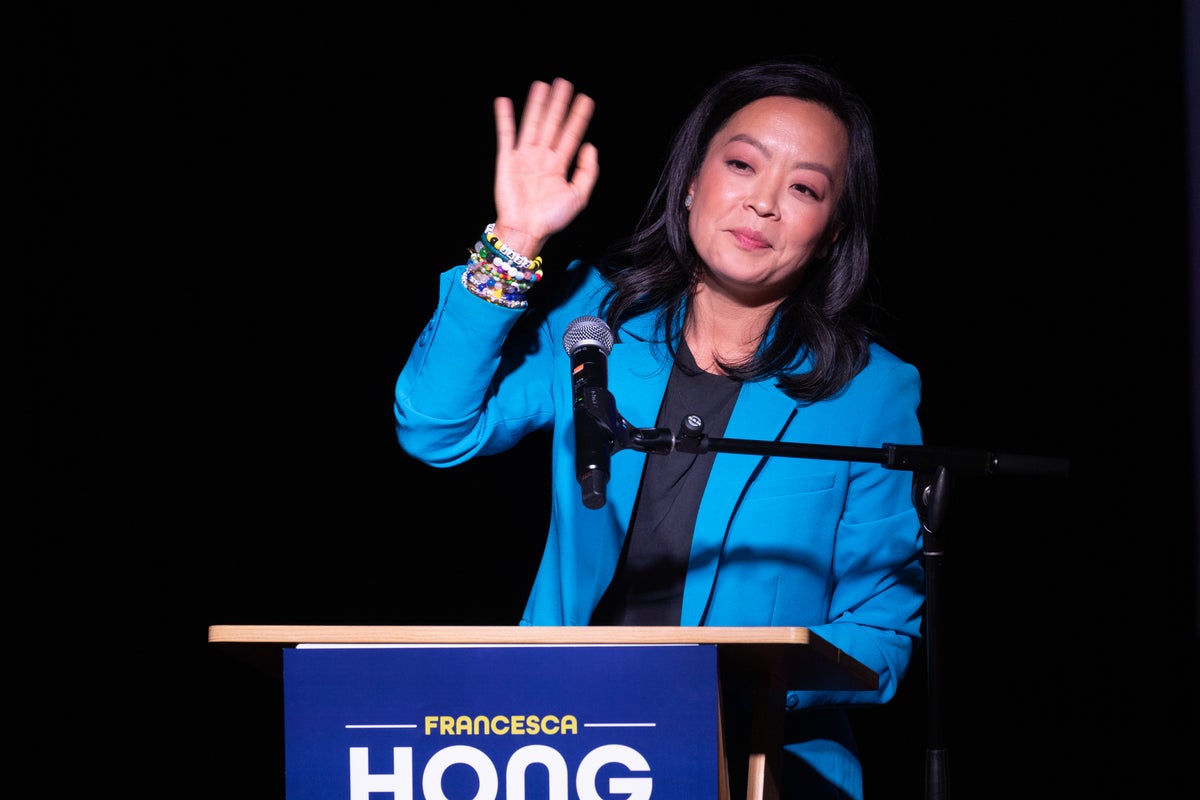
The margins in American politics do not just whisper; they roar. In Wisconsin's August 2026 Democratic gubernatorial primary, Milwaukee County Executive David Crowley squeaked past state Representative Francesca Hong by a razor-thin spread of roughly three thousand votes.
For months, mainstream pundits and horse-race forecasters missed the actual fault lines developing across the Midwest. They treated the primary as a coronation of momentum for Hong, a democratic socialist who enjoyed commanding double-digit leads in late-stage public opinion surveys. Instead, the contest exposed the iron-clad survival instinct of a party apparatus terrified of general election vulnerabilities in a quintessential swing state.
The Anatomy of a Late-Stage Rescue Operation
Crowley’s victory was not organic. It was manufactured by panic.
Earlier in the cycle, Crowley had exited the race, leaving a chaotic void. As Hong consolidated the progressive wing, fueled by grassroots organizing and populist economic grievances, alarm bells rang through the executive chambers of state power. Outgoing Governor Tony Evers, maintaining a veneer of neutrality for months, dropped his neutrality to recruit Crowley back into the field.
It was a classic institutional counter-offensive. The moderate wing recognized a fundamental truth about Wisconsin politics. Statewide electorates in Madison, Milwaukee, and the sprawling, purple collar counties do not behave like hyper-localized legislative districts in downtown Madison.
Resurfaced social media wreckage from Hong’s past—including old posts regarding law enforcement and holiday traditions—provided the establishment with the exact ammunition needed to frame her as an unviable general election candidate against Republican nominee Tom Tiffany. The party apparatus did not defeat a movement on policy alone; they defeated it on the altar of electability.
Why the Polls Got It Wrong
Polling in primary elections with volatile, late-shifting dynamics is notoriously fragile. Weeks before ballots were cast, firms showed Hong leading by margins that stretched past twenty points.
These figures lulled progressive camps into a false sense of security while galvanizing moderate donors and organizational heavyweights into an aggressive, subterranean rescue mission. Thousands of undecided voters broke heavily toward safety in the final seventy-two hours. They chose a figure who managed the state's most populous county over a charismatic insurgent who promised sweeping systemic overhauls.
Consider how modern primary electorates function under pressure. When given a choice between ideological purity and perceived safety against a hardline Trump-endorsed opponent like Tiffany, risk aversion wins. Crowley leaned heavily on his personal biography—rising from childhood homelessness to executive leadership—while pitching a steady hand on economic fundamentals like childcare and regional affordability.
The Broader Midwestern Reality
This primary was never just about Wisconsin. It served as a regional barometer for the soul of Midwestern Democratic politics. Just days prior, progressive victories in neighboring Michigan suggested a surging left flank could successfully capture institutional party nominations.
Wisconsin slammed the brakes on that narrative.
The state remains a knife-edge battleground where statewide victories require coalition building that stretches deep into moderate suburbs. Democratic leaders calculated that Hong’s policy positions—such as a proposed moratorium on new data center construction and sharp departures from traditional law enforcement funding—would turn suburban swing voters into automatic Republican ballots.
Whether those fears were empirically sound or merely reflective of institutional imagination matters less than the action they inspired. The machine mobilized. And by the narrowest of mathematical margins, the machine held.
November now looms as a high-stakes referendum. Crowley must pivot from neutralizing a left-wing challenger within his own party to uniting a fractured base against a unified conservative opposition. Meanwhile, the progressive infrastructure built by Hong walks away empty-handed in the win column, yet proves it can push the party's center to the brink of extinction.
The socialist surge in Wisconsin did not vanish on Tuesday night. It crashed directly into a brick wall built by its own party.