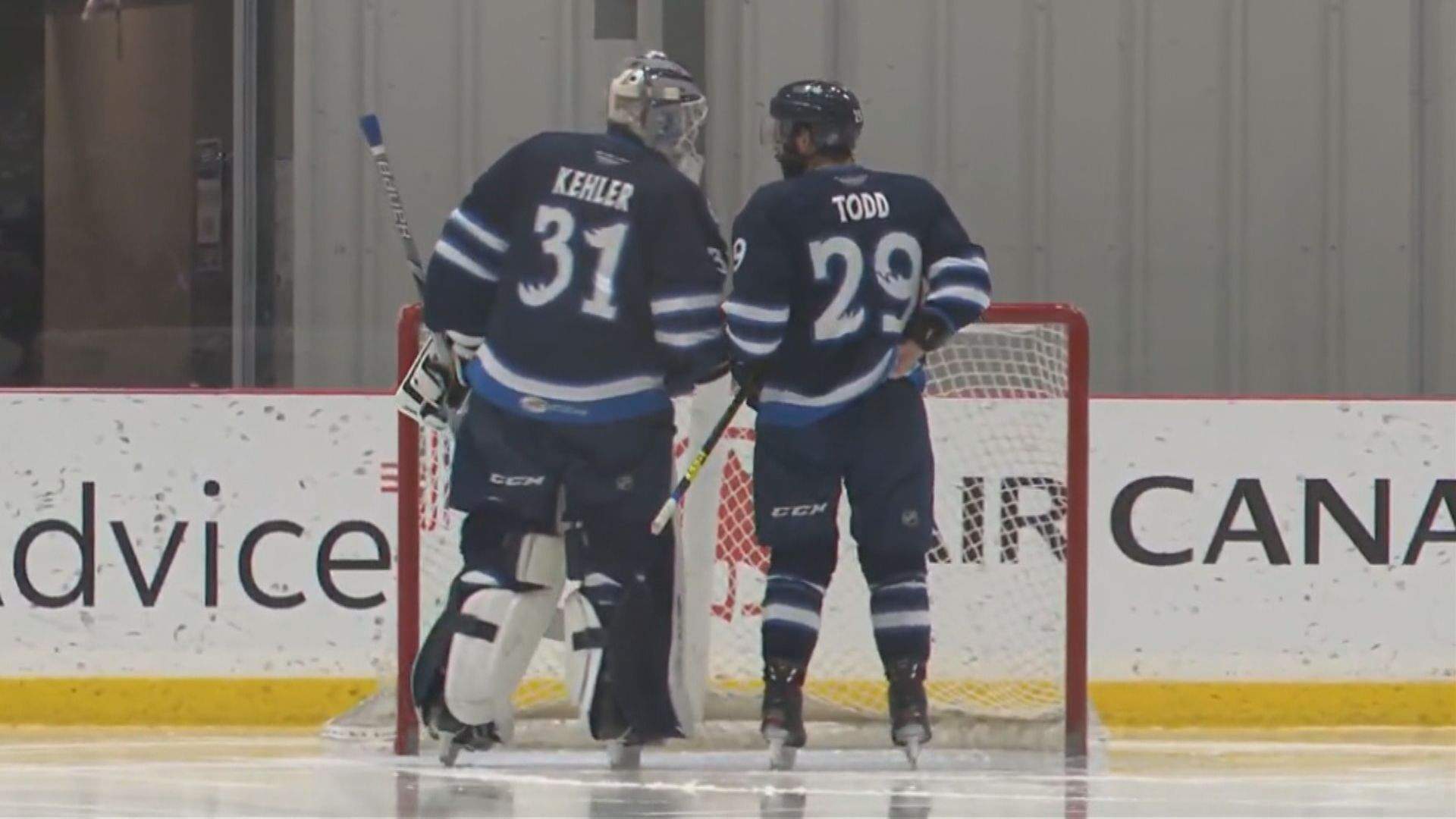
The modern National Hockey League is a multi-billion-dollar enterprise built on hyper-specialization, tracking data, and microscopic risk mitigation. Yet until very recently, the position of emergency backup goaltender operated like a chaotic lottery ticket pulled from local beer leagues. When the Winnipeg Jets officially named Altona native Cole Kehler as their full-time designated emergency backup goaltender, it marked a quiet professional evolution for the franchise. Kehler, a 28-year-old former Manitoba Moose netminder who spent his recent winters coaching and playing senior men's hockey locally, is now locked into a travel schedule covering all 82 games.
This is not a feel-good local media footnote. It is a calculated structural necessity born from the updated Collective Bargaining Agreement requirements that mandate a permanent, travel-ready safety net for every club. Also making headlines recently: Why Stan Kroenke Buying the Angels is a Financial Trap Disguised as a Trophy.
The Anatomy of the Modern Safety Net
For years, the emergency backup role relied on the arena's local supply of available goalies. Sometimes that meant pulling a college club goaltender out of a lecture hall. Other times, it meant scrambling to find someone who still owned equipment that fit regulation standards. The league office realized that relying on a random accountant or a local beer-league legend to step into a high-intensity professional environment carried too many operational variables.
Under the revised framework, teams can no longer roll the dice on whoever happens to be sitting three rows behind the home bench. They need a designated professional who meets strict eligibility thresholds—specifically, someone with zero official National Hockey League experience and fewer than eighty professional games under their belt. Kehler fits that precise statistical window. His professional ledger includes stints in the ECHL with Rapid City, Cincinnati, and Utah, alongside a brief cup of coffee with the AHL's Manitoba Moose during the pandemic-shortened 2021 campaign. More details into this topic are detailed by ESPN.
He is a professional athlete by definition, yet outside the hyper-lucrative ecosystem of the major leagues. This creates a strange professional purgatory for the individual wearing the headset.
The Physical Reality of Waiting
Sitting on the bench for eighty-four games a year—including a full complement of preseason, regular-season, and potential travel obligations—is an exercise in professional patience that breaks most standard athletic psyches. Professional athletes live to compete. They crave the rhythm of the morning skate, the physical feedback of stopping live pucks, and the mental tension of a starting assignment.
Kehler will experience none of that traditional competitive feedback loop on a regular Tuesday night in November. His job description requires absolute readiness combined with absolute stillness. If a starting goaltender pulls a groin during the second period against Edmonton, or an unexpected equipment failure leaves the backup bleeding on the bench, Kehler has to transition from spectator to active participant in roughly twelve minutes.
The human body cools down quickly when sitting on a wooden bench in a sub-zero arena atmosphere. Keeping warm without access to a net is an art form. Most emergency backups spend intermissions frantically stretching in cramped hallway tunnels, trying to trick their nervous systems into firing at an elite level after sitting idle for hours.
Beyond the Local Angle
The regional headlines naturally focused on Kehler's roots in Altona and his tenure with the South Eastern Manitoba Hockey League's Maroons. Hometown pride makes for compelling morning reading. However, looking strictly at the geographic convenience misses the broader organizational strategy at play.
Front offices across the league are discovering that having a dedicated, travel-ready emergency option stabilizes the mental load of their primary goaltending tandem. When a starter takes a violent collision in the crease, the bench boss does not need to waste mental energy wondering who is lacing up skates in the stands. The protocol is automated. The uniform is tailored. The player is already in the building, wearing number zero-zero, tracking the angle of every shot from behind the glass.
This setup also protects the organization's developmental pipeline. In previous eras, minor league affiliates would sometimes have to scramble their own rosters to shuttle an emergency option across time zones if an NHL starter went down during a morning skate. By locking down a permanent fixture like Kehler, the Jets insulate their American Hockey League affiliate from sudden logistical disruptions.
The pressure facing Kehler now is entirely internal. He is no longer just a local favorite getting a ceremonial nod; he is an institutional insurance policy for a Stanley Cup contender. If his number is ever called, the transition from local coaching duties to facing the world's most lethal shooters will happen under the blinding glare of high-definition television cameras.
The skates are sharpened. The gear bag is packed for every single road trip across the continent. The waiting game begins now.


