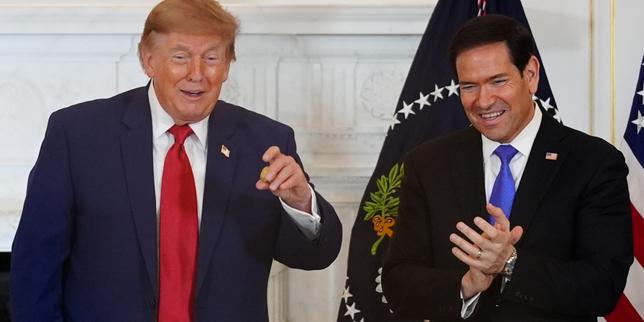
The United States government has formally imposed financial sanctions on International Criminal Court President Tomoko Akane and Senior Trial Lawyer Abdoulaye Seye. This move marks a major escalation in Washington’s campaign to dismantle the authority of the Hague-based tribunal. Secretary of State Marco Rubio announced the designations, targeting officials who have participated in investigations or prosecutions involving nations that never consented to the court's jurisdiction.
The Mechanics of Financial Isolation
Sanctions of this nature operate through the long arm of the American financial system. When the Treasury Department designates an individual, any assets held within U.S. jurisdiction are immediately frozen. More importantly, international banks with ties to Wall Street face severe penalties if they process transactions for the targeted individuals. For a Japanese judge and a Senegalese lawyer leading a global judicial institution, these measures disrupt personal banking, professional travel, and the routine administration of international justice.
Washington is weaponizing compliance. Financial institutions worldwide must now choose between maintaining accounts for court personnel or preserving their access to the lucrative U.S. market. Most banks choose self-preservation, effectively cutting off the designated jurists from global financial networks.
Clash of Sovereignty and Universal Jurisdiction
The friction between Washington and The Hague stems from a fundamental disagreement over international law. The United States never ratified the Rome Statute, the 2002 treaty that established the International Criminal Court. American policymakers argue that a non-member state cannot be bound by a court it rejected.
Conversely, the court operates on the principle that territorial jurisdiction applies when crimes occur within the borders of a member state. This legal bridge allowed the tribunal to pursue investigations into actions committed in Afghanistan as well as the ongoing conflict in Gaza. Warrants issued for high-ranking foreign officials, including Israeli Prime Minister Benjamin Netanyahu, triggered fury in Washington. The White House views these judicial actions not as independent legal proceedings, but as politically motivated assaults on close allies and American sovereignty.
The Expanding Scope of Retaliation
Targeting the sitting president of the tribunal represents a sharp departure from previous diplomatic friction. Earlier measures focused primarily on investigative prosecutors. By penalizing the administrative and judicial leadership, the current strategy aims to paralyze the court's institutional functioning.
Human rights organizations and legal scholars have responded with alarm. Several groups filed federal lawsuits challenging the legality of these executive measures, arguing that penalizing judges for rendering legal opinions threatens the independence of international jurisprudence. Yet the administration remains defiant. Officials have signaled plans to use diplomatic channels to pressure other member states into abandoning the institution entirely.
The legal architecture designed to hold perpetrators of mass atrocities accountable now faces an existential financial siege from a superpower determined to render it toothless