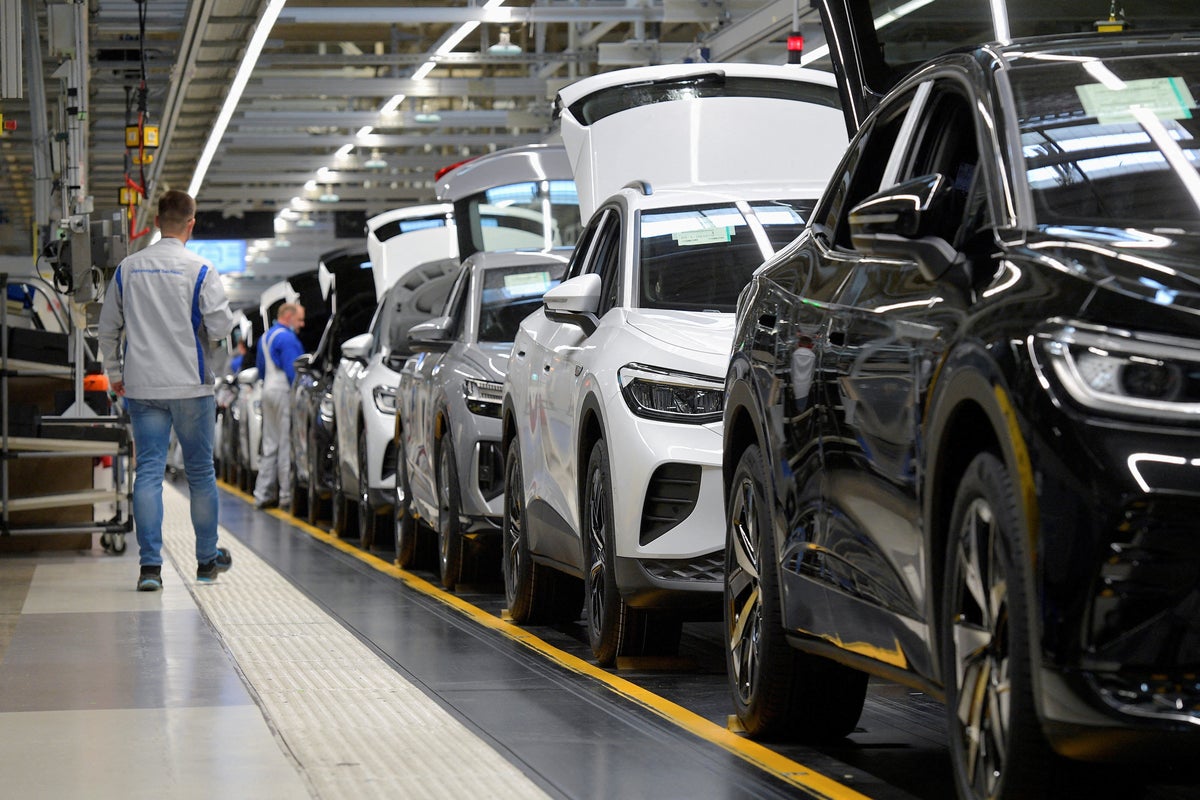
Volkswagen is slashing another 50,000 jobs, doubling down on a restructuring mandate that brings its total planned workforce reduction to a staggering 100,000 positions. Wall Street cheered the news, driving shares up roughly eight percent on the initial announcement. Yet beneath the celebratory ticker tape lies a sobering reality. The European automotive titan is not merely trimming fat; it is amputating limbs to survive a multi-front war against Chinese manufacturing dominance, punishing global trade barriers, and internal structural inertia.
For decades, the Wolfsburg-based giant operated under a comfortable premise. Scale solved everything. Build millions of cars across a sprawling empire of brands, distribute fixed costs across a massive volume, and let European engineering prestige do the rest. That formula is dead.
The Anatomy of an Industrial Retreat
To understand why Volkswagen needs to shed 15 percent of its global workforce, look no further than the balance sheet. Operating margins have slumped below four percent in recent reporting periods, a razor-thin cushion for a company attempting to fund a multi-billion-euro transition into software-defined electric vehicles.
The new "Future Plan 2030" targets an ambitious nine percent operating margin by the end of the decade. Achieving that goal requires more than simple layoffs. Management intends to axe half of the company's vehicle lineup by 2035, effectively ending the era of hyper-niche model proliferation.
Consider a hypothetical automaker producing five different variants of compact hatchbacks, each with unique body panels, distinct interior tooling, and separate software validation cycles. The complexity eats profits alive. By shrinking the portfolio by fifty percent, Volkswagen aims to force massive economies of scale into the remaining chassis architectures.
The industrial footprint itself is under unprecedented scrutiny. Executives have openly acknowledged that European factories carry over 500,000 units of excess annual capacity. Plants in Emden, Zwickau, Neckarsulm, and Hannover currently lack allocated production models for the next decade, leaving them vulnerable to dramatic transformations or eventual shutdowns once current vehicle lifecycles expire in the early 2030s.
The Chinese Shadow and Tariff Traps
The primary driver behind this bloodletting is not domestic inefficiency alone, but an existential threat emanating from the East. Chinese original equipment manufacturers have mastered battery-electric vehicle production velocity and cost structures in ways legacy European firms failed to anticipate.
When a Chinese competitor can design, build, and ship a digitally integrated electric vehicle at a fraction of a legacy manufacturer's unit cost, traditional pricing power evaporates. Volkswagen spent decades treating China as its primary cash cow, a booming market where local joint ventures printed billions. That revenue stream has turned into a contested battleground where domestic Chinese brands are winning the software and price war.
Compounding the problem are rising international trade barriers. US import tariffs and shifting regulatory walls mean Volkswagen can no longer easily arbitrage production across global borders. Building cars locally to avoid trade penalties creates redundant manufacturing nodes, destroying the very cost efficiencies the company desperately needs.
The Clash of Governance and Labor
What makes Volkswagen unique—and uniquely vulnerable—is its governance structure. The German state of Lower Saxony holds a major stake, and powerful labor unions wield veto power through co-determination boards.
Chief Executive Officer Oliver Blume managed to secure unanimous supervisory board approval for the historic overhaul only after tense, marathon negotiations. Labor leaders extracted vital concessions. Compulsory layoffs remain largely constrained under existing pacts through 2030, and controversial proposals to spin off core passenger car components into entirely separate corporate entities were temporarily shelved to protect worker representation.
This uneasy compromise creates a dangerous operational paradox. Management is tasked with executing the most aggressive downsizing in the company's 89-year history, yet it must do so without breaking the social contract that underpins German industrial policy. Cutting administrative overhead and management tiers is politically palatable, but touching the factory floor risks immediate labor unrest.
The Road Ahead for Legacy Auto
The rally in Volkswagen stock reflects investor relief that management has a concrete blueprint rather than paralysis. Yet financial markets often mistake a survival strategy for a guaranteed victory.
Slimming down vehicle lineups, shrinking factory footprints, and reducing headcount will buy time, but they do not automatically generate consumer demand for new electric models. If the remaining vehicles fail to match the digital experience and price points set by agile competitors, fewer models will simply mean a smaller company generating lower revenues with the exact same structural headaches.
The next few years will test whether an industrial dinosaur can transform into a nimble predator before its financial reserves run dry. The execution window is narrowing, and the margin for error is effectively zero.