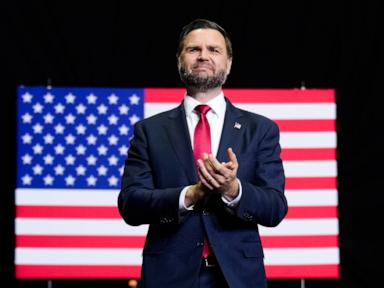
Vice President JD Vance walked onto a CBS News town hall stage in Michigan expecting to sell a patience pitch ahead of the 2026 midterms, yet spent an hour defending a seven-month war with Iran, aggressive immigration enforcement, and stubborn cost-of-living pressures before voters who were no longer buying slogans.
Standard wire coverage treats the broadcast as a routine campaign stop or a preview of 2028 ambitions. That framing misses the deeper structural squeeze on the vice president. Vance sits at the exact intersection where populist rhetoric collides with executive accountability. When you campaign as a disruptor, voters judge you on promises. When you govern in the middle of an active conflict and an expensive economy, voters judge you on outcomes.
I have watched dozens of televised town halls over three decades in political reporting, and the most revealing moments rarely come from cable pundits. They come when an ordinary person brings a personal loss or a failing ledger into a studio and forces a politician to trade grand theory for concrete answers.
Why the Iran War Question Cut Deeper Than Foreign Policy
Vance has long argued for restraint and skepticism toward foreign entanglements. Defending an ongoing conflict with Iran puts him in a bind that goes beyond standard partisan sparring. Critics on the left question the escalation and its regional fallout, while portions of the populist right watch warily as attention and resources pull away from domestic priorities.
During the broadcast, Vance pressed back on critics by asking what solutions they offer right now and arguing that criticizing decisions made months earlier ignores the realities on the ground. In statecraft, there is a real argument to be made that once military operations begin, leaders must manage consequences rather than replay debates. Yet that argument runs straight into human grief when a family member asks about command failures and operational security.
Consider a hypothetical scenario where a defense official claims a strike was unavoidable while a bereaved spouse asks why basic force protection fell short. No macro-strategic explanation easily bridges that gap. Vance acknowledged the weight of the moment without offering a tidy resolution, underscoring how costly open-ended military commitments can be for a movement built on keeping America out of foreign quagmires.
- Strategic framing: Vance argued the administration's approach will yield dividends over time and challenged critics to state their immediate alternatives.
- Political friction: Defending an active conflict strains the non-interventionist instincts that helped fuel populist enthusiasm.
- Human stakes: Personal questions from grieving relatives shift the conversation from geopolitical doctrine to individual accountability.
Immigration Enforcement and the Rhetoric Trap
Immigration has always been one of Vance's sharpest tools. On the campaign trail, tough talk on borders and labor supply rallies the base. In office, enforcement brings friction with courts, local communities, and moral voices who see the human toll up close.
When pressed on immigration and federal enforcement tactics, Vance drew a distinction between criticizing corporations that import labor and targeting immigrant workers themselves, conceding that his own phrasing has sometimes fallen short. He also acknowledged that federal immigration officers sometimes make serious mistakes and need to face consequences when they do.
That concession is more revealing than it looks. Populist politics thrives on sharp binaries—us versus them, rule-breakers versus law-abiders. Admitting that rhetoric can be clumsy or that enforcement officers can err introduces nuance. Nuance is healthy for governance, yet it can dull the simple message that wins crowds.
The tension does not stop at enforcement. Employers across agriculture, construction, and hospitality still complain about tight labor pools, while working-class voters worry about wage pressure and housing costs. Any serious immigration plan has to reconcile enforcement, labor demand, and due process, and none of those trade-offs disappears after a television soundbite.
| Policy Arena | Vance's Core Defense | Practical Friction Point |
|---|---|---|
| Iran conflict | Focus on current realities and future payoffs | Grief over casualties and risk of prolonged entanglement |
| Immigration and ICE | Blame corporate labor pull; hold errant officers accountable | Balancing strict enforcement with labor shortages and fairness |
| Cost of living | Multi-generational fix requiring more than 18 months | Household budgets strained right now at the checkout line |
The 18-Month Clock on Pocketbook Pain
Small business owners and households in places like Michigan do not experience the economy through quarterly GDP revisions. They feel it in grocery bills, interest rates, insurance premiums, and whether neighbors have discretionary cash left at the end of the month.
Vance told a Michigan small business owner that problems built up over decades of offshoring and under-investment in domestic manufacturing will take longer than eighteen months to unwind. Economists across the spectrum largely agree on one point: reindustrialization is slow. Building factories, training skilled tradespeople, and shifting supply chains take years, not quarters.
Here is the catch for any sitting administration. Voters rarely grant multi-year grace periods on everyday prices. When a campaign promises swift relief, asking for patience can sound like an excuse even when the structural diagnosis has merit. Pointing to automaker commitments and foreign investment announcements helps establish intent, yet families paying today's bills look for relief they can measure now.
What This Reveals About Media Format and 2028 Math
Town halls hosted by legacy networks occupy an awkward middle ground in modern media. Viewers distrust polished spin, yet networks also face constant scrutiny over format, moderation, and ratings. Putting a high-profile vice president in front of a mixed audience creates unscripted friction that neither party can fully control.
Vance's remarks about weighing a future presidential run—noting he tends to procrastinate on major life choices and highlighting his family's dynamics—sounded candid on the surface. Politicians often use reluctant-candidate language to keep options open while appearing grounded. Still, the real test for 2028 is not whether Vance sounds relatable on a Sunday night.
It is whether he can build a coalition that holds when populist promises meet governing limits. Winning swing states requires holding onto core loyalists while persuading skeptical independents who care less about ideological purity and more about stability, competence, and their own wallets.
A tough question on television is a hazard for a politician. A tough record in office is a verdict.
This clip shows the full CBS News town hall where Vice President JD Vance addressed voters' questions on the economy, immigration, and foreign policy.