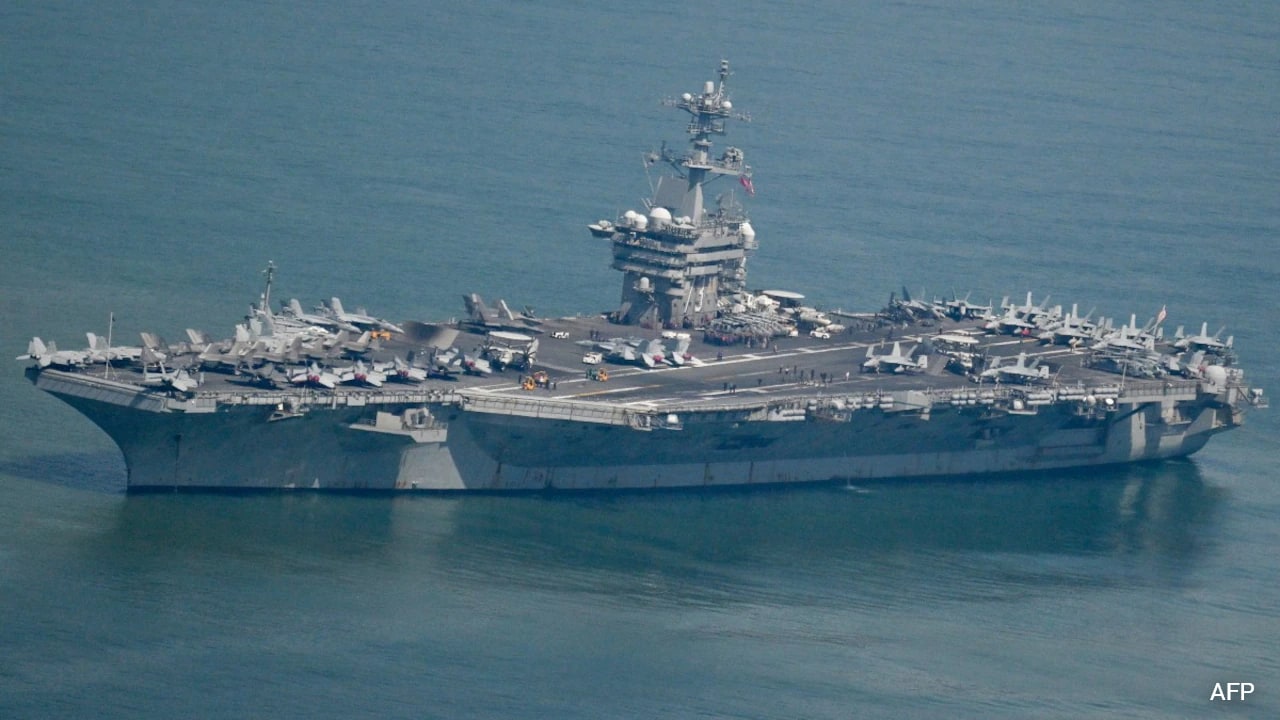
For more than 260 consecutive days, the nuclear-powered aircraft carrier USS Abraham Lincoln has operated in an unrelenting operational theater, locked into a protracted campaign supporting military actions against Iran. While Pentagon officials debate strategy and lawmakers demand accountability for conditions aboard the floating city of 5,000 sailors and Marines, a quieter, more urgent human cost has surfaced. Reports of extreme fatigue, supply strains, and desperate sailors attempting to jump overboard have shattered the official narrative of routine maritime endurance.
The arrival of the USS George Washington from the Pacific toward the Middle East offers a functional remedy, but it arrives too late to mask a deeper institutional failure. The crisis aboard the Lincoln is not an isolated administrative glitch. It serves as a glaring symptom of a military machine caught between endless global commitments and a shrinking, overextended naval force structure.
The Anatomy of an Endless Cruise
Standard deployment schedules for United States aircraft carrier strike groups are built around a hard ceiling of six months. This window is not chosen at random. It represents a calculated balance between geopolitical signaling, equipment maintenance cycles, and the psychological endurance of human crews. When the Lincoln left San Diego in late November, the schedule pointed toward a spring homecoming.
Then the strategic reality shifted. The outbreak of active hostilities with Iran in late February fundamentally altered deployment parameters. Traditional supply chains across the Middle East fractured under combat conditions, turning routine resupply missions into logistical hurdles. Mail delivery slowed to a crawl, freshwater systems faced intermittent strain, and plumbing failures compounded the misery of cramped living quarters.
Sailors subsisted on restricted amenities while executing thousands of flight operations and launching millions of pounds of ordnance. The ship became a pressure cooker. By July, the Lincoln shattered modern endurance marks by logging over 210 days at sea without a single meaningful port call, denying its crew the psychological reset valve that normal naval operations provide.
Beyond the Official Stance
Publicly, military leadership has pushed back against descriptions of the ship as broken or unsafe. Defense Secretary Pete Hegseth dismissed reports of severe distress as misrepresentations, praising the resilience of sailors enduring austere combat conditions without standard shore leave. The Department of the Navy maintains that formal metrics show no statistically anomalous surge in suicidal ideation, while acknowledging the inherent difficulties of high-tempo maritime warfare.
Yet these reassurances clash sharply with the raw testimony emerging from families and internal service reports. Town hall meetings in San Diego between Navy leadership and anxious relatives revealed deep anger over deteriorating conditions, water quality issues, and deck safety. When multiple sailors attempt to jump overboard—with at least one recovery incident officially acknowledged in early August—the debate over whether morale is merely "low" or genuinely catastrophic becomes a distinction without a difference.
The structural demands of maintaining an indefinite blockade in the Strait of Hormuz have pushed human tolerance past its breaking point. Combat stress multiplies exponentially when crews know their extensions are open-ended, untethered to any predictable rotation date.
The Strategic Domino Effect
The dispatch of the USS George Washington to relieve the Lincoln temporarily patches the immediate wound in the CENTCOM area of responsibility, but it rips open a fresh vulnerability elsewhere. Pulling the Washington from its regional stationing leaves the entire Asia-Pacific theater temporarily devoid of a forward-deployed U.S. aircraft carrier.
This zero-sum shell game exposes the fundamental arithmetic problem plaguing the naval service. The Pentagon currently possesses fewer active carriers than its global strategy demands, forcing commanders to rob Peter to pay Paul. Every month a ship stays deployed beyond its operational window is a month stolen from its subsequent maintenance phase.
When a vessel finally returns home, it requires extensive overhauls to mend wear-and-tear on propulsion plants, flight decks, and electronics. Overextending carriers today guarantees shorter operational availability windows tomorrow, accelerating a compounding loop of fleet degradation.
The Human Element in Modern Warfare
Modern naval defense analysis often focuses on tonnage, missile defense interceptors, and sortie generation rates. The crisis aboard the Lincoln underscores a recurring historical oversight: high-tech hardware is entirely dependent on the psychological stability of the people operating it.
A nuclear reactor can run indefinitely on uranium, but human beings cannot function indefinitely on adrenaline, warm salt water, and institutional denial. As geopolitical friction points multiply across multiple continents, the Department of Defense faces a stark reckoning. Without an expansion of fleet capacity or a stricter adherence to operational timelines, the ultimate limiting factor for American sea power will not be enemy fire, but the quiet collapse of the crews who keep the fleet afloat.