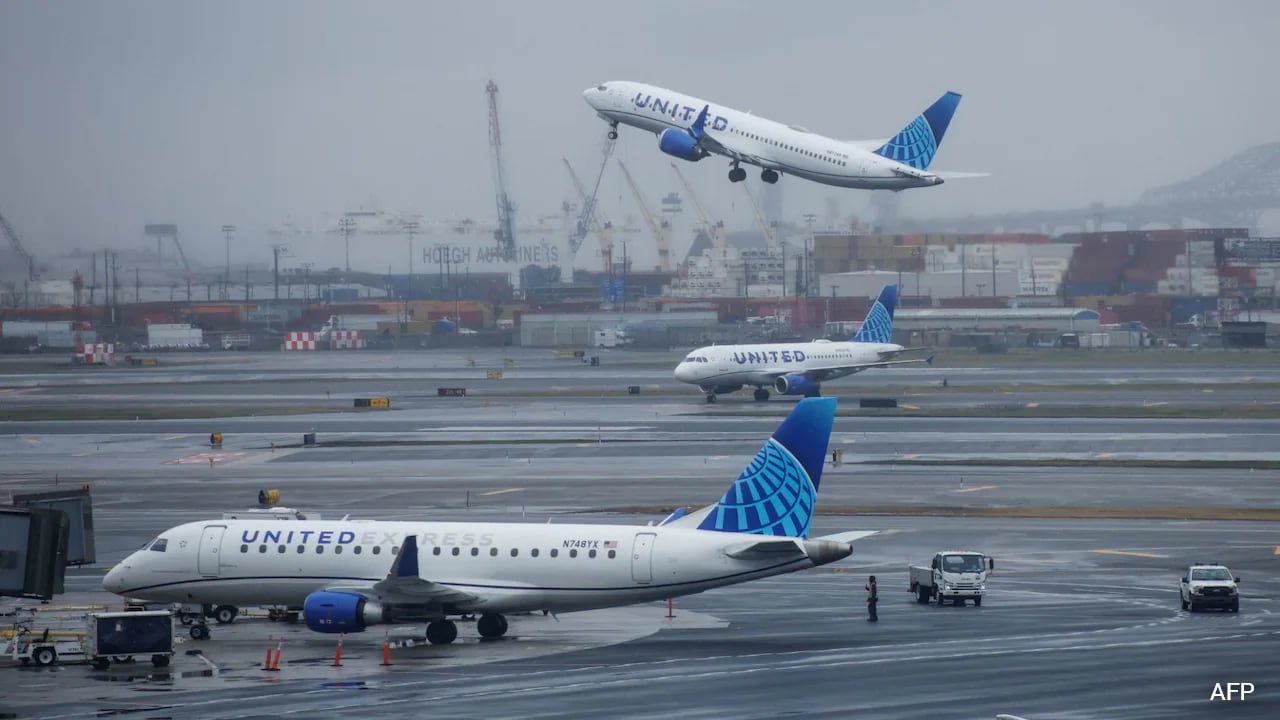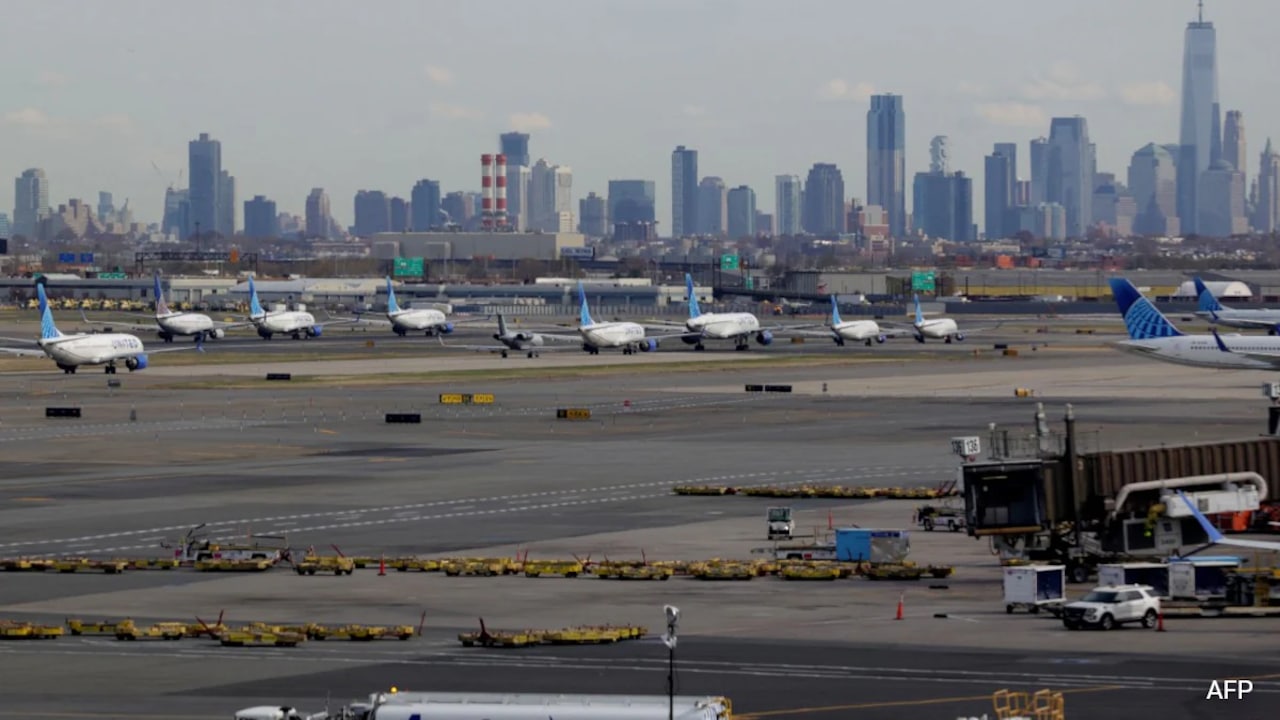
When the Federal Aviation Administration orders a nationwide ground stop, the entire North American economy hits a brick wall. The recent US flight shutdown—widely reported as only the second total grounding of domestic departures since the attacks of September 11, 2001—did more than strand millions of travelers on terminal floors. It exposed a dangerous truth about the invisible architecture keeping commercial aviation in the air.
Most breaking news coverage treats a nationwide US flight shutdown as a sudden, isolated anomaly. A glitch happens, planes stop moving, technicians reboot a server, and schedules slowly recover over forty-eight hours. That narrative is comforting, neat, and dangerously incomplete. In reality, a system-wide ground stop is the predictable outcome of decades of deferred infrastructure upgrades, hyper-consolidated airline scheduling, and single-point-of-failure software architecture. Recently making news recently: Blaming Visa Loopholes for the Bilal Kazi Case Ignores the Real Predator Factory.
To understand how thousands of commercial aircraft can be frozen on the tarmac simultaneously, you have to look past the departure boards and examine the aging arteries of the National Airspace System.
The Anatomy of a Nationwide Ground Stop
Airspace does not run on intuition. It runs on data packets. Before a commercial airliner pushes back from a gate in Atlanta, Chicago, or Los Angeles, the flight crew must receive a verified stream of safety-critical information. This includes real-time weather patterns, runway closures, temporary flight restrictions, and airspace hazards. Additional information regarding the matter are covered by Associated Press.
In the United States, the central nervous system for this pre-flight safety data is the Notice to Air Missions network, commonly known as NOTAM. The system dates back to the mid-twentieth century, originally designed to transmit teletype alerts to pilots and dispatchers. While the interface has been modernized over the decades, the underlying database architecture has historically relied on legacy code and aging hardware patched together across multiple federal budget cycles.
When the primary database fails and the backup fails to seamlessly take over, the FAA faces a binary choice. Regulators can allow planes to fly blind into potentially compromised airspace, or they can issue a nationwide ground stop. Safety protocols leave zero room for compromise. Every departing flight is held at the gate until the integrity of the alert system is verified.
Planes already in the air remain safe. Air traffic controllers maintain radar contact and voice communication with airborne traffic, guiding those flights to their destinations normally. The paralysis strikes exclusively on the ground, creating an immediate, cascading bottleneck across every major hub in the country.
Why the 9/11 Comparison Misses the Mark
Media outlets instinctively reach for September 11, 2001, whenever the skies over America go quiet. On the surface, the visual parallel is undeniable. Empty runways, silent terminals, and emergency directives halting commercial aviation feel eerily similar.
Yet comparing a technical or systemic US flight shutdown to 9/11 obscures the real vulnerability.
In 2001, the airspace was shut down deliberately as a defense measure against an external kinetic threat. The infrastructure itself worked precisely as intended. Controllers executed an unprecedented emergency evacuation of the skies, safely landing more than four thousand commercial and private aircraft within hours.
A modern systemic shutdown is the exact opposite. There is no external enemy hijacking aircraft. Instead, the threat comes from inside the federal aviation stack itself. When a database corruption, a corrupted file in a synchronization pipeline, or a localized telecom severance brings down national departure clearance, it proves that a single line of bad code can achieve what hostile actors could not. It demonstrates that the world’s most complex transportation network can be brought to its knees without a single plane being damaged.
The Domino Effect Inside Modern Airline Operations
Once the FAA lifts a ground stop, the public assumes operations return to normal within a few hours. Anyone who has spent twenty years covering aviation logistics knows the real pain begins after the green light flashes.
Modern commercial airlines operate on razor-thin margins and hyper-optimized fleet utilization. Twenty years ago, carriers built buffer time into their schedules. Spare aircraft sat parked at major hubs, and reserve crews waited on standby to absorb delays. Today, algorithmic scheduling keeps planes in the air for as many hours per day as maintenance windows allow.
Consider a hypothetical example of how this affects a single cross-country airframe. Suppose a Boeing 737 is scheduled to fly from Seattle to Denver, turn around in forty-five minutes to head to Dallas, continue to Miami, and finish the night in Boston. When a nationwide ground stop freezes that aircraft in Seattle for three hours, the entire four-leg chain collapses.
Crew Timeout Regulations
Federal aviation regulations strictly limit the number of consecutive hours pilots and flight attendants can remain on duty. The clock starts ticking the moment a crew reports to the airport, not when the wheels leave the runway. During a multi-hour US flight shutdown, thousands of crew members time out while sitting inside parked planes. Even after the FAA restores departure clearance, an airline cannot legally fly a plane until a fresh, rested crew arrives to take over.
Gate Gridlock
Airports are built for continuous flow, not mass storage. When departing flights are held at gates, incoming flights—which were already airborne when the ground stop was issued—have nowhere to park. Arriving aircraft stack up on taxiways, burning fuel while passengers wait hours just to reach a jet bridge. This gridlock blocks departing planes from pushing back even after clearance is granted.
Maintenance Displacement
Commercial airliners require mandatory safety inspections after a specific number of flight hours or takeoff-and-landing cycles. These inspections happen overnight at designated maintenance bases. When a shutdown strands aircraft at outstations across the country, planes miss their scheduled maintenance windows. Carriers are forced to cancel flights the following day simply to reposition empty aircraft back to maintenance hangars.
The Hidden Cost of Deferred Modernization
Why does a twenty-first-century superpower still suffer from single-point-of-failure outages in its aviation infrastructure? The answer lies in Washington’s chronic inability to fund long-term, unglamorous technical overhauls.
For more than two decades, the FAA has worked on NextGen, a massive initiative meant to transition American air traffic control from ground-based radar to satellite-based navigation and digital data links. While parts of NextGen have been deployed, the program has been plagued by shifting congressional priorities, government shutdowns, and inconsistent funding streams.
Politicians love cutting ribbons on new terminal buildings and funding visible airport expansions. Nobody wins an election by securing a three-billion-dollar appropriation to rewrite legacy COBOL databases or replace aging fiber-optic routing switches buried beneath regional air route traffic control centers.
As a result, engineers inside the FAA are routinely forced to maintain legacy systems long past their intended operational lifespans. When a hardware failure occurs, technicians sometimes have to source replacement components from secondary markets because the original manufacturers stopped producing them years ago. The engineers keeping the system running are extraordinary professionals, but they are fighting a losing battle against technical debt.
What Travelers Must Do When the Grid Goes Dark
When a US flight shutdown hits, the standard passenger playbook becomes useless. Waiting in line at the airport customer service desk puts you behind three hundred frustrated travelers competing for the same dwindling pool of rebooking options.
If you are caught in a nationwide ground stop, speed and positioning determine whether you sleep in your own bed or on a terminal bench.
- Bypass the terminal desk immediately. Open the airline’s mobile app while simultaneously calling the carrier’s international support line. Domestic call centers flood within seconds of an FAA alert, while international desks—such as those routed through Canada, the UK, or Australia—often have shorter hold times and identical access to the global reservation system.
- Claim a backup seat on a competing carrier. During a systemic ground stop, airlines rarely waive interline agreements until hours into the crisis. If you must reach your destination, book a fully refundable ticket on another airline for the following morning before those seats disappear. You can cancel it without penalty if your original flight recovers.
- Understand your legal rights regarding compensation. Under current Department of Transportation rules, an FAA-mandated ground stop is classified as an event outside the airline’s direct control. Carriers are generally not legally required to provide hotel vouchers or meal stipends for airspace shutdowns, even if the delay stretches overnight. Do not waste hours arguing with gate agents over hotel vouchers you are not legally owed. Book a nearby airport hotel room via a mobile app the moment a multi-hour ground stop is announced, before surrounding properties sell out.
- Track incoming aircraft rather than departure boards. Airport monitors lag behind operational reality. Use a public flight-tracking service to check the tail number of your assigned aircraft. If your plane is currently sitting on a tarmac two states away, your flight is not leaving on time regardless of what the gate agent announces.
The Uncomfortable Reality of Airspace Resilience
The aviation industry prides itself on an unmatched safety record, and rightly so. Commercial flying remains the safest mode of mass transportation ever devised. When the system breaks, it fails safe—meaning planes stay on the ground rather than taking unnecessary risks in the sky.
Failing safe, however, is no longer an acceptable excuse for failing frequently. The US economy relies on the predictable movement of people and high-value cargo. Every hour of a nationwide ground stop drains hundreds of millions of dollars in lost productivity, spoiled perishable freight, missed medical transports, and disrupted supply chains.
Airlines have spent billions on stock buybacks over the last decade while lobbying fiercely against passenger compensation mandates and infrastructure fees. Meanwhile, Congress continues to treat FAA funding as a political football during annual budget standoffs. Until lawmakers insulate aviation infrastructure funding from partisan gridlock and mandate full redundancy across every layer of the federal air traffic stack, the question is never whether another nationwide shutdown will happen—only which Tuesday morning it will hit.