On July 2, 2026, Lobga Rangzen, a 42-year-old Tibetan activist and Uber driver, died after setting himself on fire outside the United Nations headquarters in New York City. Dressed in traditional robes, Rangzen planted a Tibetan flag and livestreamed an appeal for his homeland's independence before self-immolating during the evening rush hour. His death, confirmed at Bellevue Hospital, acts as a harrowing protest against China’s newly enacted ethnic unity law, which targets dissent even beyond its borders. The tragedy forces a renewed, painful focus on a desperate geopolitical crisis that international bodies routinely overlook.
The Screaming Silence Outside First Avenue
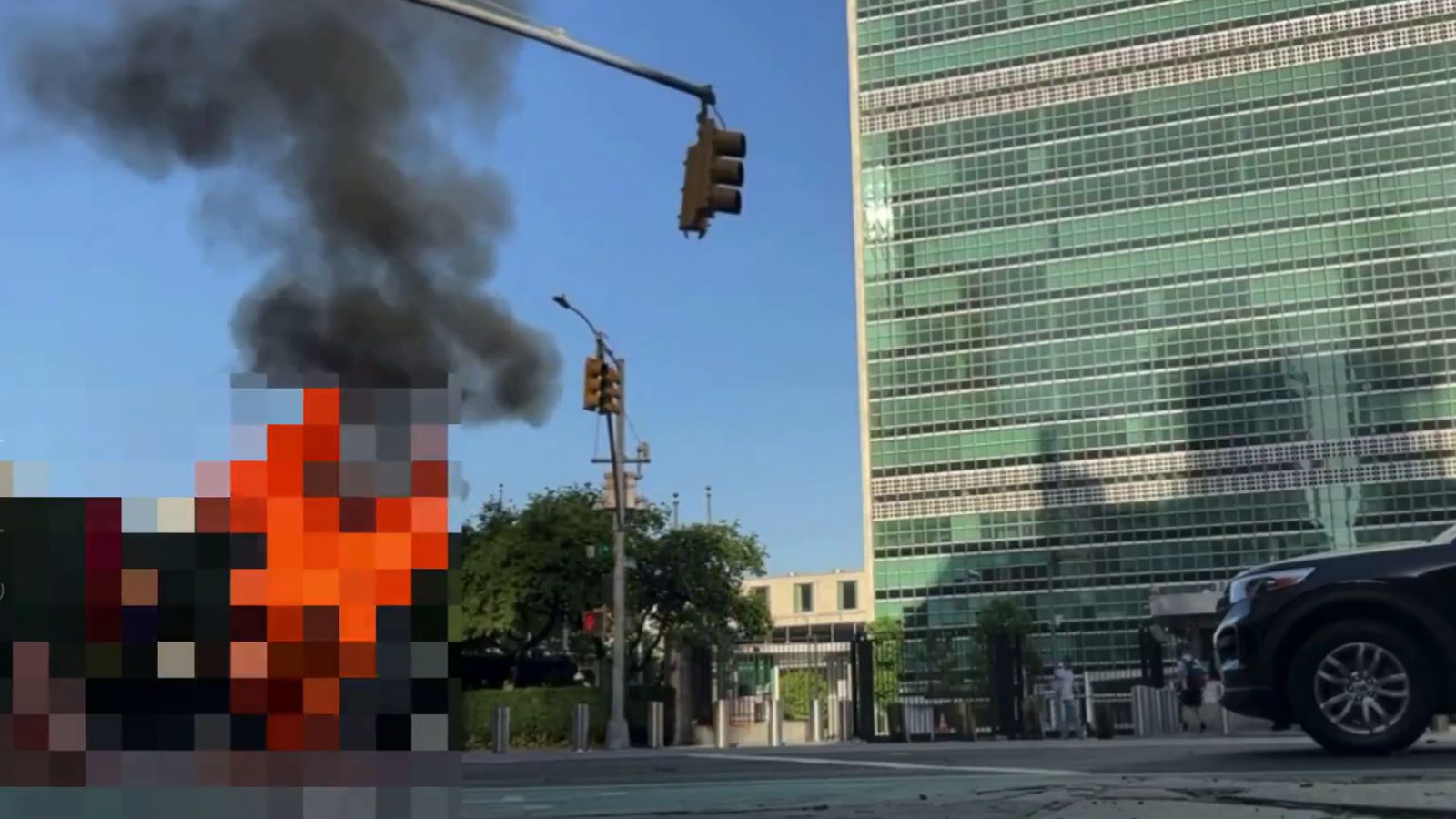
The evening rush hour at East 43rd Street and First Avenue in Manhattan is usually defined by the drone of yellow cabs, the rush of diplomats leaving their offices, and the hum of city traffic. That routine shattered when Rangzen stepped onto the pavement. He was not a stranger to the city, having spent two decades living in the United States, earning his living navigating these very streets behind the wheel of a rideshare vehicle. Yet, his final act was calculated to stop that very machinery of daily life.
By planting a Tibetan flag into the concrete and wearing traditional monastic attire, Rangzen transformed a crowded New York sidewalk into a stage for geopolitical grievance. His phone captured his final moments on a livestream. He spoke of unity, independence, and the mounting despair of an exiled population watching their culture undergo systemic erasure from thousands of miles away. Within minutes, he was engulfed in flames. First responders extinguished the fire quickly, but the damage was absolute. He collapsed on the asphalt as drivers honked their horns, a brutal juxtaposition of local indifference and profound personal sacrifice.
Left behind on the cordoned pavement, alongside the flag that remained standing for an hour during the police investigation, were paper leaflets. One handwritten note read simply, "CHINA OUT OF TIBET."
The Global Reach of Beijings New Shadow Law
To understand why a middle-aged driver would choose such an agonizing end in the heart of New York, one must look to Beijing. The timing of Rangzen’s protest was not coincidental. It occurred days after the Chinese government implemented a sweeping new ethnic unity law designed to enforce a singular, state-approved national identity among its 55 recognized minority groups, most notably Tibetans and Uyghurs.
This legislation does not merely dictate domestic policy. It contains extraterritorial provisions that give Beijing a theoretical legal mechanism to monitor, track, and penalize ethnic minorities living far beyond Chinese borders. For the Tibetan diaspora, this is an existential threat. The law formalizes what activists have warned about for years, which is the long-arm policing of exile communities through digital surveillance, familial intimidation back home, and transnational repression.
Western governments, including the United States and the European Union, have issued formal expressions of concern regarding the legislation. These diplomatic communiqués change very little on the ground. For men like Rangzen, who watched his community grow increasingly terrified of speaking out due to Beijing's expanding shadow, the diplomatic hand-wringing felt less like protection and more like abandonment. Friends noted he had grown increasingly enraged by the tightening noose around his countrymen, realizing that even twenty years of living in America could not fully insulate him or his family from the reach of the Chinese Communist Party.
A History Written in Flames
The act of self-immolation is the most extreme manifestation of political dissent available to a human being. It is an act born of total asymmetric warfare, where an individual concludes that their physical body is the only weapon left to deploy against an immovable state apparatus.
Since March 2009, more than 150 Tibetans have set themselves on fire to protest Chinese occupation. The vast majority of these incidents occurred inside Tibet and the surrounding regions, hidden away from international cameras by strict state information blackouts and internet blocks. When someone immolates inside Tibet, the state retaliates not just against the deceased, but against their entire family, cutting off communications, arresting relatives, and imposing collective punishments on villages.
Rangzen’s protest belongs to a smaller, equally desperate category. He is one of roughly eleven Tibetans who have self-immolated while living in exile. By bringing the fire to the doorstep of the United Nations, he attempted to bypass the information firewall that Beijing uses to smother dissent. He forced the international community to witness a horror that is usually kept behind closed borders.
The history of this movement reveals a shift from monastics to laypeople. Early protests were dominated by monks and nuns from monasteries in eastern Tibet, individuals steeped in Buddhist traditions who viewed the sacrifice as a non-violent offer of their own lives to protect the broader community. Today, the protest involves truckers, students, farmers, and overseas drivers. The political desperation has thoroughly bled into the secular, working-class population.
The Price of Multilateral Apathy
The choice of the United Nations headquarters as the site for this tragedy carries heavy symbolic weight. The institution was founded on the premise of protecting human rights and self-determination, yet it has remained largely paralyzed regarding Tibet for more than seven decades. China's position as a permanent member of the UN Security Council, paired with its immense economic influence across the developing world, ensures that any formal discussion of Tibetan autonomy is strangled before it can reach the floor.
Diplomats pass through the gates of the New York headquarters every day, walking past the spot where Rangzen burned. They operate within a system that prioritizes trade relationships, climate partnerships, and macroeconomic stability over the cultural survival of six million people. The UN has not passed a resolution on Tibet since the 1960s. This institutional silence creates a vacuum where desperate measures appear to be the only option left for visibility.
The International Campaign for Tibet and other advocacy groups find themselves in a difficult position following such events. They must honor the passion and grief of the activist while managing the terrifying reality that self-immolation can inspire copycats within a deeply traumatized diaspora. Human rights organizations continuously call for alternative avenues of protest, but those avenues require an international audience willing to listen. When the UN ignores peaceful marches, petitions, and legislative lobbying, it inadvertently signals that only the most shocking displays of trauma will command the world's attention for a single news cycle.
The immediate aftermath of Rangzen’s death followed a predictable script. Local police cordoned off the block, treating the incident as a public suicide and an ongoing investigation. Exiled Tibetan communities gathered in small rooms to hold candlelit vigils and chant prayers for the deceased. Beijing issued its standard rebuttals, framing the event as the work of marginal extremists manipulated by foreign forces intent on splitting the Chinese nation. The diplomatic machinery reset itself almost instantly, ready to resume normal operations by the next morning.
The true tragedy of the event lies in this rapid return to normalcy. A man ended his life in the most painful manner possible to disrupt the conscience of the world, yet the world proved remarkably adept at absorbing the shock and moving on. The flag is gone, the soot has been washed from the First Avenue sidewalk, and the new ethnic unity law remains fully in effect.